
Ofori-Atta vs Ato Forson: What the Numbers Really Say About Ghana's Economy Under Two Finance Ministers


A fresh debate has erupted in Ghanaian economic and political circles following comments by policy analyst Kofi Bentil comparing the performance of two Finance Ministers — Ken Ofori-Atta, who served under President Nana Akufo-Addo, and the current Finance Minister, Cassiel Ato Forson, serving under President John Mahama. Drawing on data from the Bank of Ghana and the International Monetary Fund, analysts have been scrutinising how key economic indicators shifted during each minister's first two years in office.
The Key Indicators at a Glance
When Ken Ofori-Atta took office in 2017, Ghana was coming off a period of economic turbulence marked by energy sector debt and a weakening cedi. His first two years saw relatively moderate inflation figures and a degree of exchange rate stability, bolstered in part by improved cocoa revenues and a Eurobond issuance programme. GDP growth picked up during that period, and the government recorded some gains in revenue mobilisation through the introduction of measures including tax reforms.
However, critics note that the foundation of borrowing laid during those years, combined with subsequent shocks including the COVID-19 pandemic and global commodity price swings, contributed to the severe fiscal deterioration that culminated in Ghana's debt default in late 2022 and its subsequent IMF bailout programme.
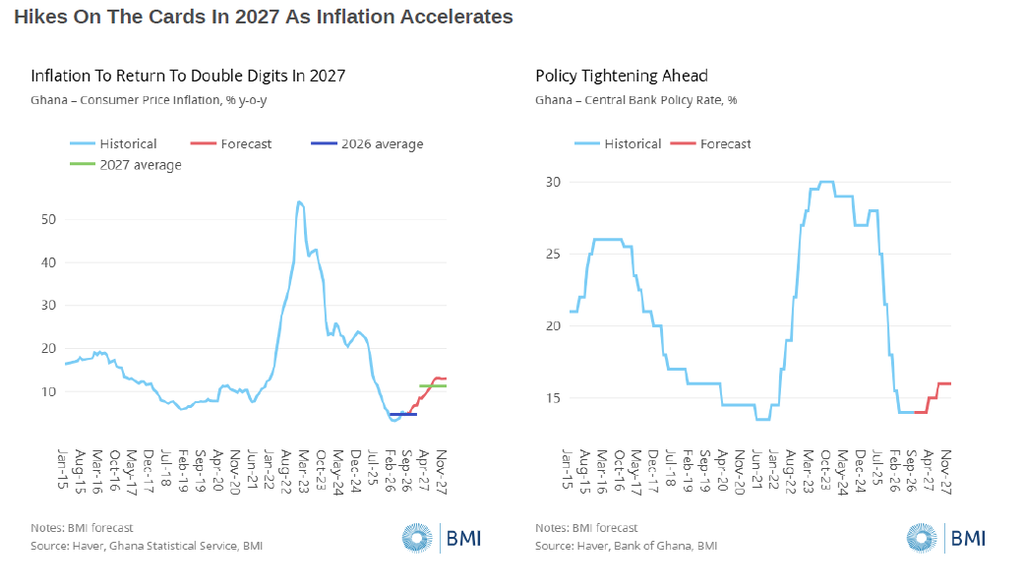
Ato Forson assumed office in early 2025, inheriting an economy still navigating the terms of an IMF Extended Credit Facility agreed under the previous administration. His opening months have involved delicate negotiations around debt restructuring, tight fiscal consolidation targets, and the challenge of rebuilding investor confidence. Inflation, while still elevated, has shown signs of easing from the extreme peaks seen between 2022 and 2023, when it surpassed 50 percent at its height. The cedi has faced continued pressure but has not collapsed at the pace seen during the worst of the 2022 crisis.
Why It Matters for Ghana
Comparing the two ministers is not merely an academic exercise — it speaks directly to the lived experience of ordinary Ghanaians. Inflation determines how far a cedi stretches at the market. The exchange rate affects the cost of imported goods, fuel and medicines. The policy rate set by the Bank of Ghana influences borrowing costs for businesses and individuals alike. And the trajectory of public debt shapes how much of the national budget is consumed by interest payments rather than schools, hospitals and roads.
Ghana remains under an IMF programme agreed in 2023, with strict conditionalities around revenue collection, expenditure discipline and the pace of debt restructuring with both external and domestic creditors. How Ato Forson manages the country's finances in the near term will determine how quickly Ghana can exit that programme and restore full access to international capital markets on favourable terms.
It is also worth noting that fair comparisons must account for the global environment each minister inherited. Ofori-Atta's first two years coincided with relatively benign global financial conditions, while both ministers have had to contend with significant external headwinds at different points in their tenures.
The Political Dimension
Kofi Bentil's remarks have reignited the perennial Ghanaian debate about economic management along partisan lines, with supporters of the New Patriotic Party and the National Democratic Congress each marshalling data to support their preferred narrative. Economists and civil society observers caution against cherry-picking figures, arguing that a holistic view — encompassing structural reforms, revenue effort, debt sustainability and poverty outcomes — is necessary for a meaningful assessment.
What is clear is that Ghana's economy has been through a genuinely difficult period, and both administrations have faced difficult choices. The numbers from the Bank of Ghana and the IMF provide an important factual baseline, but they are only part of a more complex story about governance, global forces and the resilience of Ghanaian households and businesses.
- Ghana entered an IMF programme in 2023 following its first sovereign debt default in decades.
- Inflation peaked above 50 percent in 2022-23, one of the sharpest rises in Ghana's modern history.
- Ato Forson is managing fiscal consolidation under strict IMF conditionalities inherited from the previous government.
Source: 3News

Comments (0)
Be the first to comment.