FDA Posts Strong Financial Growth Despite Equipment Challenges
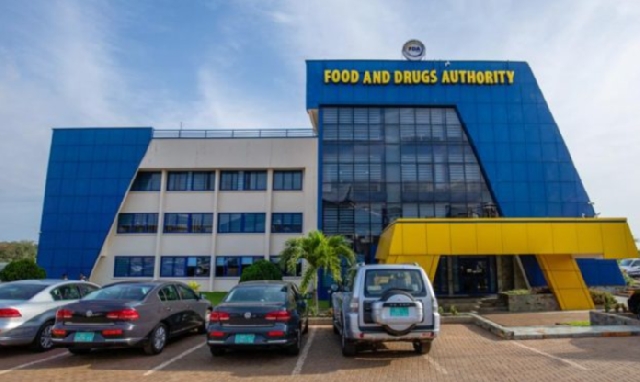
Ghana's Food and Drugs Authority (FDA) has recorded impressive financial performance in 2025, posting a surplus of GH¢70 million—a substantial 51 per cent jump from the previous year's GH¢46 million. The growth underscores the regulator's improving fiscal position, though officials warn that infrastructure challenges threaten operational efficiency in coming years.
The Authority's Deputy Director of Finance, Samuel Adom-Siaw, revealed the figures at the FDA's 2025 Annual Stakeholders' Meeting in Accra, presenting audited accounts that show strengthening balance sheets across multiple metrics. Total assets climbed from GH¢296 million to GH¢358 million, whilst liabilities dropped significantly from GH¢12 million to GH¢3.4 million—a sign of improved financial health.
Revenue Sources and Financial Performance
The FDA's diversified revenue base contributed to the strong performance. The Authority generated GH¢420 million in total revenue, comprising GH¢278 million from internally generated funds (66 per cent), GH¢78 million in donor support (19 per cent), and GH¢63 million in government subsidies (15 per cent). This composition reflects the FDA's growing self-sufficiency, with revenue from its own operations now accounting for nearly two-thirds of income.
However, the Authority fell short of its internally generated funds target, recording a GH¢95 million shortfall against a projected GH¢374 million. Adom-Siaw attributed this primarily to exchange-rate fluctuations, a persistent challenge for Ghanaian organisations dependent on foreign currency transactions.
Expenditure increased only marginally—from GH¢266 million to GH¢267 million—despite higher staff compensation and mounting operational demands. This cost discipline contributed to the strong surplus position, though officials indicated the Authority intends to review its fee structures periodically in consultation with stakeholders to improve revenue mobilisation.
Regulatory Activity and Product Safety Impact
Beyond finances, the FDA's regulatory footprint expanded substantially in 2025. The Authority processed 24,225 product applications from a total of 24,446 received, approving 20,205 products. Quality Assurance Manager Joseph Ofosu-Siaw reported conducting 15,457 facility inspections and examining 47,189 consignments at ports—critical checkpoints for preventing substandard and counterfeit medicines from entering the market.
Market surveillance proved particularly active, with 2,250 exercises carried out nationwide and 215,876 non-compliant products retrieved from circulation. An encouraging trend emerged in local manufacturing: 62 per cent of newly registered products in 2025 were locally made, nearly double the 33 per cent recorded in 2024—suggesting growth in Ghana's domestic pharmaceutical and regulated-product sectors.
The FDA also strengthened food safety oversight, training 8,693 street food vendors and issuing 1,369 permits under its food safety programme, expanding consumer protection beyond medicines into everyday food preparation.
Why It Matters for Ghana
The FDA's financial surplus is significant for Ghana's health security. A well-resourced regulator is essential for combating the counterfeit and substandard pharmaceutical products that pose serious public health risks, particularly in low-income settings where consumers may lack access to reliable verification. The sharp increase in locally manufactured products approved for sale could reduce Ghana's dependence on imports and create jobs, but only if the FDA's quality assurance capacity remains robust.
Yet the Authority's identified concern—ageing laboratory equipment, some between 8 and 20 years old—threatens this progress. Laboratories operating round-the-clock require reliable, modern equipment for testing medicines, food and other regulated products. Equipment failure or outdated technology could slow product approvals, increase costs and compromise safety testing accuracy, undermining both local manufacturers and consumer confidence.
With a strengthening balance sheet and demonstrated revenue discipline, the FDA has the financial foundation to address infrastructure gaps. Strategic reinvestment in laboratory modernisation, alongside maintained operational spending control, will be critical to sustaining regulatory effectiveness as Ghana's economy and manufacturing base grow.
Source: MyJoyOnline



Comments (0)
Be the first to comment.