
Fanaka University partners GISI to boost Ghana's financial sector talent pipeline
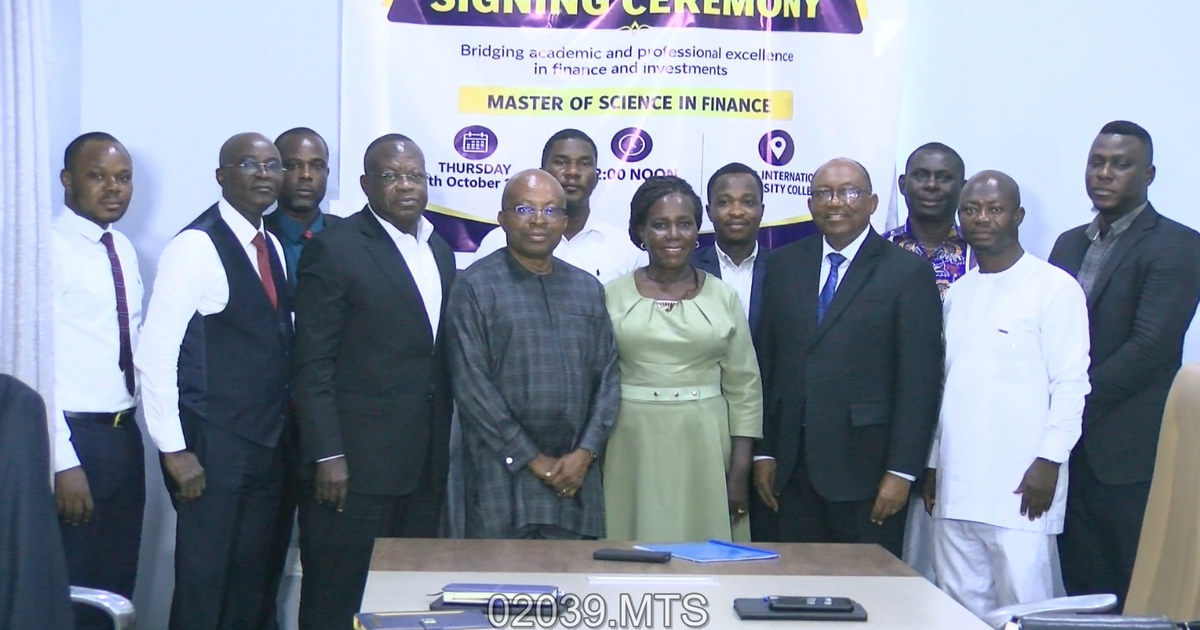

Fanaka International University College and the Ghana Investment and Securities Institute (GISI) have formalised a partnership designed to reshape how finance professionals are trained in Ghana. The Memorandum of Understanding will embed professional capital market training directly into Fanaka's Master of Science in Finance programme, creating a bridge between classroom theory and the practical demands of Ghana's securities industry.
The collaboration reflects a growing recognition that Ghana's financial sector requires graduates equipped not just with academic knowledge but with hands-on expertise in investment management, securities trading and corporate governance. Through this partnership, students will gain access to industry-recognised professional qualifications alongside their university degrees, positioning them more competitively for employment in Ghana's expanding financial services landscape.
What the partnership delivers
Under the agreement, Fanaka students will benefit from several key components. They will receive practical industry exposure through real-world case studies and projects relevant to Ghana's capital market. The curriculum will be updated to reflect cutting-edge developments in modern asset classes, digital financial frameworks and contemporary governance standards—areas where Ghana's financial sector is actively evolving.
Students will also gain access to professional development opportunities and internationally recognised certifications through GISI, enhancing their credentials in a competitive job market. Faculty members will receive continuous professional development, ensuring that teaching remains aligned with industry needs and global best practices.
- Curriculum benchmarking between academia and professional standards
- Direct access to GISI's expertise and industry insights
- Internationally recognised professional qualifications integrated with degree programmes
Why it matters for Ghana's financial sector
This partnership addresses a persistent gap in Ghana's financial ecosystem: the shortage of skilled professionals with both theoretical grounding and practical market knowledge. Ghana's capital market has been expanding, with increased activity in equities, bonds and other investment instruments. However, the market's growth has often outpaced the availability of adequately trained professionals who understand both global best practices and the local regulatory environment.
For Fanaka graduates, the partnership means improved employment prospects in a sector offering competitive salaries and career advancement. For GISI, it represents an opportunity to shape the next generation of securities professionals and ensure that professional standards remain high across the industry. For Ghana's broader economy, the initiative supports the development of a more sophisticated and efficient capital market capable of mobilising domestic savings and attracting investment.
Professor Samuel Agyei-Ampomah, Rector of Fanaka International University College, emphasised that the financial sector's rapid evolution demands that universities remain agile. He noted that GISI's involvement ensures students stay current with developments in modern asset classes and digital financial frameworks—critical areas as Ghana's financial sector increasingly embraces technology and innovation.
Alexander Williams, CEO of GISI, highlighted that the collaboration strengthens the bridge between education and industry practice. Such partnerships are increasingly recognised globally as essential for preparing graduates for the workplace and ensuring that professional standards remain high.
Building Ghana's professional pipeline
The initiative is part of broader efforts across West Africa to align university education with professional sector needs. By creating a pipeline of skilled professionals who understand both global investment principles and Ghana's market context, the partnership aims to boost investor confidence, improve market participation and ultimately support the financial sector's contribution to Ghana's economic growth.
As Ghana continues to develop its position as a regional financial hub, initiatives like this partnership between academic and professional institutions will be crucial in ensuring the country has the talent and expertise needed to compete effectively.
Source: MyJoyOnline



Comments (0)
Be the first to comment.