
ECOWAS pledges $250,000 relief as Ghana flood recovery enters new phase
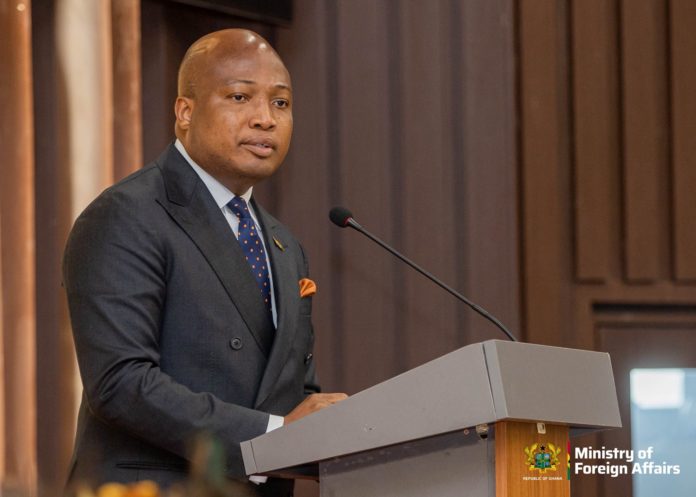

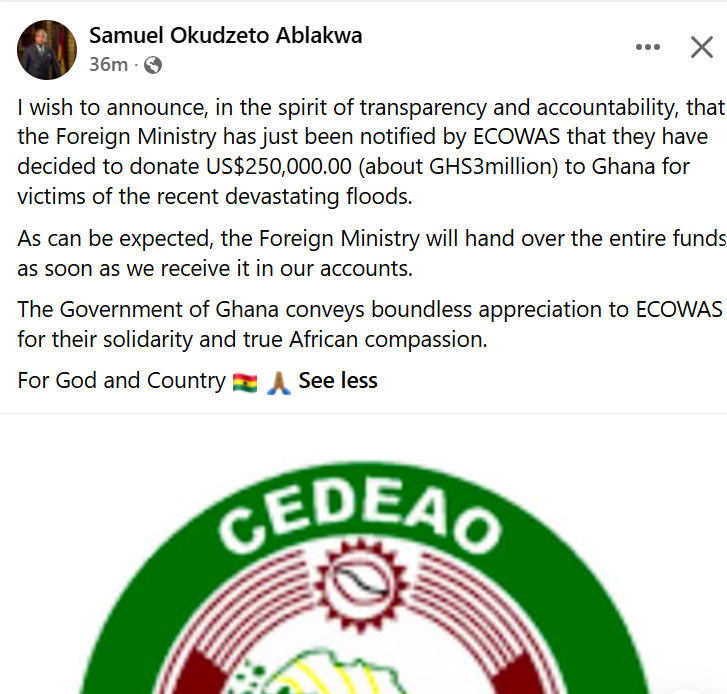
The Economic Community of West African States (ECOWAS) has committed $250,000 in emergency relief to help Ghana rebuild following devastating floods that swept through Greater Accra on June 29. Foreign Affairs Minister Samuel Okudzeto Ablakwa announced the contribution on Friday, October 16, marking a significant boost to the country's ongoing disaster response efforts.
The funds, equivalent to approximately GH¢3 million, have been transferred to the Adventist Development and Relief Agency (ADRA), an international humanitarian organisation selected to manage distribution independently of government interference. This arrangement underscores a deliberate commitment to transparent and accountable aid delivery at a time when public trust in disaster relief processes remains scrutinised across West Africa.
Independent oversight ensures fairness
The decision to channel resources through ADRA rather than direct government distribution reflects growing international best practice in post-disaster interventions. The Ministry of Foreign Affairs and the National Disaster Management Organisation (NADMO) agreed that an independent implementing partner would ensure beneficiary identification and fund allocation occurred without political or bureaucratic bias.
This approach aims to reach the most vulnerable households quickly and equitably. Minister Ablakwa stressed that the process would be guided by integrity and accountability, signalling ECOWAS's expectation that Ghana demonstrate rigorous stewardship of regional resources during the recovery phase.
The scale of June's catastrophe
The June 29 floods ranked among Ghana's most destructive recent natural disasters. The deluge affected over 38,000 people across the Greater Accra Region, displaced more than 7,700 households, and claimed at least 15 lives. Survivors lost homes, livelihoods, and access to clean water and sanitation for weeks afterward. Many remain in temporary shelters or staying with relatives as reconstruction efforts continue.
The economic toll extends beyond immediate casualties—businesses were shuttered, agricultural land was inundated, and critical infrastructure including roads and drainage systems sustained severe damage. Recovery will require months, if not years, of sustained effort.
Why it matters for Ghana
This ECOWAS intervention signals growing recognition that West African member states must support one another during crises. Ghana, as a relatively developed ECOWAS member with stronger institutions than many neighbours, receives both practical assistance and a reminder of regional interdependence. The donation also demonstrates that Ghana's diplomatic standing within ECOWAS remains solid enough to attract meaningful support.
More broadly, the announcement underscores climate change vulnerabilities in coastal West Africa. Ghana faces recurring flood risks as extreme weather patterns intensify, and international funding mechanisms like this ECOWAS contribution may become increasingly vital. The government will need to balance immediate relief with long-term investment in drainage infrastructure, urban planning reform, and early warning systems.
The selection of ADRA as implementing partner also sets a precedent: future disasters may benefit from similar third-party oversight arrangements that shield vulnerable populations from patronage-driven distribution. For Ghanaians affected by the June floods, the $250,000 represents concrete acknowledgement that their suffering matters beyond national borders.
ADRA will now begin the process of identifying and registering eligible beneficiaries across affected communities, with distribution expected to commence within weeks. Government and regional observers will monitor compliance to ensure funds reach those most in need.
Source: MyJoyOnline


Comments (0)
Be the first to comment.