Civil Society Groups Warn Government on Firearm Licence Revocation Plan
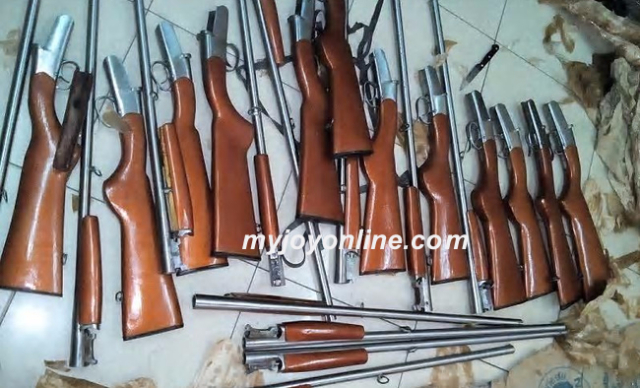
Implementation fears over new gun control policy
Civil society organisations have expressed serious concerns about the government's plan to revoke or suspend all civilian firearm licences in Ghana, warning that poor planning could create confusion and undermine public trust in firearms regulation. The coalition, led by the Jatikay Centre for Human Security and Peace Building, acknowledged support for stricter gun control measures but questioned whether state institutions are adequately prepared to execute the directive announced by Interior Minister Muntaka Mohammed-Mubarak.
The new policy requires stricter compliance including mental health screening, drug testing, and practical firearms training. However, the CSOs argue that the announcement lacks a clear operational framework, with critical questions left unanswered about processing centres, costs, timelines, and which institutions will handle thousands of potential applicants. They warned that facilities such as the Tesano Police Shooting Range could become overwhelmed without proper preparation.
Questions on execution and fairness
The coalition raised concerns about how the policy will be practically implemented across regions, particularly for special categories such as farmers, private security operators, and persons in remote communities. They cautioned that the government has not clarified how many licence holders will be processed daily, which regional centres will operate, who will pay for testing, or how the transition will work for those currently holding valid licences.
Adib Saani, Executive Director of one member organisation, stressed that reform must follow proper administrative procedures. "Reform must be done in a structured manner that respects due process, legitimate expectation, and administrative fairness," he said. The CSOs proposed phased implementation including regional audits, published national protocols, certified training centres beyond Accra, and independent appeals mechanisms for affected licence holders.
Public communication and legislative reform needed
The groups criticised inadequate public communication about the policy, arguing that a measure of this scale requires nationwide civic education through multiple media channels and languages. They warned that poor communication could damage public confidence, particularly after the recent gun amnesty programme that encouraged voluntary surrender and regularisation of weapons.
The coalition also urged the government to prioritise long-delayed legislative reforms, noting that a new arms bill could modernise Ghana's regulatory framework to address modern challenges including digital databases, ballistic tracing, private security expansion, and international obligations under ECOWAS and UN frameworks. While supporting stronger gun control, the CSOs cautioned against "panic administration" and stressed the need to distinguish between lawful firearm owners and criminal actors.
Source: MyJoyOnline

Comments (0)
Be the first to comment.