
CalBank and Minerals Commission Forge GH¢1bn Deal to Bankroll Ghanaian Mining Businesses
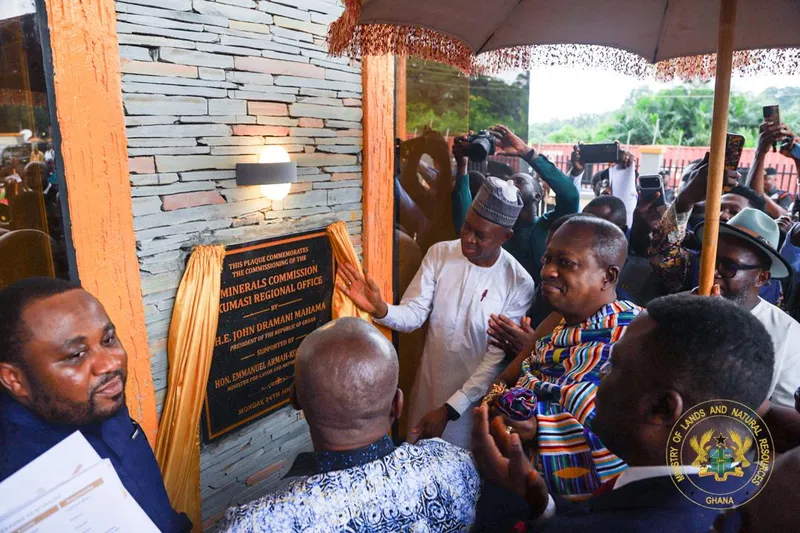

In a significant move aimed at strengthening the local content dimension of Ghana's mining sector, CalBank has signed an agreement with the Minerals Commission to make GH¢1 billion available in credit facilities for Ghanaian businesses operating along the mining value chain. The deal is set to benefit mine suppliers, contractors and holders of small-scale mining licences who have long struggled to access the capital needed to grow and compete.
What the deal covers
Under the terms of the partnership, CalBank will extend financing to a range of players in the domestic mining ecosystem. This includes Ghanaian-owned companies that supply goods and services to large mining operations, contractors engaged in mining-related construction and earthworks, and licensed artisanal and small-scale miners — a segment that has historically been underserved by formal financial institutions.
The Minerals Commission, as the government body responsible for regulating and managing Ghana's mineral resources, will play a facilitative role in identifying and vetting eligible businesses, helping to bridge the trust gap that has traditionally kept banks cautious about lending to the mining sector's smaller players.
The GH¢1 billion commitment represents one of the more substantial dedicated credit lines a commercial bank has directed towards local mining enterprises, signalling growing confidence in the sector's potential to generate returns beyond the large multinational operators that have historically dominated Ghana's gold and mineral landscape.
Why it matters for Ghana
Ghana is Africa's largest gold producer and one of the world's top ten, yet a significant portion of the wealth generated by the sector has historically flowed out of the country through foreign-owned companies, imported equipment and expatriate labour. Building a stronger local supply chain is widely regarded as one of the most effective ways to ensure that mining wealth translates into lasting domestic economic development.
Access to finance has been one of the most persistent barriers for Ghanaian businesses hoping to participate meaningfully in the mining value chain. Many local contractors and suppliers lack the balance sheet strength or collateral that conventional bank lending requires, leaving them unable to scale up operations or win larger contracts from the major mining houses operating in the country.
By backing this facility with the institutional credibility of the Minerals Commission, CalBank is effectively reducing the risk perception around this segment of borrowers. If structured well, the initiative could help formalise parts of the small-scale mining sector, improve safety and environmental standards, and create employment in mining communities across regions such as Ashanti, Western, Eastern and the Ahafo belt.
The move also aligns with broader government policy objectives around local content in extractive industries, a priority that has gained renewed attention as Ghana looks to maximise the economic returns from its natural resources amid ongoing fiscal pressures.
The bigger picture for local content
Ghana's Minerals and Mining Act and associated local content regulations require mining companies to give preference to Ghanaian goods and services where these are available at competitive prices and quality. In practice, however, local businesses have often found themselves unable to meet the financial requirements to pre-finance large contracts or acquire the equipment needed to qualify for significant work.
Dedicated financing arrangements like this CalBank-Minerals Commission deal are therefore critical infrastructure for making local content policy a reality rather than simply an aspiration. Other sectors, including oil and gas, have seen similar initiatives, with varying degrees of success depending on how rigorously eligibility criteria are applied and how accessible the application process is for smaller operators.
Industry watchers will be paying close attention to how the GH¢1 billion is disbursed, the interest rates and repayment terms attached to the facilities, and whether the initiative reaches genuinely grassroots mining businesses or ends up concentrated among already well-connected contractors. Transparency in implementation will be key to determining whether this partnership delivers its full potential for the Ghanaian mining community.
Source: 3News



Comments (0)
Be the first to comment.