Beyond the balance sheet: Why Ghana's gold purchase programme deserves broader economic scrutiny
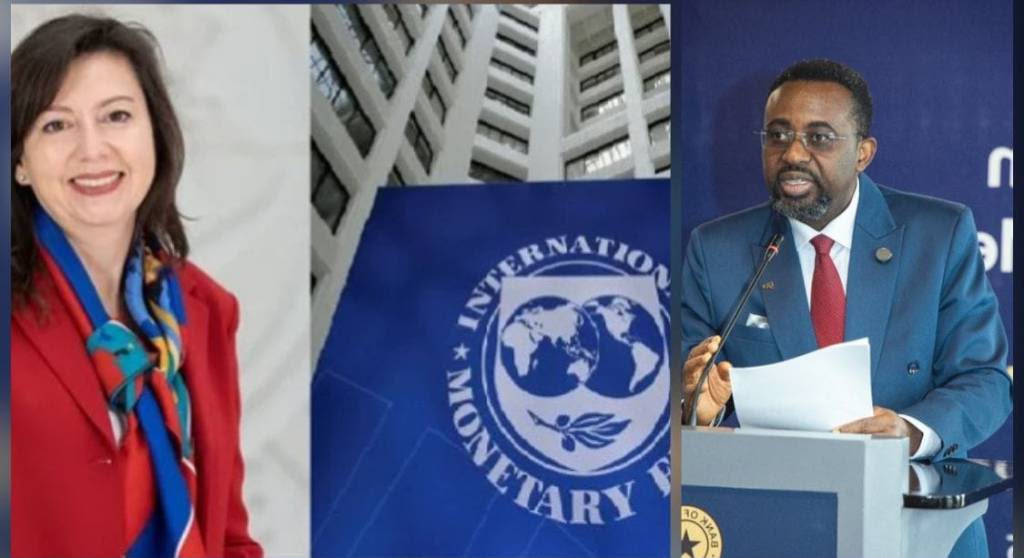
Ghana's Domestic Gold Purchase Programme has sparked a critical debate about how to measure success for central bank interventions. The International Monetary Fund recently recommended reassessment, citing concerns about transparency and an estimated quasi-fiscal loss of US$214 million. But economists and policymakers are pushing back, arguing that judging the programme solely on its accounting costs misses the bigger picture of economic stability it has delivered to the nation.
The programme, launched during Ghana's recovery from a severe economic crisis, was never intended as a profit-making operation. Rather, it functioned as a strategic tool to rebuild Ghana's foreign exchange reserves, stabilise the cedi, and protect the economy from external shocks. By this measure, the results have been substantial.
The reserve recovery tells the story
When Ghana entered its IMF Extended Credit Facility programme, gross international reserves sat at just US$3.66 billion—equivalent to only 1.6 months of import cover, a dangerously thin cushion for any economy. Today, reserves are projected to reach US$10.73 billion, covering 3.7 months of imports. This near-tripling represents one of the strongest reserve recoveries in Ghana's recent history.
Central to this achievement was the gold programme. The Bank of Ghana acknowledged that Ghana consistently exceeded its Net International Reserve targets under the IMF facility, with the Fund itself crediting "the large-scale deployment of the Domestic Gold Purchase Programme" for this outperformance. Meanwhile, Ghana's gold holdings increased to 19.2 metric tonnes by February 2026, and government has set an ambitious target to build reserves equivalent to 15 months of import cover by 2028.
Gold-related foreign exchange inflows also surged dramatically, from approximately US$1.7 billion in 2023 to US$12.7 billion in 2025, fundamentally reshaping Ghana's external position.
Why economic stability matters more than accounting profits
The IMF's concerns about transparency and governance deserve attention, but the broader question is whether a central bank's role is to maximise profits or to safeguard economic stability. International practice suggests the latter is paramount.
A stable exchange rate delivers tangible benefits that ripple through the entire economy. It reduces imported inflation, lowering costs for fuel, medicines, machinery, and industrial inputs. Households preserve purchasing power, businesses face lower operating costs, and investors gain confidence in the currency environment. For Ghana, where inflation has been a persistent challenge, this stabilising effect cannot be overstated.
Perhaps most critically for Ghana's fiscal health, exchange rate stability protects against spiralling debt costs. A significant portion of Ghana's public debt is denominated in foreign currencies. Sharp cedi depreciation automatically inflates the local value of this debt, raising government debt-servicing obligations and widening fiscal deficits. By moderating currency volatility, the gold programme may have prevented far larger fiscal costs than the US$214 million in quasi-fiscal losses the IMF identified. These avoided costs should be counted as part of the programme's economic return.
The case for comprehensive cost-benefit analysis
A truly fair evaluation of the Domestic Gold Purchase Programme requires assessing multiple dimensions: the financial cost to the central bank, but also the reduction in inflation from exchange rate stability, savings from lower import costs, reduced exchange rate volatility, and the avoided increases in debt-servicing obligations. When computed together, these factors likely demonstrate that the programme delivered far greater value to Ghana than its accounting losses suggest.
This is not to dismiss the IMF's concerns about transparency or governance—those critiques should prompt reforms to enhance accountability. However, the core logic behind the programme remains sound: a central bank's mandate is to preserve price stability, financial stability, and confidence in the national currency, not to maximise earnings.
As Ghana continues its economic recovery and pursues more ambitious reserve targets, policymakers should resist the temptation to judge success solely through narrow financial metrics. The true measure of the gold programme's success lies in the macroeconomic stability it has helped restore to Ghana's economy.
Source: MyJoyOnline


Comments (0)
Be the first to comment.