Berko's Brooklyn conviction exposes Ghana's corruption blind spot — and what we must do
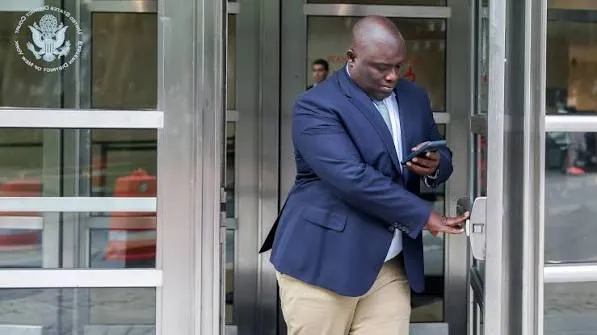
Asante Kwaku Berko, the former Tema Oil Refinery managing director, was convicted this week in a Brooklyn federal court of violating America's Foreign Corrupt Practices Act — a landmark case that exposes a critical weakness in how Ghana tackles corruption. Over more than $1 million in bribes to Ghanaian government officials tied to a power-plant project, Berko became the face of the supply side of corruption. But according to legal analysis, the real lesson for Ghana is far more uncomfortable: we have been watching the wrong hand.
The two hands of corruption
Every bribery transaction requires two parties — the giver and the taker. Yet Ghana's anti-corruption conversation has historically focused almost entirely on condemning the official who receives the bribe, often overlooking the businessman or company executive who initiates and finances the corrupt transaction. Berko's conviction underscores this asymmetry. He deliberately offered money to corrupt Ghanaian officials' decisions. Those officials allegedly accepted it. Both are authors of the corruption, yet our systems have historically treated them as if only one bears responsibility.
The case did not materialise overnight. Berko's involvement in the power project ran from December 2014 to March 2017. U.S. authorities first alleged misconduct in 2020, leading to his resignation from TOR in April that year. In 2021, he settled Securities and Exchange Commission charges without admitting wrongdoing, agreeing to disgorge $275,000 plus interest. Now, after a nine-day trial, a jury has convicted him criminally. This trajectory — from civil allegations to settlement to criminal verdict — demonstrates that corruption files may grow cold, but they do not die.
America's evolving approach: watching both hands
The United States has long used the Foreign Corrupt Practices Act, enacted in 1977, to prosecute companies and executives who bribe foreign officials. The FCPA targets the supply side — it prohibits paying bribes, authorising them, or routing them through intermediaries. Berko violated these rules by funneling millions through intermediaries to facilitate payments to Ghanaian officials. For decades, this created an asymmetry: a foreign businessman could face U.S. prosecution for paying a bribe that a Ghanaian official received with minimal legal consequence in America.
That framework has shifted. In recent years, America enacted the Foreign Extortion Prevention Act (FEPA), which reaches the demand side. FEPA allows the U.S. to prosecute foreign officials who corruptly demand, seek, receive, or accept bribes. However, FEPA cannot be applied retroactively. The Berko scheme predates FEPA's enactment, so Ghanaian officials involved cannot automatically be prosecuted under it, though other American laws, including money-laundering statutes, may apply depending on evidence and circumstances.
Why it matters for Ghana
The Berko case holds three critical lessons for Ghana. First, corruption is not a one-handed problem. Ghana's anti-corruption institutions must develop the capacity and political will to investigate and prosecute both the supplier and the recipient of bribes with equal vigour. Currently, public outrage often focuses on officials, whilst foreign executives and companies walk away or settle overseas with minimal domestic accountability.
Second, Ghana cannot rely on foreign jurisdictions to solve our corruption problems. America can prosecute Berko because he is a Ghanaian operating within U.S. legal reach and because American financial systems were involved. But if the briber had been entirely foreign and kept proceeds outside U.S. systems, America's interest might be limited. Ghana must build its own institutional capacity — through the Office of the Special Prosecutor, the Attorney General's office, and law enforcement — to pursue both sides of corrupt transactions domestically.
Third, Ghana's legal framework must evolve. Whilst we have anti-corruption laws, they often emphasise supply-side offences or public-sector misconduct. Strengthening prosecutions of private-sector actors, foreign companies, and intermediaries who knowingly facilitate corruption would create a more balanced deterrent. This requires not just legislative clarity but also adequate resourcing, investigative training, and political insulation of prosecutorial bodies from interference.
The Berko verdict should prompt Ghana's government and civil society to ask uncomfortable questions: how many other foreign executives have paid bribes to Ghanaian officials and faced no domestic consequence? How many Ghanaian officials have received such payments without investigation? And do Ghana's institutions have the tools and will to hold both hands accountable?
Source: The Ghana Report



Comments (0)
Be the first to comment.