AMA cracks down on overcharging: six transport operators arrested in Accra CBD
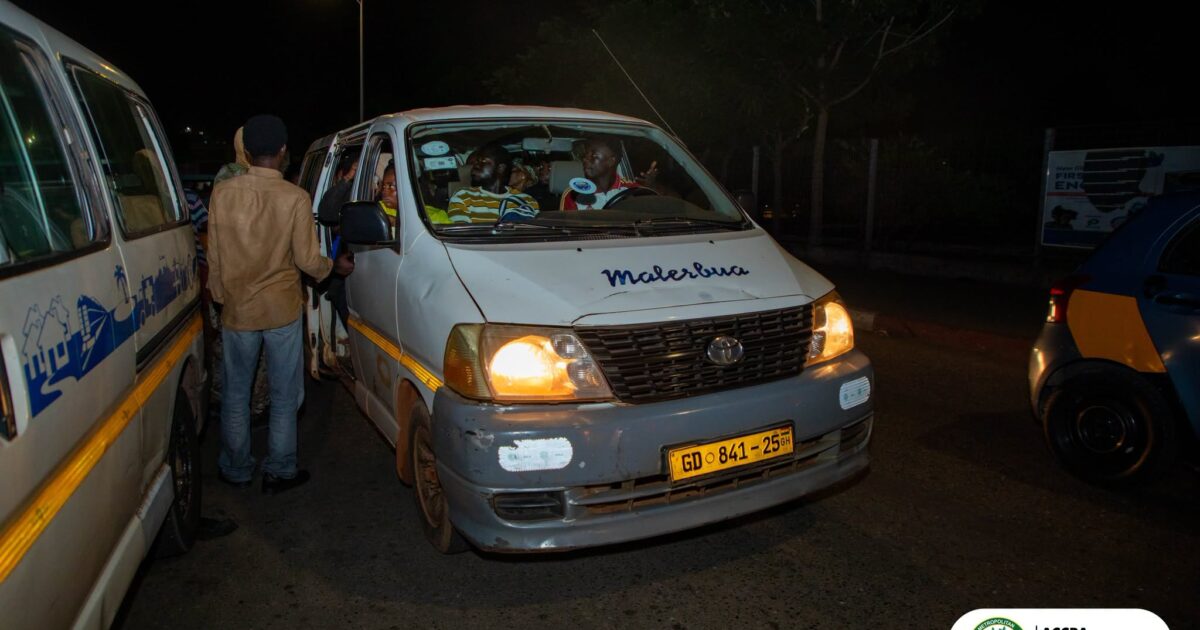
The Accra Metropolitan Assembly has intensified its enforcement against commercial transport operators exploiting passengers through inflated fares, arresting six operators during a targeted operation in the Central Business District on Tuesday evening.
Three drivers and three bus conductors, known colloquially as mates, were apprehended between 5 p.m. and 7 p.m. on August 25, 2026, after allegedly charging passengers illegal surcharges on routes connecting Awoshie, Kasoa and Madina to central Accra. The suspects have been named as drivers Joseph Bonney, Francis Morgah and Foster Osei, alongside mates Benjamin Ofori Atta, Emmanuel Aduafo and Emmanuel Paa Ekow Amissah.
The crackdown intensifies
The arrests mark an escalation in the AMA's fight against fare manipulation, coming weeks after Accra Mayor Michael Kpakpo Allotey issued a stern warning to transport unions and operators against arbitrary fare increases. The enforcement operation signals the Assembly's resolve to move beyond rhetoric into concrete action, with officers conducting unannounced sweeps across busy transport corridors during peak evening hours when many commuters travel.
Authorities acted under clauses 19(f) and 19(d) of the AMA (Operation of Commercial Vehicles) By-laws, 2017, which explicitly prohibit operators from charging fares exceeding rates approved by the Assembly in consultation with recognised transport unions. The by-laws also forbid the practice of forcing passengers to exit and re-board vehicles mid-journey to charge separate fares for different route segments—a common loophole used to circumvent approved tariffs.
Why it matters for Ghana
This crackdown carries significant implications for millions of Ghanaians who depend on commercial transport daily. Transport fare disputes have long been a flashpoint in Accra, with commuters frequently caught between informal fare increases and limited recourse. For low-income workers and students, even marginal surcharges accumulate into meaningful costs across weekly journeys.
The AMA's enforcement effort addresses a structural problem: without consistent oversight, operators exploit information asymmetries, knowing most passengers lack clarity on approved fares. The decentralised nature of Ghana's transport sector—dominated by independently owned tro-tros and minibuses rather than formal transit systems—creates opportunities for exploitation that regulation struggles to combat effectively.
The Assembly's decision to publicise arrests and named suspects represents a deterrent strategy. By holding operators accountable and creating visibility around violations, authorities aim to shift behaviour across the sector. However, success depends on sustained enforcement rather than isolated operations, as operators often resume old practices once attention fades.
Broader transport regulation challenges
Whilst the AMA's initiative is welcome, Ghana's transport regulation faces deeper obstacles. Approved fare structures are frequently outdated relative to fuel costs and inflation, creating pressure on operators to charge extra unofficially rather than petition for formal increases. Additionally, many passengers remain unaware of approved rates, limiting their ability to identify and report overcharging.
The Assembly indicated this exercise forms part of a broader enforcement agenda to protect commuters across the metropolis. Sustained success would require strengthening communication channels between authorities and passengers, modernising fare-setting mechanisms to reflect operational realities, and building transport operator buy-in through dialogue rather than enforcement alone.
Source: MyJoyOnline



Comments (0)
Be the first to comment.