World Cup visa row exposes Ghana's accountability crisis, warns Senyo Hosi
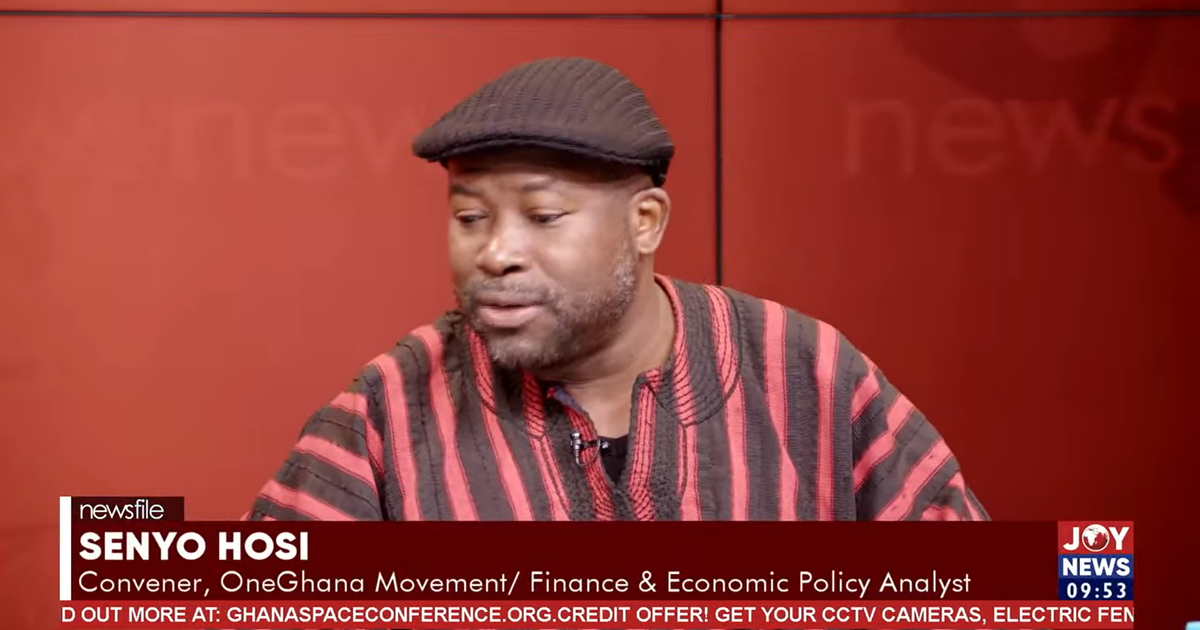
The growing controversy over visa arrangements linked to Ghana's 2026 FIFA World Cup preparations has ignited debate over accountability and constitutional governance, with prominent civil society advocate Senyo Hosi calling for the issue to be framed as a test of Ghana's commitment to the rule of law rather than a simple call for ministerial resignations.
Speaking on JoyNews' Newsfile over the weekend, Hosi, who leads the OneGhana Movement and serves as Trustee of the Ghana Coalition Against Galamsey, emphasised that the allegations represent a deeper failure of public institutional standards. He expressed concern that Ghana appears to be repeating historical patterns of governance lapses, particularly around the handling of official processes and the safeguarding of public resources.
The allegations fuelling the debate
The visa scandal centres on serious claims that individuals paid between US$7,000 and US$14,000 for expedited visa processing tied to World Cup activities. Parliamentary scrutiny has also revealed troubling discrepancies in personnel lists submitted to the United States and Canadian embassies by key Ghanaian agencies.
According to the Minority in Parliament, only two of 50 individuals listed as media personnel by the Ghana Tourism Authority were verified as legitimate professional journalists. Similarly, just 15 of 102 names submitted by the National Sports Authority were confirmed as actual employees of the organisation. These gaps have sparked questions about governance, verification protocols and the integrity of official submissions to foreign governments.
In response, President John Dramani Mahama has requested that the National Sports Authority's Director-General, Yaw Ampofo Ankrah, step aside, with Professor Emmanuel Osei Sarpong appointed to the acting role. The Ministry of Sports and Recreation has also released a timeline of its engagements, including correspondence from January 28, 2026, suggesting that some World Cup-related arrangements preceded ministerial involvement.
Why it matters for Ghana
Hosi's intervention shifts the conversation from individual accountability to systemic governance concerns with long-term implications for Ghana's international reputation and public trust. He invoked Article 232 of the 1992 Constitution, which empowers the Commission on Human Rights and Administrative Justice (CHRAJ) to enforce standards of fairness, reasonableness and legal compliance across public institutions. This constitutional framework, Hosi argued, should be central to how the nation responds.
The underlying concern extends beyond this scandal. Ghana's handling of official processes reflects on its credibility as a host nation for major international events and shapes public confidence in government institutions. Young Ghanaians, Hosi warned, are observing whether officials are genuinely held accountable or whether consequences depend on political affiliation—a message that undermines civic trust regardless of which party holds power.
Hosi also acknowledged the Minority's legitimate role in parliamentary oversight but urged fairness and balance in their scrutiny, emphasising that accountability must be pursued on principle rather than as a tool for partisan advantage.
A call for facts and constitutional order
Rather than focusing narrowly on whether the Sports Minister should resign, Hosi advocated for a comprehensive examination of what went wrong, why, and how similar breaches can be prevented. He stressed that public officials must embody the principles of probity and lawful conduct, irrespective of which political administration is in power. This framing positions the visa controversy as a moment for Ghana to demonstrate whether its constitutional institutions and values are operational or merely ceremonial.
Source: MyJoyOnline


Comments (0)
Be the first to comment.