
UK Hits Israeli Settlement Firms with Sanctions, Warns Against E1 Construction Plans
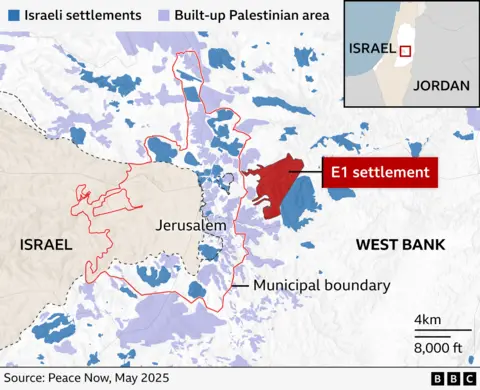

The United Kingdom has imposed sanctions on eight Israeli construction and property development companies accused of facilitating the expansion of illegal settlements in the occupied West Bank, marking the most significant step yet in what London has described as a fundamentally new approach to the Israeli-Palestinian conflict.
The measures, announced by UK Foreign Secretary Ed Miliband, are designed to disrupt the financing and operational capacity of the targeted firms. Alongside the construction companies, the sanctions also cover Tzav 9, an Israeli activist group that the UK government alleges has organised blockades preventing humanitarian aid from reaching Gaza.
What the sanctions mean and why now
Settlement construction in the West Bank is considered illegal under international law, yet activity has accelerated sharply in recent years. Israel has built approximately 160 settlements housing around 700,000 Jewish settlers since it occupied the West Bank and East Jerusalem following the 1967 Middle East war. Some 3.3 million Palestinians live alongside them in what rights groups and international observers have consistently described as an increasingly untenable situation.
The timing of the announcement is significant. It comes just two days before a deadline for construction bids in the E1 corridor — a highly contested strip of land east of Jerusalem. Critics, including Miliband himself, have warned that development in E1 would effectively cut the West Bank in two and sever its connection to East Jerusalem, making a viable Palestinian state all but impossible.
"Do not bid, do not build, and do not profit from the destruction of the two-state solution," Miliband said bluntly, adding that protecting the two-state solution remains the "North Star" of UK foreign policy on the conflict.
Israeli Foreign Minister Gideon Saar condemned the sanctions as a "hostile act targeting private, law-abiding companies" and promised countermeasures, saying Israel "will not bow to external pressure or change its policies." The Palestinian foreign ministry, by contrast, welcomed the move and urged other nations to follow the UK's lead.
Why it matters for Ghana
Ghana has long maintained a principled position in support of Palestinian self-determination, consistent with the broader African Union stance that calls for a two-state solution based on internationally recognised borders. Accra has voted in favour of multiple United Nations resolutions affirming Palestinian rights, and the latest UK actions reflect a growing international consensus that peaceful resolution requires tangible accountability measures — not just diplomatic statements.
For Ghanaian policymakers and civil society, the UK's move is a noteworthy signal. As a major trading partner and development ally of Ghana, Britain's willingness to deploy economic sanctions against a close Western partner like Israel over international law violations adds weight to arguments that multilateral rules must apply universally. It also feeds into broader continental debates at the African Union about how African nations should respond more assertively to the ongoing conflict in Gaza, where the death toll has continued to rise since the Hamas-led attack of 7 October 2023 triggered the current war.
Ghana is also home to a sizeable community engaged in international trade and business, some of whom have dealings with UK-based firms. The expansion of Britain's human rights sanctions regime — which now allows London to target companies involved in violations of international humanitarian law anywhere in the world — is a development Ghanaian businesses and diaspora members operating in the UK should monitor closely.
Broader context: UK-Israel relations under strain
Relations between London and Tel Aviv have been under considerable stress since the Labour government came to power and signalled its intent to take a tougher line on settlement expansion. When the UK announced plans to ban imports of settlement goods in September, Israel retaliated by moving to shut the British consulate in East Jerusalem — the facility that handled UK diplomatic relations with Palestinians. Most UK diplomats have since vacated the building, though London insists it remains operational as a formal UK mission.
The UK is also working on separate legislation to ban the import of goods produced in Israeli settlements and to prohibit UK-based advertising services from promoting settlement properties. Taken together, these measures represent a substantial shift in British foreign policy — one that is being watched closely across the Middle East, Africa, and beyond.
- Eight Israeli construction firms sanctioned by the UK over illegal West Bank settlements.
- UK warns against bids for E1 construction, saying it would destroy the two-state solution.
- Israel vows countermeasures; Palestinian foreign ministry welcomes the UK action.
Source: MyJoyOnline


-1200x800.webp)

Comments (0)
Be the first to comment.