
The Acheampong Legacy Debate: Why Ghana Must Learn From Both Sides of Its History
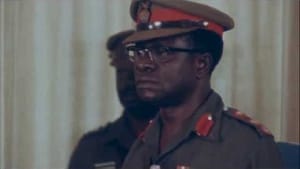

A renewed and passionate debate about the legacy of Colonel Ignatius Kutu Acheampong — the military leader who ruled Ghana from 1972 to 1978 — is once again dividing public opinion and challenging Ghanaians to examine their history with honesty and nuance. The conversation, which has drawn in prominent voices including mining magnate Sir Sam Jonah and democracy advocate James Kwabena Bomfeh, known as Kabila, cuts to the heart of a question every generation of Ghanaians must eventually face: how do we judge leaders whose records are neither entirely heroic nor entirely condemnable?
What the debate is really about
Those who speak in favour of Acheampong's legacy point to concrete achievements. Sir Sam Jonah, one of Ghana's most celebrated business leaders, has acknowledged that policies under Acheampong created pathways for Ghanaians to rise to leadership roles in key industries, particularly in mining — an environment from which he himself benefited. For Jonah, the argument is not that Acheampong was without fault, but that history should not reduce his tenure to its darkest chapters alone.
Nana Kobina Nketsia V, a respected advocate for Ghanaian nationalism, has pointed to Acheampong's nationalistic credentials, including the fact that he publicly declared his assets upon assuming power after the January 1972 coup — a gesture that resonated with those who value public accountability. Meanwhile, Professor Baffour Agyeman-Duah has gone further, arguing that some of the initiatives pursued under Acheampong's Supreme Military Council would be difficult for even Ghana's current Fourth Republican governments to replicate.
On the opposing side, voices like Kabila's insist that any honest assessment of Acheampong must not sideline the manner in which he came to power — by overthrowing the democratically elected government of Prime Minister Kofi Abrefa Busia and the Second Republic in 1972. For democracy purists, how power is obtained matters as much as what is done with it. The excesses of military rule, the suppression of civil liberties, and the lasting damage done to Ghana's democratic institutions cannot, in their view, be glossed over by appeals to economic policy or nationalist sentiment.
Why it matters for Ghana
This debate is not merely academic. Ghana is a country that has experienced multiple military coups — in 1966, 1972, 1979, and 1981 — and each one left deep scars on its political and social fabric. The manner in which Ghanaians remember and interpret those eras directly influences how they engage with democracy today, and how vulnerable the country may be to authoritarian nostalgia in times of economic hardship or political frustration.
It is worth noting that Acheampong's time in power also ended badly: he was removed in a palace coup by fellow military officers in 1978 and was subsequently executed in 1979 following the Armed Forces Revolutionary Council takeover led by Flight Lieutenant Jerry John Rawlings. That trajectory — from coup leader to coup victim — is itself a cautionary tale about the instability that military governance breeds.
The danger in this debate is not in having it, but in having it carelessly. Selective memory — whether it glorifies the achievements while ignoring the abuses, or condemns the abuses while erasing the achievements — serves no one. Ghana needs a mature, evidence-based national conversation about its military past, one that is guided by the Akan wisdom embedded in the phrase "Tsetse wɔ bi kyerɛ" — roughly translated as "the fly that bites has also shown something" — meaning that even painful experiences carry lessons worth heeding.
What this means going forward
For younger Ghanaians who did not live through the Acheampong era, the responsibility is clear: engage with history rigorously and resist the temptation to adopt ready-made verdicts. That means seeking out multiple sources, listening to those who lived through those years on all sides, and grounding any conclusions in a sound understanding of the political and economic context of the time.
It also means being clear-eyed about one principle that should not be up for debate: military coups are not, and cannot be, a legitimate path to national development. Whatever achievements any military government may claim, they come at the cost of the people's right to choose their own leaders — a cost that is always too high.
- Colonel Acheampong seized power in January 1972, overthrowing the elected government of Prime Minister Busia.
- Supporters cite policies that promoted Ghanaian ownership in key industries, particularly mining, as lasting achievements.
- Critics argue his military rule set dangerous precedents and that the means of acquiring power cannot be separated from his legacy.
Source: The Ghana Report



Comments (0)
Be the first to comment.