
Stop Pointing Fingers: NDC Urged to Clean Up Its Own House on Vote-Buying Before Criticising Others


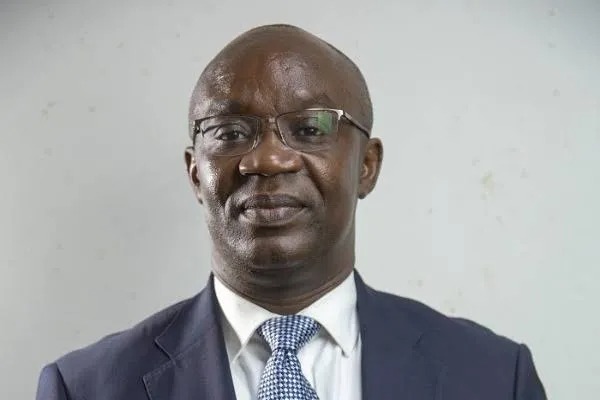
A political analyst identified as Brako-Powers has issued a pointed challenge to the National Democratic Congress (NDC), urging the party to move beyond rhetoric and take decisive steps to stamp out vote-buying within its own ranks before levelling accusations at political opponents. His comments come amid growing concern over the culture of monetised politics that continues to undermine democratic integrity in Ghana.
Condemnation alone is not enough
Brako-Powers made clear that simply speaking out against vote-buying — whether at press conferences or in media appearances — amounts to very little if a party is unwilling to enforce real consequences within its own structures. He argued that political parties in Ghana, the NDC included, have a responsibility to go beyond public condemnation and implement practical, enforceable measures that actively discourage the exchange of money, gifts or other inducements for votes during internal elections and national campaigns alike.
His remarks reflect a broader frustration among political observers who note that vote-buying has become so entrenched in Ghanaian party politics that it is now almost treated as an accepted norm during primaries and general elections. Critics argue that when parties call out opponents for the practice while tolerating or ignoring it internally, they lose moral authority and damage public trust in the democratic process.
What this means for Ghana's democracy
Vote-buying is not merely an ethical issue — it has real and lasting consequences for Ghana's governance. When candidates secure positions through financial inducements rather than merit or genuine popular support, it distorts accountability. Elected officials who have effectively purchased their mandates may feel more obligated to recoup their expenditure than to serve constituents, fuelling corruption further down the line.
Ghana has made significant strides as one of Africa's more stable democracies, regularly cited as a model for peaceful transitions of power. However, the persistence of vote-buying threatens to hollow out that reputation. The Electoral Commission has previously flagged the problem, and civil society organisations such as the Coalition of Domestic Election Observers have repeatedly called for stronger enforcement of laws that prohibit the practice.
Under Ghana's electoral laws, vote-buying is a criminal offence, yet prosecutions remain rare. Many analysts argue that until political parties themselves become the first line of enforcement — suspending or disqualifying members found guilty of the practice — the legal deterrent will remain largely symbolic.
The NDC's moment to lead
Brako-Powers' challenge to the NDC carries particular weight given that the party currently holds the reins of government following the December 2024 general election. As the ruling party, the NDC has both the platform and the institutional authority to set a new standard. Introducing transparent internal disciplinary processes, establishing clear rules around campaign spending during party primaries, and publicly sanctioning offenders would send a strong message that the party is serious about reform.
Beyond the NDC, the broader point applies equally to all political parties operating in Ghana. The New Patriotic Party and smaller parties have faced similar accusations over the years, suggesting that vote-buying is a systemic problem that requires a collective political will to address.
- Ghanaian political parties are urged to enforce internal rules against vote-buying, not just issue public statements.
- Vote-buying distorts accountability and undermines the quality of Ghana's democratic governance.
- The NDC, as the current ruling party, is seen as well-placed to lead meaningful reform on this issue.
Ultimately, the credibility of Ghana's democracy depends not just on what parties say at podiums, but on the standards they uphold behind closed doors. Brako-Powers' call is a reminder that reform must start from within.
Source: 3News

Comments (0)
Be the first to comment.