
Feared or Loved? How Mahama and Akufo-Addo Represent Ghana's Two Faces of Presidential Leadership
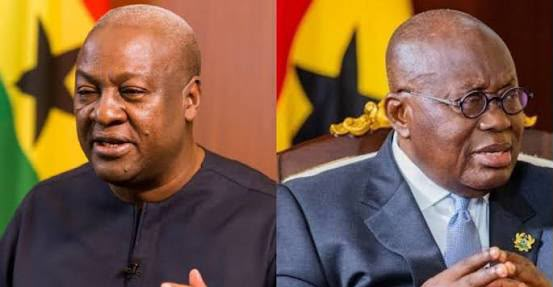

One of the oldest questions in political thought — whether a leader is more effective when feared or when loved — has fresh relevance in Ghana today. With John Dramani Mahama back in Jubilee House and his predecessor Nana Addo Dankwa Akufo-Addo now in retirement, Ghanaians have lived through two distinctly different presidential styles within a short space of time. The contrast offers a rare opportunity to examine what kind of leadership truly serves a democratic republic.
Two Presidents, Two Approaches
President Mahama, who was sworn in on 7th January 2025 following his victory in the December 2024 election, has built an early public image around accessibility and humility. His engagements with ordinary citizens — whether on the streets, at community events or through direct communication — have reinforced a perception that he views Ghanaians not merely as voters but as active partners in governance. Supporters describe him as a leader who listens, acknowledges difficulty and does not project an air of untouchability that often accompanies high office.
This approach stands in notable contrast to the latter years of Akufo-Addo's presidency. The former president arrived in office in 2017 with considerable goodwill and delivered ambitious policy initiatives — most prominently the Free Senior High School programme, which fundamentally changed access to secondary education for millions of Ghanaian families. His early years were widely regarded as bold and reform-driven.
Yet as economic pressures mounted — including the currency depreciation, rising cost of living and the debt restructuring exercise — public sentiment shifted. Critics began to characterise his administration as distant and unreceptive. The Twi phrase "Yentie Obiaa" (meaning "we don't listen to anyone") became a popular label among detractors, capturing a perception that the presidency had grown less consultative. An incident at a public event, in which the president was seen directing traditional chiefs to stand, became a flashpoint — with critics reading it as a display of arrogance, while supporters argued it reflected normal protocol. Regardless of interpretation, it illustrated how perception of leadership style can shape a government's legacy as powerfully as its policies.
What This Means for Ghana's Democracy
The Machiavellian question — whether it is safer for a leader to be feared or loved — is not merely academic in Ghana's context. Ghana's Fourth Republic is built on constitutional limits, multiparty competition and an electorate that has repeatedly demonstrated willingness to vote out incumbents. That reality fundamentally changes the calculus. A leader who relies on fear or authority alone risks creating resentment that translates directly into electoral defeat, as Ghana's political history has shown more than once.
At the same time, popularity without performance is an equally fragile foundation. A president who is beloved but cannot stabilise the economy, deliver public services or make difficult and sometimes unpopular decisions will eventually exhaust public patience. The two qualities — relatability and competence — are not opposites. The most enduring leaders find a way to hold both.
Ghana's Constitution caps presidents at two four-year terms, a safeguard designed precisely to prevent the entrenchment of personality-driven rule. Conversations that have emerged in some quarters about extending Mahama's term, however informal, serve as a reminder that affection for a leader can itself become a democratic risk if it encourages citizens to look beyond constitutional boundaries. Institutions must matter more than individuals, regardless of how popular those individuals are.
The Deeper Lesson for Ghanaian Governance
What the comparison between these two presidencies ultimately reveals is that leadership style is not just about personality — it is a signal about how power is understood. A leader who projects openness signals that citizens have standing. A leader who projects authority without accountability signals the opposite.
- Effective democratic leadership requires both emotional connection with citizens and the courage to make difficult, evidence-based decisions.
- Policy achievements, such as Free SHS, can be undermined in public memory if the manner of leadership feels dismissive or arrogant.
- Ghana's constitutional framework — including the two-term limit — exists to ensure that institutions, not individuals, remain the bedrock of governance.
As Mahama's new administration takes shape, the early goodwill he has generated is a genuine political asset. The question now is whether it can be sustained through delivery — on the economy, on jobs, on public services — rather than on image alone. For Ghanaians, the answer to that question will matter far more than any philosophical debate about fear versus love.
Source: The Ghana Report



Comments (0)
Be the first to comment.