
Ghana's Partisan Trap: How Blind Party Loyalty Is Blinding Us to Real Problems
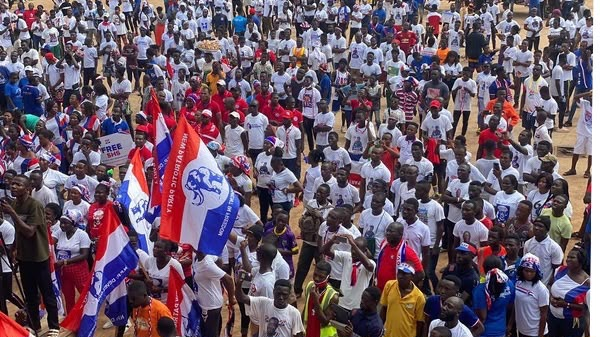

Ghana's political discourse has become a theatre of perpetual performance. Every day, from morning radio shows to taxi conversations, the same script plays out: the ruling government makes announcements, the opposition responds with counter-claims, and supporters of both sides engage in ritualistic accusation and defence. Yet in the noise of this partisan theatre, ordinary Ghanaians struggle with the tangible crises that shape their daily lives—unemployment, inflation, crumbling public services and the relentless challenge of survival.
The deeper crisis, however, is not that Ghana is politically divided. It is that our attachment to political parties has become so powerful that it now distorts our ability to think clearly, judge fairly and demand accountability from those in power. Partisan loyalty has become a lens through which Ghanaians interpret right and wrong, and it is preventing the nation from making meaningful progress on the issues that matter most.
The Psychology of the Divide
Political parties are essential to democracy. They represent competing visions, offer voters choices and provide peaceful mechanisms for government change. The NDC and NPP have both played important roles in Ghana's democratic journey. The problem emerges when loyalty to a party becomes unconditional and overrides independent judgment.
When someone becomes deeply invested in a political identity, criticism of the party can feel like a personal attack. This creates what researchers call an "us versus them" mentality. Suddenly, the same action is judged completely differently depending on which party commits it. A government project celebrated as evidence of competence when one's preferred party is in power becomes proof of waste when the opposing party implements something similar. An allegation of corruption demands immediate punishment when levelled against opponents, but caution and scepticism when it concerns allies.
This psychological mechanism means that citizens stop asking important questions like "Is this government doing the right thing?" Instead, they ask "What does this mean for our party?" The motivation shifts from holding power to account to protecting political allies.
The Cycle of Evasion
Watch what happens when a government official faces serious allegations. Rather than examining the evidence independently, party communicators and loyalists rush to defend the individual, question investigating institutions or redirect attention to similar controversies under the previous administration. The opposition, meanwhile, uses the moment to relitigate old grievances. Soon the original allegation is lost in a fog of counter-accusations: Who borrowed more? Which government built more roads? Who was more corrupt?
These are legitimate historical questions in principle. But when raised as deflections rather than clarifications, they serve a dangerous purpose: they allow wrongdoing to escape scrutiny. The fact that a previous government made similar mistakes does not absolve the current one. Yet in Ghana's current political culture, this basic principle seems lost.
When every demand for accountability meets a counter-accusation, nothing gets resolved. Officials escape consequences, systems remain broken and citizens grow more cynical about democracy itself.
Why This Matters for Ghana
Ghana's democratic reputation depends not on having elections, but on having elections that produce governments willing to serve the public interest. That requires citizens capable of judging leaders fairly and holding them accountable regardless of party affiliation. It requires a public sphere where truth matters more than tribal loyalty.
The current pattern is corroding that foundation. As Ghanaians become more absorbed in partisan identity, they become less able to notice or challenge real failures in governance. Young people facing unemployment do not need political theatre—they need jobs and opportunities. Patients waiting in broken hospitals do not care which party built the facility—they need functioning healthcare. Families struggling with inflation need solutions, not debates about which administration borrowed more wisely.
Breaking this cycle requires conscious effort. Citizens must learn to separate criticism of government from support for opposition. They must judge actions on merit, not partisan affiliation. Most importantly, they must remind themselves and their leaders that political parties exist to serve Ghana, not the other way around.
Until that shift happens, Ghana will remain divided by loyalty and united only in suffering.
Source: MyJoyOnline

Comments (0)
Be the first to comment.