Constitution review must transcend politics, says CDD chief as Ghana begins major governance overhaul
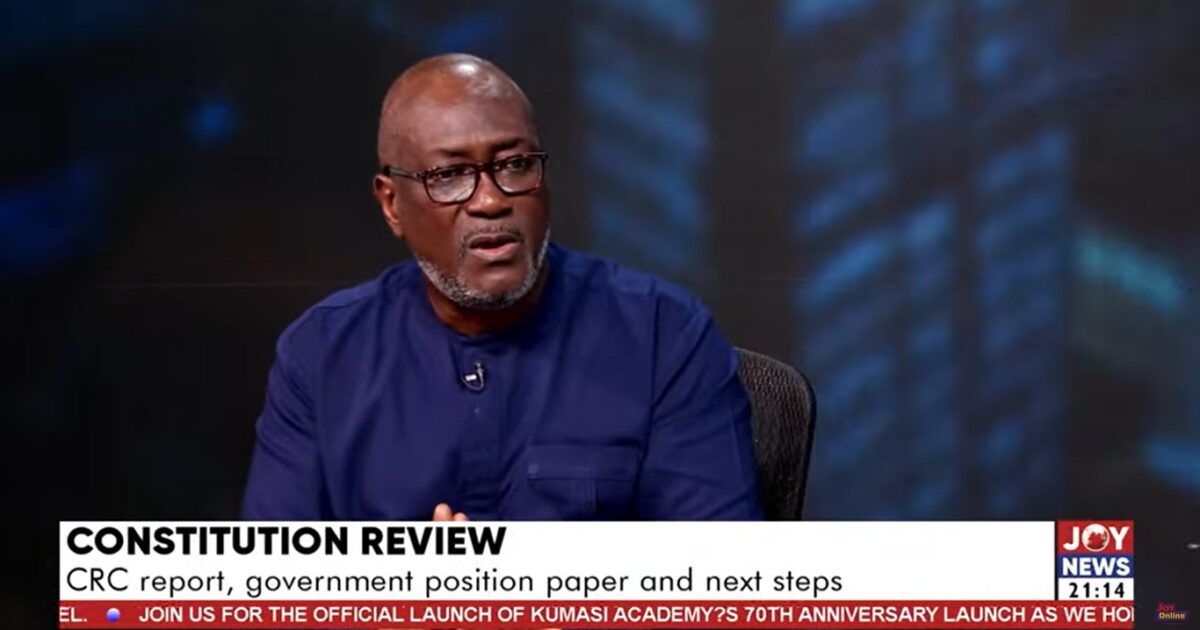
Ghana's constitutional review process must be shielded from partisan political manoeuvring if it is to serve the nation's long-term interests, according to Prof. H. Kwasi Prempeh, Executive Director of the Centre for Democratic Development (CDD-Ghana) and Chairperson of the 2025 Constitution Review Committee. In an appearance on JoyNews' PM Express this week, Prempeh warned that treating the Constitution as a political tool risks undermining public confidence in reforms designed to strengthen the country's democratic foundations.
A national document for generations
Prof. Prempeh's core argument centres on the fundamental purpose of constitutional law. Unlike everyday legislation shaped by partisan priorities, he argued, a Constitution establishes the rules governing how a nation is governed across multiple electoral cycles and generations. Ghana's 1992 Constitution has served the country through numerous political transitions, and any revisions must maintain that forward-looking character.
"Constitutions are different; they are forward-looking and they last generations," Prempeh explained during the broadcast. "They set the foundational roots of the game on how the country is to be governed, how we recruit our national political leadership, and these things transcend party government; they transcend regimes, and they transcend particular leaders."
This distinction is critical for Ghana, where constitutional reviews have occasionally been criticised for reflecting the preferences of sitting administrations rather than broader democratic principles. Prempeh's emphasis on depoliticisation suggests concern that the current review could fall into similar traps.
Why it matters for Ghana
The timing of this 2025 review is significant. Ghana faces ongoing governance challenges, including questions about institutional effectiveness, electoral integrity, and the balance of power between branches of government. A Constitution that enjoys broad legitimacy across party lines is more likely to command respect and stability than one perceived as favouring particular interests.
Public confidence in constitutional reforms depends on transparent, inclusive processes that genuinely reflect Ghanaian aspirations. Prempeh called explicitly for political leaders to approach the review "with a certain sense of patriotic obligation," signalling that personal and partisan gain must take a back seat to national interest. This appeal reflects lessons from other African democracies where divisive constitutional processes have weakened institutional legitimacy.
The review also carries practical implications. Ghana's 1992 Constitution has weathered three decades of political and social change. Updating it to address contemporary challenges—digital governance, fiscal accountability, local government autonomy, and others—requires consensus-building rather than winner-take-all politics. If opposition parties and civil society feel excluded or marginalised, the resulting document risks being contested from inception.
Promoting genuine public participation
Prempeh emphasised that broad Ghanaian participation is essential to legitimacy. The Constitution Review Committee has explicitly invited citizens to submit views and proposals, recognising that constitutional reform cannot be a top-down exercise. This democratised approach, if genuinely implemented, could distinguish Ghana's current review from past efforts that critics have accused of rubber-stamping executive preferences.
Building the institutional and political conditions for depoliticised constitutional reform will be challenging. Ghana's two main political parties, the National Democratic Congress (NDC) and the New Patriotic Party (NPP), have competing visions for governance and institutional design. However, Prempeh's framing—that Constitutions belong to all Ghanaians, not to governments in power—offers a philosophical anchor for keeping the process focused on enduring principles rather than immediate political advantage.
The success of this review will be judged not only on whether reforms address Ghana's governance gaps, but whether they emerge from a process that all stakeholders view as fair and genuinely national in character.
Source: MyJoyOnline




Comments (0)
Be the first to comment.