
Telecel Ghana backs 10 female engineers with scholarships to boost STEM pipeline


Telecel Ghana has announced the 2026 cohort of its Female Engineering Students Scholarship Programme (FESSP), selecting ten outstanding final-year female students from Ghana's premier technical universities to receive comprehensive financial and professional support. The initiative underscores the telco's commitment to addressing the persistent gender imbalance in Ghana's science, technology, engineering and mathematics sectors.
The ten scholars, drawn from Kwame Nkrumah University of Science and Technology (KNUST), University of Ghana (UG), University of Cape Coast (UCC) and University of Mines and Technology (UMaT), were chosen through a rigorous competitive process evaluating academic excellence, leadership potential and readiness for industry roles. Beyond financial backing for final-year tuition, each recipient receives a laptop, data bundles, professional mentorship from experienced practitioners, and structured internship and national service placements.
Top performers are also fast-tracked into Telecel Ghana's NextGen Graduate Programme, creating clear pathways to employment within the company and the broader technology sector.
Building Ghana's innovation pipeline
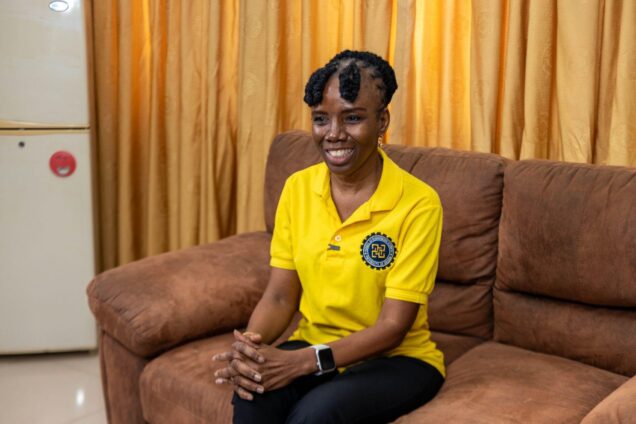
Speaking at the cohort announcement, Telecel Ghana's Chief Executive Officer Ing. Patricia Obo-Nai framed FESSP as far more than a scholarship: "FESSP is more than a scholarship, it is an investment in Ghana's future. By empowering young women in STEM, we are building the innovators and leaders who will drive our country's progress." Her Human Resources Director, Rachael Appenteng, described the programme as a flagship talent development initiative designed to equip young women to lead innovation and strengthen Ghana's technology ecosystem.
The programme's track record is substantial. Since its launch in 2011, FESSP has supported over 100 female students, many of whom now hold successful positions within Telecel Ghana and across engineering and technology sectors nationally. Alumni testimonies highlight the scheme's real-world impact: Clara Acquah, a 2019 cohort member, advised current scholars to view engineering as a versatile foundation for broader career opportunities, while Sena Foli-Mensah, now a Telecel NextGen Graduate Executive, credited the programme with opening doors and encouraging her to embrace responsibility and continuous learning.
Why it matters for Ghana
Ghana's technology and engineering sectors face a critical talent shortage, particularly among women. Female representation in STEM fields remains significantly below global averages, limiting Ghana's innovation capacity and economic competitiveness. By systematically developing female engineers and scientists, initiatives like FESSP directly address this gap, ensuring that Ghana's tech ecosystem benefits from diverse talent and perspectives.
The scheme also carries broader societal implications. When young women successfully pursue engineering careers, they become role models for younger generations, gradually normalising female participation in technical fields. This cultural shift is essential for long-term sectoral growth. Additionally, by creating employment pathways into established companies like Telecel, FESSP reduces the risk that newly qualified female engineers will migrate abroad—a persistent challenge for Ghana's retention of technical talent.
Current scholar Nana Ama Ampofowaa Antwi expressed the competitive nature of selection: "Securing a place in this year's FESSP was quite competitive so I'm grateful for the opportunity to be part of it," highlighting that the programme's rigour attracts high-calibre candidates. Parent feedback also underscores confidence in STEM pathways, with supporters noting strengthened faith in engineering careers for their daughters.
As Ghana pursues digital transformation and seeks to position itself as a regional technology hub, programmes like FESSP are essential infrastructure. They not only equip individual women with skills and confidence but also signal to employers, educators and families that female leadership in technology is both viable and valued. Telecel's commitment to scaling FESSP signals that private sector investment in gender-balanced talent development is both socially responsible and strategically important for Ghana's economic future.
Source: Ameyaw Debrah




Comments (0)
Be the first to comment.