Supreme Court confirms OSP's prosecutorial powers, but Attorney-General retains override authority
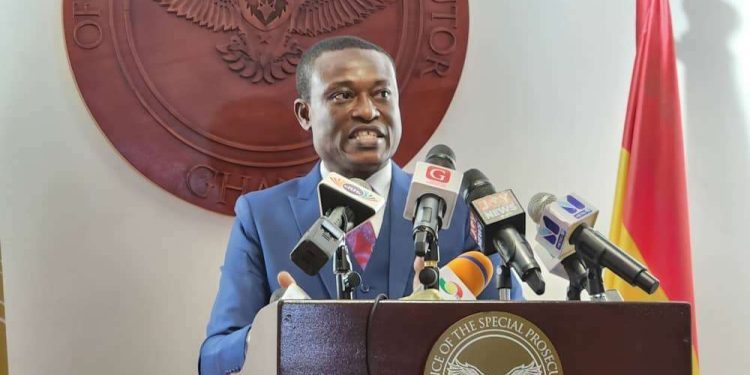
Ghana's Supreme Court has delivered a landmark ruling that affirms the constitutional legitimacy of the Office of the Special Prosecutor (OSP) to conduct prosecutions independently, whilst simultaneously confirming that the Attorney-General retains overarching authority to discontinue any cases the OSP initiates. The unanimous decision, delivered on Wednesday, July 29, concludes a high-stakes constitutional challenge and provides crucial clarity on the balance of prosecutorial powers in Ghana's governance structure.
The ruling came in response to a legal challenge filed by private legal practitioner Noah Adamtey, who sought to invalidate the OSP Act 2017 (Act 959). Adamtey had argued that by establishing an independent prosecutorial body, Parliament had overreached its constitutional authority and violated Article 88 of Ghana's 1992 Constitution, which vests prosecutorial powers exclusively in the Attorney-General. The Attorney-General's office initially supported Adamtey's position, contending that whilst prosecutorial powers could be delegated to other institutions, any such delegation must remain under the Attorney-General's direct control and supervision rather than being permanently transferred to an autonomous agency without a formal constitutional amendment.
What the court decided
In its judgment, the Supreme Court rejected Adamtey's core argument and declared the OSP Act constitutional and valid. This means the OSP can legally continue its mandate to investigate and prosecute cases of alleged corruption, financial crime, and related offences without requiring further legislative or constitutional validation. The court's affirmation removes significant legal uncertainty that had surrounded the institution since its establishment in 2018.
However, the judgment does not grant the OSP absolute independence. The court simultaneously upheld Article 88 of the Constitution, meaning the Attorney-General—currently serving as the chief law officer—retains constitutional power to halt or discontinue any prosecution initiated by the OSP at any stage of proceedings. This dual holding creates a nuanced framework: the OSP has genuine prosecutorial authority to act independently, but the Attorney-General maintains a constitutional override mechanism that cannot be stripped away by ordinary legislation.
Why this matters for Ghana
This ruling carries profound implications for Ghana's anti-corruption agenda and institutional accountability. For over a decade, civil society organisations and governance reformers have advocated for an independent prosecutorial body to tackle high-level corruption and financial crimes perceived as difficult for traditional prosecution authorities to pursue. The OSP's establishment in 2017 was meant to address this gap, but constitutional doubts had hampered its operations and credibility.
The Supreme Court's validation strengthens the OSP's legal footing and signals the court's recognition that an independent specialised prosecutorial institution serves a legitimate constitutional purpose. This bolsters confidence amongst international partners, donor agencies, and Ghanaian citizens invested in transparency and rule of law.
However, the judgment's preservation of the Attorney-General's override power creates ongoing tension. Civil society groups welcomed the OSP's constitutional affirmation but remain concerned that the Attorney-General's power to discontinue prosecutions could become a political tool to shield connected individuals or derail investigations. Future Attorneys-General from different political administrations may use this power differently, potentially undermining the OSP's independence depending on political circumstances.
The court notably rejected an application for the OSP to participate directly in the case as an interested party, instead permitting civil society organisations focused on anti-corruption work to file submissions. This procedural choice reflected the court's view that constitutional questions about state institutions belong primarily to the state itself, whilst recognising that broader public interests in governance reform warranted civil society input.
Road ahead
The judgment settles the immediate constitutional question but leaves unresolved the deeper tension between institutional independence and executive oversight. Ghana's political leadership, the OSP, and civil society will need to develop conventions and practices that respect both the OSP's operational autonomy and the Attorney-General's constitutional prerogatives, ensuring neither becomes a vehicle for political interference in justice.
Source: Today GH

Comments (0)
Be the first to comment.