
Supreme Court to Rule on Ghana's Special Prosecutor Powers as Deputy AG Insists Parliament Cannot Override Constitution
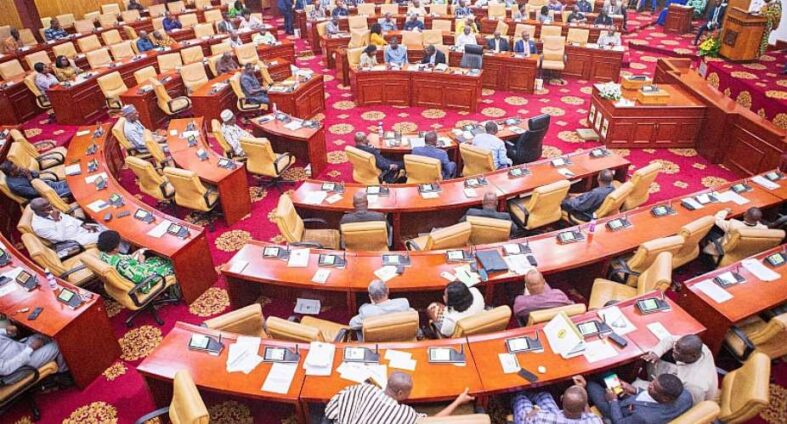

Ghana faces a pivotal constitutional moment as the Supreme Court prepares to deliver judgment on July 29, 2026, in a landmark case challenging the prosecutorial independence of the Office of the Special Prosecutor (OSP). The ruling will settle a contentious legal debate about whether Parliament can grant the OSP powers that the Constitution vests solely in the Attorney-General.
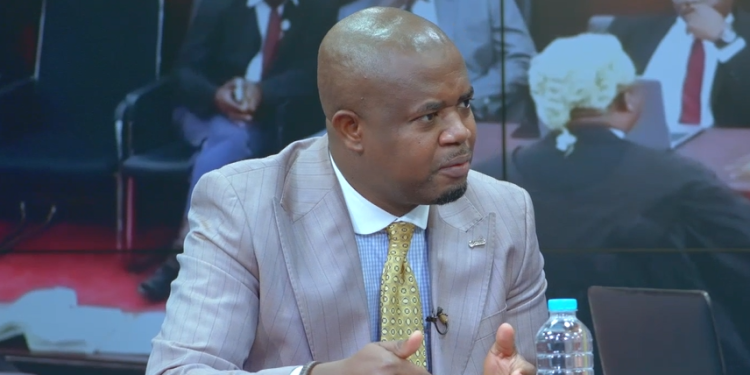
Deputy Attorney-General and Minister for Justice Dr Justice Srem-Sai has forcefully argued that Parliament lacks the constitutional authority to transfer the Attorney-General's prosecutorial powers through legislation. Speaking on JoyNews, Dr Srem-Sai maintained that Article 88 of the 1992 Constitution expressly assigns prosecution authority to the Attorney-General, and no Act of Parliament or Legislative Instrument can reassign these powers without amending the Constitution itself.
"Parliament has no power to prosecute, and if you have no power to prosecute, you cannot delegate that power to anybody," Dr Srem-Sai stated, rejecting arguments from legal experts who contend that the Office of the Special Prosecutor Act, 2017 (Act 959) and its operations regulations effectively authorise the OSP to act independently of the Attorney-General.
The Legal Challenge and Constitutional Questions
The Supreme Court case, brought by private legal practitioner Noah Adamtey, directly challenges the constitutionality of Act 959. Adamtey argues that the legislation unlawfully grants the OSP independent prosecutorial authority in violation of Articles 1(2), 88(3) and (4), 93(2) and 296 of the Constitution.
Specifically, he contends that Sections 3(3) and 4 of Act 959—which make the OSP independent of the Attorney-General in initiating, conducting and terminating prosecutions—exceed Parliament's constitutional powers. A seven-member panel chaired by Chief Justice Paul Baffoe-Bonnie will determine whether these provisions are null and void.
The case has evolved significantly during proceedings. In January 2026, the Supreme Court unanimously rejected an application by the OSP itself to join as an interested party, holding that the constitutional issues could be fully determined between the plaintiff and the Attorney-General. However, the court approved an application by 14 civil society organisations to participate, recognising their expertise given their role in establishing the OSP.
Why This Matters for Ghana
This constitutional dispute strikes at the heart of Ghana's institutional balance of power and the rule of law. The outcome will determine whether Ghana has truly independent prosecution powers or whether the Attorney-General retains ultimate control over all criminal prosecutions—including those involving sitting and former government officials.
Since its establishment, the OSP has pursued high-profile investigations and prosecutions, including cases against prominent political figures. The July 29 judgment will clarify whether these prosecutorial actions rest on solid constitutional footing or whether they could be challenged as ultra vires. A ruling against the OSP's independence could fundamentally reshape how Ghana tackles corruption and abuse of power, potentially concentrating prosecutorial authority in ways that critics argue could enable political manipulation.
Conversely, a ruling supporting the OSP's independence would validate the institution's current operations and affirm Parliament's ability to create specialised prosecutorial bodies through legislation. This outcome would likely strengthen Ghana's anti-corruption frameworks and provide greater protection for investigations involving the government of the day.
Dr Srem-Sai has emphasised that whilst strengthening the OSP enjoys broad support, this cannot justify circumventing constitutional safeguards. His position reflects a traditional view of separation of powers—that each institution must operate strictly within constitutional boundaries. The Supreme Court's decision will ultimately define where Ghana draws that line.
Source: MyJoyOnline


Comments (0)
Be the first to comment.