
Security forces seize vehicle carrying toxic cyanide and smuggled cigarettes in Bono East crackdown
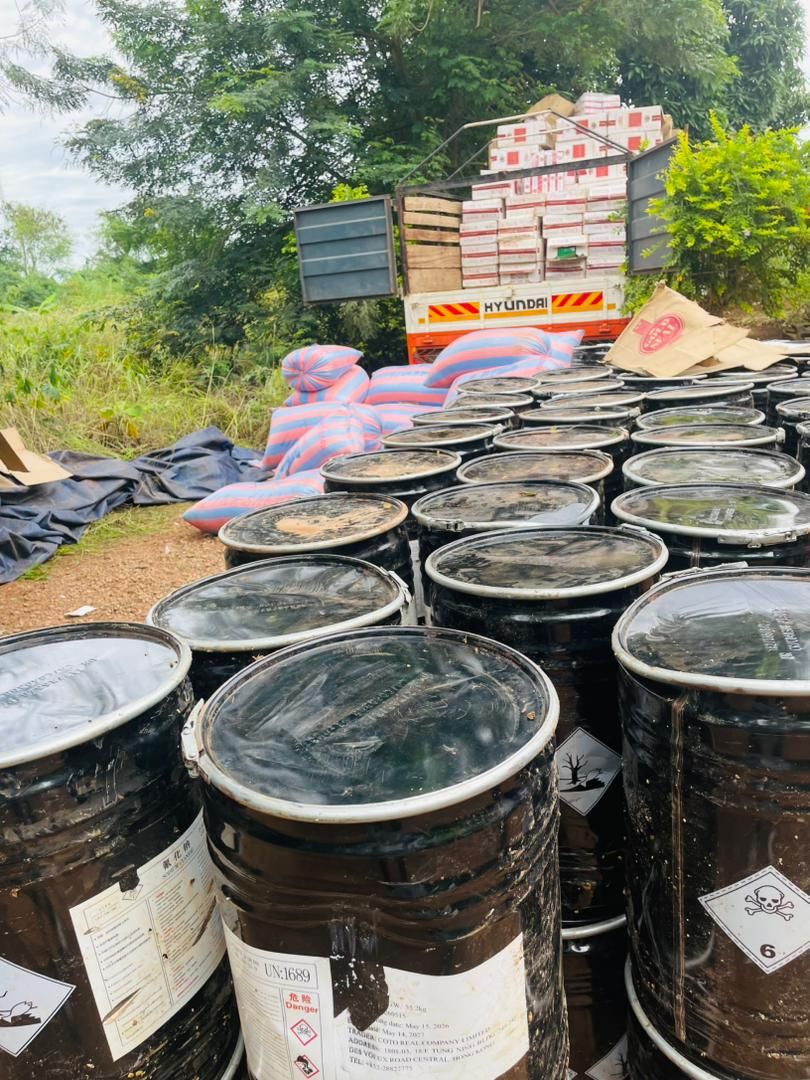

Security agencies in the Bono East Region have successfully intercepted a vehicle believed to be transporting sodium cyanide—a highly toxic chemical frequently used in illegal small-scale mining operations—along with a significant consignment of unregistered cigarettes, according to security reports.
The seizure represents another blow against organised smuggling networks operating across Ghana's mining regions, where the illicit trade in dangerous chemicals and contraband goods continues to pose serious public health and economic threats.
The crackdown on illegal mining networks
Sodium cyanide remains one of the most critical substances fuelling unregulated mining activity across Ghana. The chemical is routinely used by illegal miners to extract gold from ore through a process that poses extreme dangers to both operators and surrounding communities. Beyond the immediate hazards of handling cyanide itself, its use in uncontrolled environments leads to severe contamination of water sources, soil degradation, and long-term health consequences for residents in affected areas.
The interception in Bono East underscores ongoing enforcement efforts by Ghana's security and regulatory agencies to dismantle the supply chains that enable galamsey operations. Such operations have become a persistent challenge in the Ashanti, Eastern, and Northern regions, where mining activity is concentrated, though the networks extend into neighbouring jurisdictions like Bono East.
Tackling smuggling and revenue leakage
The recovery of unregistered cigarettes alongside the cyanide shipment highlights a common pattern: vehicles transporting illegal goods often carry multiple contraband items to maximise profits whilst distributing risk across different market segments. Unregistered cigarettes represent significant revenue loss to the government through unpaid excise duties and taxes, whilst the informal trade undermines legitimate tobacco retailers.
Ghana's Excise Tax Authority and customs agencies have intensified focus on cigarette smuggling routes, particularly through porous borders and inland checkpoints, to protect tax revenues and safeguard regulated markets.
Why this matters for Ghana
These seizures are critical for several reasons. First, they disrupt the financial flow sustaining illegal mining networks, which often operate with armed security and resort to violence against law enforcement and host communities. Second, preventing cyanide circulation directly protects public health—cyanide leakage into groundwater has poisoned drinking sources in multiple mining communities, causing documented health crises.
Third, enforcement actions like this one demonstrate the security agencies' commitment to multi-faceted crime-fighting that addresses not only mining illegality but also smuggling and tax evasion. The broader challenge remains significant: Bono East, though less scrutinised than traditional mining hotspots, has emerged as a transit route for both chemicals and contraband goods destined for southern markets or neighbouring countries.
For Ghanaians, the implications are twofold. Communities hosting mining activities face reduced environmental and health risks when supply chains are disrupted. Additionally, recovered tax revenue from crackdowns on contraband strengthens government coffers for public services. However, sustained effort—including intelligence operations, border security enhancements, and community engagement—will be required to neutralise the sophisticated networks behind these smuggling operations.
Authorities have not yet disclosed the exact quantity of cyanide recovered or the identity of suspects under investigation, though the case is expected to inform ongoing enforcement strategies in the region.
Source: 3News




Comments (0)
Be the first to comment.