
Queen Máxima Urges Ghana to Embed Financial Health Into Its Next Inclusion Strategy
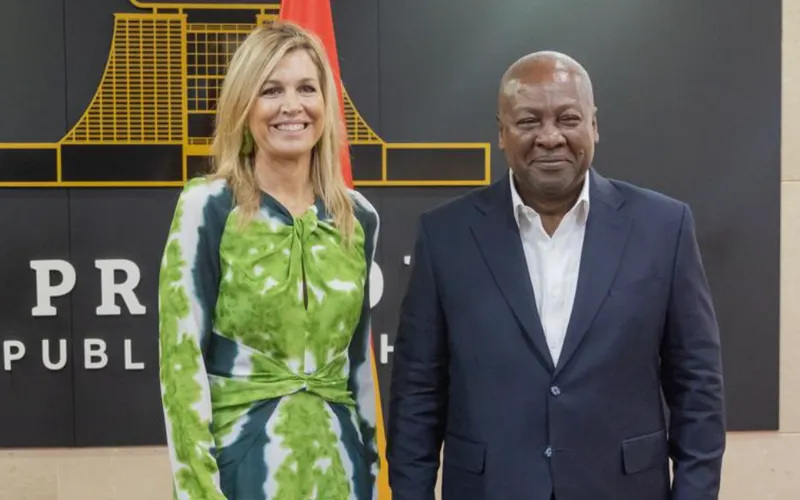

Queen Máxima of the Netherlands, who serves as the United Nations Secretary-General's Special Advocate for Inclusive Finance for Development (UNSGSA), has urged Ghana to seize the momentum of its ongoing economic recovery and transform it into a long-term agenda centred on the financial wellbeing of ordinary citizens. Speaking on the country's progress, she highlighted that recovery alone is not enough — what matters is whether that recovery reaches and improves the lives of everyday Ghanaians.
Financial health at the heart of Ghana's next strategy
Queen Máxima specifically called for financial health to be a defining feature of Ghana's upcoming National Financial Inclusion and Development Strategy. She emphasised that the strategy should move beyond simply measuring how many people have access to financial products and instead focus on whether those products are genuinely improving people's lives — their ability to save, manage debt, withstand financial shocks, and plan for the future.
To achieve this, she stressed the importance of setting clear, measurable goals within the strategy, backed by regular and rigorous surveys that track progress over time. Without robust data, she warned, it becomes difficult to know whether policies are working or which segments of the population are being left behind.
Ghana has made notable strides in financial inclusion in recent years, with the widespread adoption of mobile money services playing a significant role in bringing previously unbanked populations into the formal financial system. However, advocates and analysts have long noted that access does not automatically translate into improved financial outcomes, particularly for low-income households, women, and those in the informal sector.
Why it matters for Ghana
Ghana is currently navigating a critical period in its economic history. After a severe fiscal crisis that led the country to seek an International Monetary Fund (IMF) bailout programme, signs of macroeconomic stabilisation have begun to emerge — including a firming of the cedi, easing inflation, and improved investor sentiment. But the human cost of the crisis — job losses, rising prices, and household debt — remains deeply felt across the country.
It is in this context that Queen Máxima's message carries particular weight. A national financial inclusion strategy that prioritises financial health would directly address the vulnerabilities exposed by the economic downturn. It would push policymakers to look beyond headline figures and ask harder questions: Are households able to cope with unexpected expenses? Are small business owners able to access affordable credit? Are workers in the informal economy building any form of financial resilience?
Ghana's current National Financial Inclusion and Development Strategy has guided policy in this space, but as the country prepares a new iteration of that framework, there is a timely opportunity to raise ambitions and align with international best practice. The Bank of Ghana and the Ministry of Finance would be key institutions responsible for translating such a vision into actionable policy.
The broader push for inclusive finance in Africa
Queen Máxima's engagement with Ghana forms part of her wider advocacy across developing economies, where she consistently pushes governments and financial institutions to look at inclusion through a outcomes-based lens rather than a purely access-based one. Across Africa, mobile money has revolutionised who can participate in the financial system, but the next frontier is ensuring that participation delivers genuine economic security.
- Regular household financial health surveys could provide Ghana with the data needed to design more targeted interventions for vulnerable groups.
- Integrating financial health metrics into the next national strategy would help align Ghana's approach with global standards championed by bodies such as the UNSGSA and the Alliance for Financial Inclusion.
- Civil society organisations and fintech companies operating in Ghana could play a complementary role in delivering financial literacy and appropriate products alongside any government-led strategy.
As Ghana charts its path forward, the message from one of the world's leading voices on inclusive finance is clear: economic recovery is an opportunity, not a destination. The real measure of success will be how many Ghanaians emerge from this period more financially secure than before.
Source: 3News


Comments (0)
Be the first to comment.