
Poultry Farmers Demand Structural Reforms Beyond Government Handouts to Fix Sector
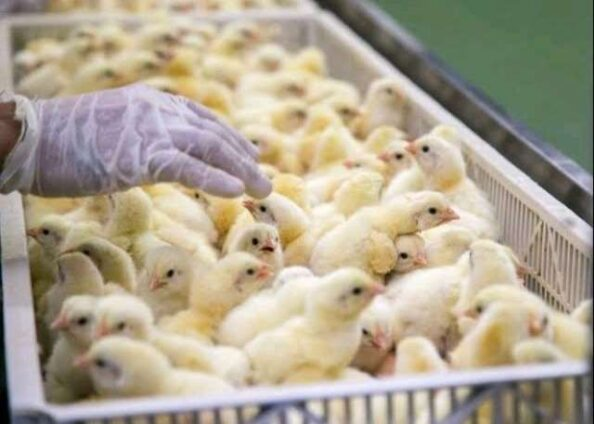
Ghana's poultry farmers have issued a stark warning that the government's Nkoko Nkitinkiti initiative, whilst welcome, cannot single-handedly revive the struggling sector without tackling deeper structural problems that have crippled profitability across the industry.
Ali Muhammed, Chief Executive Officer of the Greater Accra Poultry Farmers Association, argues that the real crisis lies in the disconnected value chain that leaves farmers unable to access affordable feed inputs — the largest cost factor in poultry production. Without coordinating maize and soya producers, feed processors and poultry farmers into a functional system, he contends, no short-term government programme will deliver lasting change.
The Feed Cost Crisis
At the heart of the farmers' grievance is the astronomical cost of animal feed. Maize and soya are essential components of poultry feed, yet there is little to no coordination between local crop farmers and feed producers, forcing poultry operations to absorb inflated costs that make their birds uncompetitive against cheaper imported frozen chicken.
Muhammed emphasised that increasing domestic production of these critical commodities must become a central pillar of any national strategy. The current system forces farmers to choose between unprofitable local production or dependence on imported poultry — a choice that undermines Ghana's agricultural self-sufficiency goals.
The disconnect between agricultural policy and commercial realities has become increasingly apparent. When the Nkoko Nkitinkiti programme launched, farmers initially expressed optimism. However, months into the first phase, it became clear the initiative was focused on small-scale backyard poultry rather than addressing the commercial sector's structural problems.
Why It Matters for Ghana
Ghana's poultry sector represents a significant employment and nutrition source, yet it faces existential pressure from cheaper imports. The repeated cycle of market gluts — such as recent egg surpluses that left farmers unable to recover production costs — demonstrates that production capacity alone is insufficient without functional markets and manageable input prices.
For consumers, the challenge is equally pressing. Whilst most Ghanaians prefer locally produced chicken for perceived quality, purchasing decisions ultimately hinge on affordability. High production costs price domestic poultry out of reach for average households, forcing them towards frozen imports regardless of preference.
The farmers' message is unambiguous: they are not seeking free handouts but sustainable policies that create the structural conditions for profitable operation. This requires government coordination across multiple sectors — agriculture, trade, and commerce — to establish reliable supply chains for feed inputs and create market mechanisms that reward local production.
The Path Forward
Muhammed's call for a deliberate policy framework linking crop production to poultry farming represents a realistic assessment of what structural reform demands. Without addressing the cost competitiveness gap, subsidised interventions will provide temporary relief without solving the fundamental problem: local farmers cannot produce chicken at prices that compete with imports.
The farmers have made clear they understand the long game. They want policies that work, not gestures. Whether policymakers will heed this call remains to be seen, but the agriculture sector's broader health may depend on it.
Source: The Ghana Report



Comments (0)
Be the first to comment.