
Two Years, GH¢650 Billion Later: Where is Ghana's 24-Hour Economy?
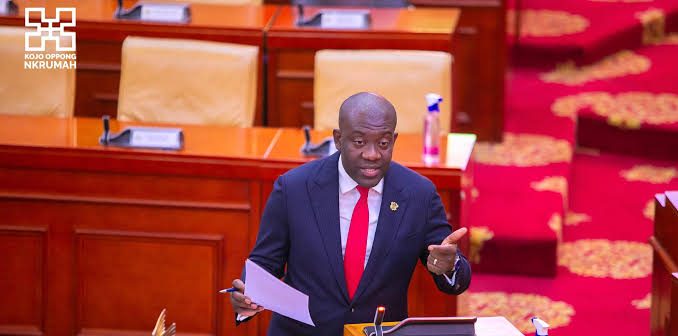
Ghana's highly publicised 24-Hour Economy initiative has drawn sharp criticism from Parliament's opposition benches, with lawmakers questioning what has become of nearly GH¢650 billion in approved expenditure with little to show in tangible results. Kojo Oppong Nkrumah, Ranking Member on the Economy and Development Committee, has voiced growing frustration over the government's inability to demonstrate concrete implementation of the scheme nearly two years into the current administration.
The Core Promise: One Job, Three People, Three Shifts
The 24-Hour Economy policy was launched with considerable fanfare, centred around an ambitious "one-three-three" (1-3-3) model designed to transform Ghana's productive capacity. The concept hinges on a single job being shared among three workers operating in three different shifts, theoretically creating employment opportunities whilst enabling continuous round-the-clock production across sectors. This approach was meant to address unemployment whilst maximising industrial output and economic activity across 24 hours.
Yet according to Oppong Nkrumah's parliamentary contribution, the government has been unable to point to even a single public institution currently operating under this model. "For all the stories that were told and all the promises that accompanied the 24-Hour Economy, almost two years after assuming office, there is not one government agency implementing the one-three-three model," he stated on the floor of Parliament.
Infrastructure Without Substance
The government's visible effort has largely focused on constructing 24-hour markets across the country—a physical infrastructure push that Oppong Nkrumah argues misses the fundamental point. He contended that putting up buildings alone cannot create a functioning round-the-clock economy. "Production must increase, businesses must have customers, and there must be demand for goods and services," he noted, highlighting the gap between infrastructure investment and actual economic activity.
The criticism underscores a persistent challenge in economic policy implementation: that capital investment in physical assets does not automatically translate into the behavioural and operational changes required to make ambitious programmes work. A 24-hour market facility remains underutilised if businesses lack incentives to operate extended shifts and consumers do not demand round-the-clock shopping and production.
Why This Matters for Ghana's Economy
The 24-Hour Economy was framed as a cornerstone strategy to address Ghana's unemployment challenge, particularly among youth, whilst boosting national competitiveness and industrial productivity. The programme resonated with voters seeking tangible job creation beyond rhetoric. The current accountability gap raises serious questions about public resource management and the government's capacity to execute flagship policies effectively.
Oppong Nkrumah highlighted that the private sector requires clear policy support—including delayed incentives for businesses to operate additional shifts—before embracing such a radical operational change. Without competitive tax breaks, subsidised utilities, or other encouragements, businesses have little motivation to incur the additional costs of multi-shift operations when single-shift demand remains uncertain.
For ordinary Ghanaians, the discrepancy between GH¢650 billion in approved spending and visible programme outcomes raises broader concerns about fiscal discipline and the effective utilisation of scarce public resources. As the country faces economic pressures, accountability for major expenditures becomes ever more critical.
The debate reflects ongoing tension between ambitious policy announcements and their practical implementation—a pattern that has characterised Ghanaian governance across administrations. Whether the government can revitalise the 24-Hour Economy initiative with genuine institutional buy-in and private sector participation remains to be seen.
Source: The Ghana Report


Comments (0)
Be the first to comment.