Ghana's Deputy Finance Minister warns election costs are choking African democracy

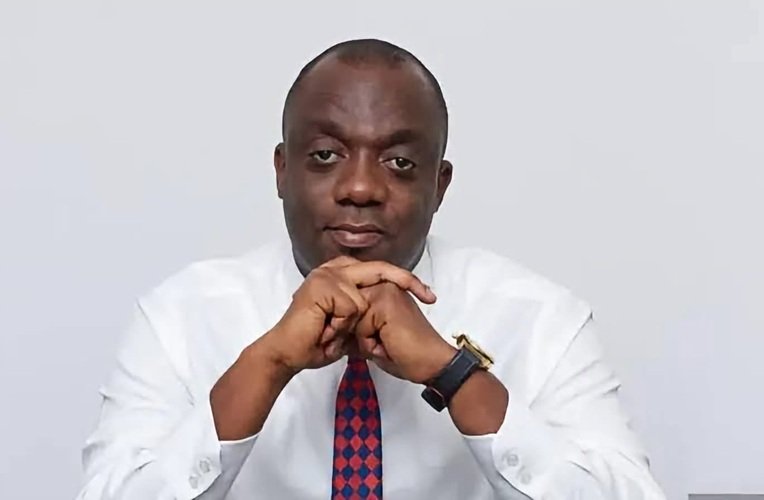
Ghana's Deputy Finance Minister Thomas Nyarko Ampem has raised the alarm over how the escalating financial demands of election campaigns are fundamentally weakening democratic processes across the African continent. Speaking on the issue, Ampem emphasised that soaring costs associated with running for office are actively preventing qualified leaders from entering the political arena, whilst simultaneously eroding citizen confidence in democratic institutions.
The growing affordability crisis in African politics
The Deputy Finance Minister's concerns highlight a structural problem afflicting democracies from West Africa to East Africa: the price of political participation has become prohibitively expensive. As campaigns require increasingly sophisticated advertising, digital outreach, rallies, and ground organisation, the financial barriers to entry have grown dramatically. This dynamic creates a two-tier system where only the wealthiest candidates—or those backed by wealthy patrons and corporate interests—can realistically mount competitive campaigns. Talented administrators, community leaders, and seasoned professionals without personal fortunes find themselves effectively locked out of the electoral process, regardless of their qualifications or track record.
The consequences ripple through voting populations. When ordinary citizens observe that their democratic choices are determined by who can spend the most money, rather than who offers the best ideas or leadership, public trust deteriorates. Voter apathy spreads, and cynicism about institutional integrity takes root. Ampem's remarks underscore that this erosion of confidence threatens the legitimacy and effectiveness of elected governments across the continent.
Why this matters for Ghana
Ghana has positioned itself as a democratic beacon in West Africa, yet the country faces identical pressures. General elections and local government contests have grown exponentially more expensive over successive electoral cycles. Political parties, candidates, and campaign machinery all rely heavily on funding from donors—both domestic and international—creating potential conflicts of interest and limiting the pool of viable candidates to the connected and the wealthy.
For a nation that prides itself on constitutional governance and free elections, the Deputy Finance Minister's warning should prompt urgent conversation. If money continues to dominate Ghanaian politics, the quality of representation suffers, and citizens' faith in democratic processes weakens. Additionally, when campaigns depend on wealthy backers, the expectations attached to those contributions inevitably influence policy decisions once candidates take office—a dynamic that can subordinate public interest to private gain.
The issue also connects to Ghana's broader governance challenges. If leadership recruitment becomes a game played only by the wealthy elite, the nation misses out on fresh talent, diverse perspectives, and leaders rooted in ordinary communities. This brain drain in political participation can weaken institutional performance and perpetuate cycles of unaccountable governance.
Potential pathways forward
Ampem's intervention suggests that policymakers should be exploring reforms to democratise access to electoral competition. Options under discussion in various democracies include: stricter campaign finance transparency and caps; public funding models for registered parties and candidates; limits on individual and corporate donations; and discounted media access for all contestants. Ghana's Electoral Commission, parliament, and civil society organisations have scope to examine these models and adapt them to local contexts.
Without intervention, the trend will likely continue: fewer talented contenders, weaker representative institutions, and declining public participation. The Deputy Finance Minister's comments serve as a timely reminder that democracy requires not just formal rules, but genuine economic accessibility.
Source: 3News


Comments (0)
Be the first to comment.