NPP Questions Whether NDC Official Has Power to Order MP's Arrest by EOCO
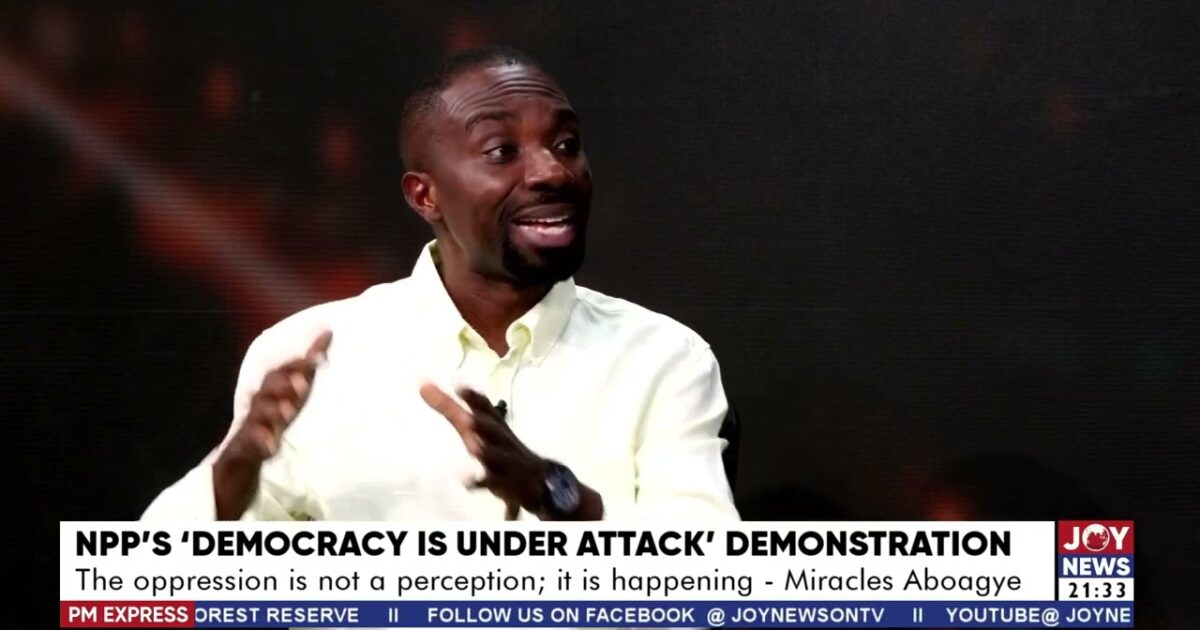
Ghana's opposition New Patriotic Party (NPP) has raised serious questions about the independence of law enforcement agencies after a top National Democratic Congress (NDC) official admitted to instructing the Economic and Organised Crime Office (EOCO) to arrest Manhyia South MP Nana Agyei Baffour Awuah.
Dennis Miracles Aboagye, newly appointed NPP Communications Director, said on Monday that allowing a political operative to direct arrests of sitting Members of Parliament fundamentally undermines democratic principles. He questioned how Mustapha Gbande, the NDC's Deputy General Secretary, possesses the authority to issue such directives to law enforcement.
The Democratic Concern
Speaking on JoyNews' The Pulse programme, Aboagye expressed alarm at what he described as a troubling admission. "It's unfortunate," he said, noting that both local observers and the international community would be questioning Ghana's democratic standards based on this development.
Aboagye's core argument centres on institutional boundaries. Gbande, who also holds the position of Deputy Director of Operations at the Office of the President, is a political figure rather than a security official, Aboagye stressed. This distinction matters significantly: political party officials have no professional mandate or legal authority to direct specialized law enforcement agencies on operational matters such as arrests.
The NPP Communications Director warned that such arrangements signal deeper problems within Ghana's justice system. "If we have a situation where it takes Mustapha Gbande to direct the EOCO on whom to arrest in this country, it now explains why for a very long time people have been complaining about selective justice," Aboagye said.
Selective Justice and Rule of Law
At the heart of Aboagye's critique lies a fundamental principle: law enforcement must apply legislation uniformly and impartially. He argued forcefully that selective application of legal authority constitutes an abuse of that authority. "Any law that you selectively apply is illegal," he stated.
This concern resonates with longstanding criticisms from opposition parties that Ghana's institutions—particularly under NDC governance—have not consistently applied the law evenhandedly. The admission that a political party official can direct arrests of opposition parliamentarians directly fuels such allegations.
Aboagye said he expected Gbande to apologise for the admission rather than defend it. Instead, law enforcement decisions should be grounded in professional assessments, evidence evaluation, and established procedures—not political instructions from party operatives.
What This Means for Ghana's Institutions
The incident raises critical questions about institutional independence in Ghana's governance structure. EOCO, as a specialist agency tasked with investigating economic and organised crime, must maintain operational autonomy from political direction. When political figures openly admit to directing such agencies, it erodes public confidence in their impartiality.
For Ghana's democracy to function properly, several principles must hold: law enforcement agencies require independence from political influence; arrests and investigations must be based on evidence and professional judgment; and no individual—regardless of political position—should wield unilateral power to direct law enforcement action against specific citizens, particularly elected officials.
The controversy underscores broader concerns about institutional accountability and the separation of powers in Ghana, issues that voters and civil society organisations will likely keep under scrutiny as the nation approaches future elections.
Source: MyJoyOnline

Comments (0)
Be the first to comment.