
No Sanctions, No Change: CDD-Ghana Expert Says Parliament Must Punish Absent MPs
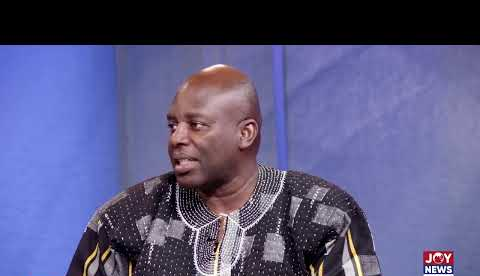

Ghana's Parliament has long grappled with the embarrassing problem of empty benches during sittings, and a leading democracy researcher says the solution is straightforward: start punishing MPs who stay away without good reason. Dr John Osae-Kwapong, a Fellow at the Centre for Democratic Development (CDD-Ghana), argues that the absence of meaningful sanctions is the single biggest reason absenteeism among Members of Parliament continues to repeat itself, year after year.
Accountability gap at the heart of the problem
Speaking on the JoyNews AM Show on Monday, 23rd November, Dr Osae-Kwapong was direct in his assessment. The existing rules on parliamentary attendance are not being enforced, and because MPs know there is little to no consequence for skipping sittings, they have no real incentive to change their conduct.
"If nothing is being done in terms of holding persons accountable for absenting themselves from Parliament without proper explanation or the proper excuse, then no one has the incentive to change behaviour," he said.
The CDD-Ghana Fellow argued that the problem is not simply about individual MPs lacking commitment — it is a structural failure. Parliaments everywhere set attendance rules precisely because the presence of elected representatives is essential to the legitimacy and functioning of the legislature. When those rules exist on paper but are never enforced, they become meaningless.
Dr Osae-Kwapong called on the Speaker of Parliament to move beyond expressions of concern and begin actively holding offending MPs to account. He suggested that imposing appropriate consequences — such as formal reprimands, public disclosure of attendance records, or financial penalties — would shift the calculus for lawmakers who currently see little risk in staying away.
Why it matters for Ghana
Ghana's Parliament is the primary institution through which citizens' elected representatives debate legislation, approve the national budget, oversee government spending and hold the executive to account. When MPs are absent during key votes or debates, it can delay the passage of important bills, skew outcomes in favour of one side of the House, and — perhaps most critically — signal to ordinary Ghanaians that their representatives do not take the job seriously.
The issue has surfaced repeatedly over successive parliaments, cutting across both the New Patriotic Party (NPP) and the National Democratic Congress (NDC). It tends to flare up most visibly during votes on contentious legislation or the budget, when the absence of a handful of MPs can alter the result entirely. Ghana's Parliament has at times struggled to form a quorum, the minimum number of MPs required to be present for official business to proceed.
Civil society organisations, including CDD-Ghana, have consistently flagged absenteeism as a governance concern. Voters in many constituencies have little way of tracking whether their MP is regularly showing up in Accra, which makes public disclosure of attendance records a potentially powerful tool for accountability.
What needs to change
Dr Osae-Kwapong's prescription is not radical — it largely involves enforcing rules that already exist. Ghana's Standing Orders, the procedural rules that govern parliamentary conduct, do contain provisions relating to attendance and leave of absence. The challenge, analysts say, has been consistent application.
- The Speaker has the authority to enforce attendance rules and could strengthen their use of that power.
- Making individual MP attendance records easily accessible to the public would allow constituents to hold their representatives to account directly.
- Parliament's leadership could consider financial consequences, such as deductions from sitting allowances, for unjustified absences — a measure used in several other legislatures across Africa.
As Ghana heads into a new parliamentary term following the December 2024 elections, Dr Osae-Kwapong's comments serve as a timely reminder that institutional reform does not always require new laws — sometimes it simply requires the will to enforce the ones already in place. For Ghanaians who expect their MPs to earn their salaries and serve their constituents, that may be the most important message of all.
Source: MyJoyOnline


Comments (0)
Be the first to comment.