Ghana's Constitutional Review Must Strengthen Accountability – Here's What Needs to Change
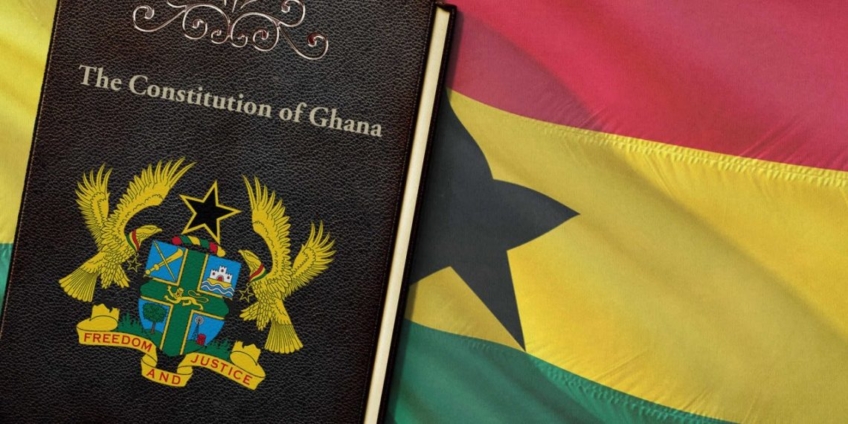
Ghana's ongoing constitutional review offers a critical window to address long-standing weaknesses in how public power and money are controlled. After more than three decades under the 1992 Constitution, the nation has built important institutions and enacted public financial management legislation, yet recurring audit irregularities, weak follow-up and opaque asset declarations reveal that constitutional safeguards on paper do not always translate into real-world accountability.
The central question facing Ghana's Constitutional Review Committee is straightforward: does the constitutional system make stewardship visible, allow independent challenge, and produce credible consequences when public resources are misused? For citizens concerned about corruption and wasteful spending, the answer matters enormously.
The Accountability Gap: What's Broken
Ghana faces several interconnected problems. Audit reports are filed but recovery of misused funds rarely follows. Parliament's Public Accounts Committee holds hearings on government spending, but recommended corrective actions often remain unimplemented. Meanwhile, appointment powers remain concentrated in the hands of the Executive, creating political influence over bodies supposed to provide independent oversight.
A practical test reveals the problem: if the same political centre that authorises public spending also appoints, budgets and controls the institutions meant to examine that spending, the oversight system remains fundamentally vulnerable. This is particularly evident in how state-owned enterprises operate with limited transparency and how asset declarations remain opaque despite their importance as corruption prevention tools.
The proposed reform of the Auditor-General's office provides a concrete example. The Constitutional Review Committee recommends requiring the Auditor-General to be a qualified professional accountant, serve a single non-renewable term and enjoy strong removal protection. Government has accepted these proposals, which would reduce political dependence. However, qualifications and tenure alone cannot guarantee independence – the office also needs budget autonomy, transparent selection procedures, guaranteed access to information and most crucially, enforceable power to follow through on audit findings.
The Division of Powers Problem
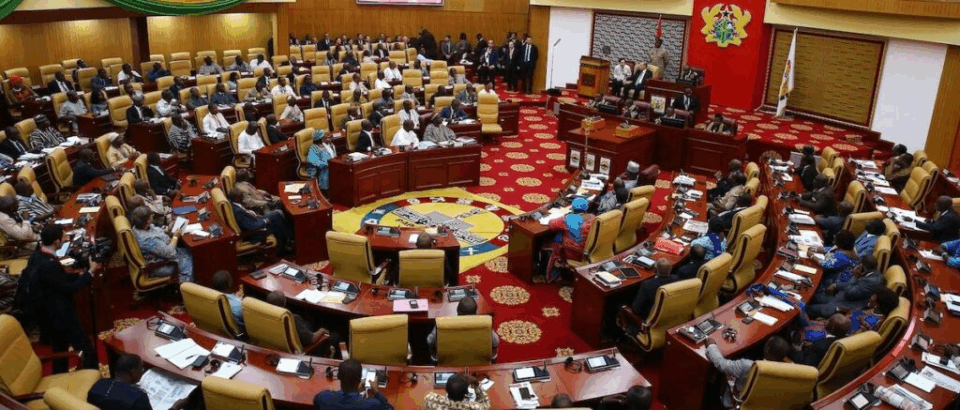
A deeper constitutional issue concerns the relationship between Parliament and the Executive. Article 78 allows Ministers to be drawn from Parliament, creating political incentives that can weaken legislative scrutiny. The Committee proposes barring Members of Parliament from ministerial appointment to create genuine separation between executive delivery and legislative oversight. Government prefers instead to remove the constitutional minimum number of Ministers required to come from Parliament, leaving the number entirely to presidential discretion.
This distinction matters significantly. A Parliament expected to scrutinise government expenditure requires members whose political incentives support rigorous independent oversight. When parliamentary members also serve as Ministers, their scrutiny becomes compromised by competing loyalties to the Executive.
Similarly, Article 70 appointments create tension. Oversight bodies designed to challenge government – such as the Auditor-General, anti-corruption agencies and human rights commissions – should not depend entirely on presidential appointment without meaningful checks. Different institutions require different methods: political offices may properly reflect the President's mandate, but independent oversight bodies require open competition, merit-based selection, public reasoning and parliamentary scrutiny.
Why This Matters for Ghana
Constitutional reform on accountability is not abstract legal tinkering – it directly affects whether stolen public money gets recovered, whether corruption investigations reach conclusion, and whether ordinary Ghanaians can trust that their tax contributions are properly managed.
Ghana's challenge is to entrench core principles of institutional independence, secure tenure, reporting duties and enforceable remedies in the Constitution itself, while leaving technical details to ordinary legislation that can evolve as circumstances change. This protects oversight institutions from political pressure without making the Constitution inflexible.
The complete accountability chain requires auditors to obtain reliable evidence, identify responsibility, give affected parties fair hearing, issue enforceable decisions and track recovery. It requires Parliament to hold timely hearings and ensure recommendations lead to action. It requires the Auditor-General to operate independently from the Executive. When any link breaks, the whole chain fails and public resources remain vulnerable to misuse.
As Ghanaians engage with this constitutional debate, the practical question should guide every proposal: does this reform make it harder or easier for political authorities to escape accountability for misuse of public resources? Answers to that question will determine whether Ghana's next three decades see genuine improvement in stewardship of public money.
Source: The Ghana Report

Comments (0)
Be the first to comment.