
Domelevo raises alarm over Presidency payments to MPs: A breach of public finance rules?
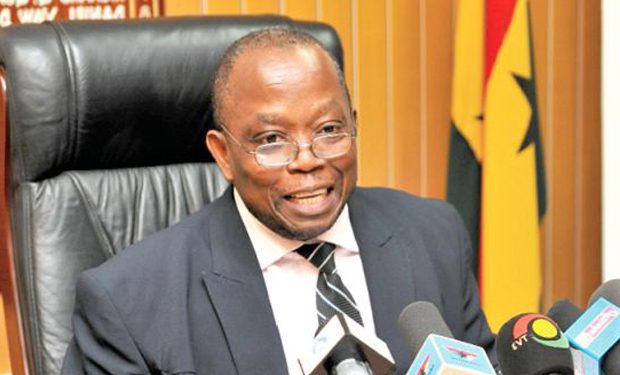

Former Auditor-General Daniel Yaw Domelevo has flagged potential irregularities in how the Office of the President is allegedly paying Members of Parliament for their participation in vetting exercises for government nominees. Speaking at a panel discussion on Saturday, September 5, Domelevo argued that such payments breach fundamental principles of public financial management and institutional accountability.
At the centre of the controversy is an alleged GH¢70,000 payment reportedly linked to the vetting of ministerial and Supreme Court nominees. The allegation specifically involves Deputy Minority Leader and Asokwa MP Patricia Appiagyei, who has denied the claim. A purported memorandum attributed to her circulated publicly, prompting investigations by the Office of the Special Prosecutor (OSP). While the MP has rejected the allegations, Domelevo emphasised that the issue warrants deeper scrutiny regardless of individual denials.
The core issue: Who should pay MPs?
Domelevo's central argument is straightforward yet significant: any sitting allowances due to MPs for parliamentary duties should come from Parliament's own budget, not from funds allocated to the Presidency. This distinction matters because it reflects how Ghana's government institutions are supposed to operate independently within their allocated budgets.
According to Domelevo, when the Office of the President makes payments to MPs for activities related to parliamentary business, it raises red flags about proper governance. He stressed that Ghana's Public Financial Management Act requires strict procedures whenever public funds move between government entities. Any such transfers must follow prescribed budgetary processes, and where necessary, supplementary estimates must be sought and approved.
The former Auditor-General noted that allowing the Presidency to settle parliamentary expenses creates confusion about institutional responsibilities and blurs the separation of budgetary powers designed to protect fiscal integrity.
Why it matters for Ghana
This controversy touches on core principles of democratic governance and fiscal transparency that Ghanaians should understand. The separation of budgets between government institutions exists specifically to prevent one office from wielding undue financial influence over another. When the Presidency pays MPs directly, it potentially compromises the independence Parliament needs to scrutinise executive actions.
For Ghana's democracy to function properly, Parliament must remain genuinely independent from the Executive. Financial arrangements that blur these lines—whether intentional or through oversight—undermine public trust in state institutions. This is particularly critical during important parliamentary functions like vetting nominees, where MPs must make impartial decisions based on merit, not financial inducements.
The issue also reflects broader concerns about public financial management in Ghana. Domelevo's intervention suggests that this is not an isolated incident but part of a pattern. He indicated that questions about vetting payments have emerged on previous occasions, suggesting systemic issues rather than one-off mistakes.
What comes next
Domelevo called for a proper investigation that moves beyond denying or confirming the specific allegation involving MP Appiagyei. Instead, he urged authorities to examine whether the payment was actually made and, crucially, to clarify the correct procedure for handling such financial arrangements going forward.
The Office of the Special Prosecutor's ongoing investigation will be important in this regard. However, Domelevo's comments suggest that addressing the procedural and constitutional dimensions is equally vital. Ghana's government institutions need clear guidelines ensuring that financial arrangements between the Presidency and Parliament follow proper channels and maintain institutional independence.
As this matter unfolds, Ghanaians should pay attention to how state institutions respond to these concerns. The principles at stake—institutional independence, fiscal transparency, and proper budgetary management—form the foundation of accountable governance that benefits everyone.
Source: The Ghana Report




Comments (0)
Be the first to comment.