Constitutional Ambiguity Around Parliamentary Vetting of Nominees Sparks Legal Debate

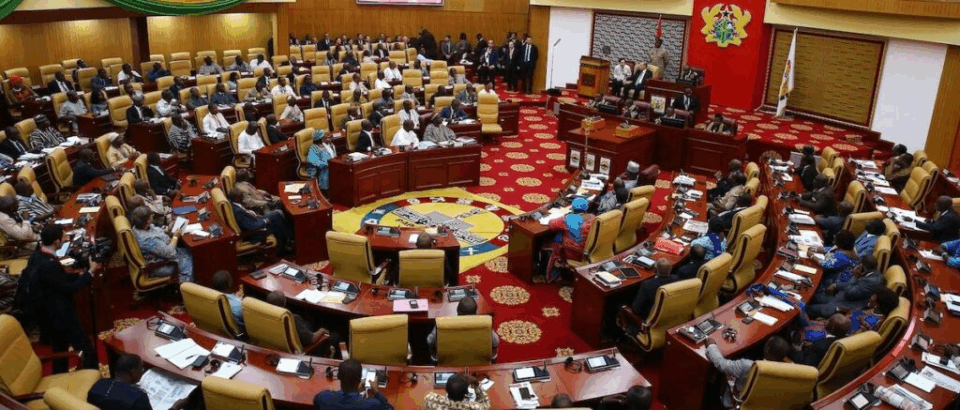
A prominent legal voice has injected fresh debate into Ghana's appointment process, questioning whether the Constitution actually requires Parliament to conduct the extensive public vetting of presidential nominees that has become standard practice in recent years.
Abraham Amaliba, an experienced legal practitioner, contends that while Parliament holds the power to vet and approve nominees, the Constitution does not expressly mandate the detailed, often lengthy public hearings that have characterised the process in contemporary Ghanaian governance. This distinction carries significant implications for how the nation conducts its institutional appointments.
The Constitutional Framework
Ghana's Constitution grants Parliament approval authority over key presidential appointments, including cabinet members, judges, and heads of state institutions. However, the precise scope and methodology of this vetting authority remain subject to interpretation. Amaliba's argument suggests that the constitutional text permits Parliament flexibility in how it exercises this approval power, rather than requiring the comprehensive public interrogation process that has emerged as standard in recent administrations.
The distinction between constitutional mandate and procedural tradition is critical in understanding Ghana's governance framework. Practices that have become institutionalised over time do not necessarily carry constitutional force, even when they feel permanent to observers and practitioners.
Implications for Ghana's Governance
This legal position has practical consequences for Ghana's appointment processes. If Amaliba's interpretation holds merit, it could suggest that Parliament has greater discretion in determining how intensively it examines nominees. Conversely, it raises questions about whether the extensive public vetting process—which allows citizens, civil society, and media to scrutinise nominees—derives from constitutional requirement or from evolved democratic practice.
The debate touches on fundamental governance questions: Should public vetting be mandatory to ensure transparency and accountability, or should it remain optional, permitting different parliaments to establish varying standards? Does flexibility in the vetting process weaken parliamentary oversight, or does mandatory public scrutiny sometimes extend beyond constitutional necessity?
Why This Matters for Ghana
Ghana's reputation as one of West Africa's democratic anchors rests partly on robust institutional checks and transparent governance processes. The vetting of nominees has become a key mechanism through which Parliament demonstrates its independence and citizens gain visibility into who will hold power. Any shift away from comprehensive public vetting could be perceived as erosion of accountability, regardless of its constitutional justification.
Conversely, if practices exceed constitutional requirements, establishing clearer constitutional boundaries could streamline governance and reduce unnecessary delays in filling critical positions. Ghana has occasionally struggled with vacant positions and delayed appointments, partly due to protracted vetting processes.
This legal argument will likely resonate differently depending on one's perspective. Proponents of strong parliamentary accountability will view it with caution, fearing it could enable weaker oversight. Those seeking more efficient governance may see it as clarifying that Parliament has room to adapt its procedures.
The broader significance lies in how Ghana continues defining its constitutional traditions. As the nation matures institutionally, clarifying what the Constitution actually mandates versus what represents evolved practice becomes increasingly important for both democratic legitimacy and governmental efficiency.
Source: 3News


Comments (0)
Be the first to comment.