Minerals Commission raids illegal sand-winning site in Ada as enforcement intensifies
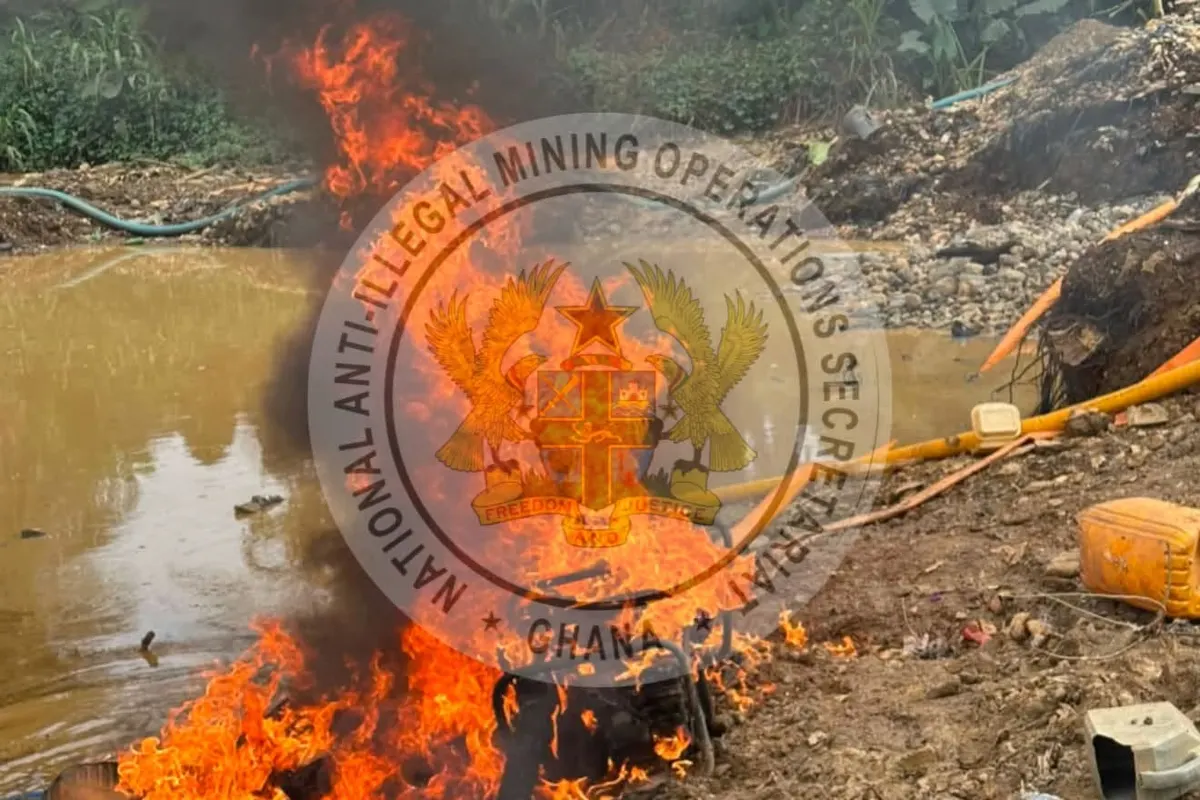
Ghana's mining regulators are stepping up enforcement action against illegal sand extraction, with the Minerals Commission and National Anti-Illegal Mining Operations Secretariat (NAIMOS) conducting raids on unlicensed quarries and sand-winning sites. During a recent operation in Tsopoli, Ada, suspected operators abandoned the site before inspectors arrived, leaving behind excavation equipment.
The raid, conducted on Tuesday, July 8, revealed a site operating entirely without the required licensing. Officials found no authorisation documents, and workers at the location could not identify the site owner. When one worker attempted to contact the alleged operator by phone, the call was immediately terminated, suggesting deliberate evasion by those responsible.
Maxwell Klu, Deputy Chief Executive Officer of the Minerals Commission overseeing Small-Scale Mining and Industrial Minerals, said the discovery underscores a troubling shift in illegal mining behaviour. "In broad daylight, they just enter a place, and then they are cutting sand," he noted, indicating that operators are no longer restricting activities to cover of darkness but operating openly despite regulatory risks.
Enforcement and Compliance Requirements
The Minerals Commission emphasises that every sand-winning operation, regardless of purpose, requires proper licensing before commencing work. Beyond obtaining permits, operators must meet multiple statutory obligations that many unlicensed sites ignore entirely. These include payment of mineral rights, ground rates, and various regulatory fees mandated under Ghana's mining laws.
Klu stressed that compliance is non-negotiable. "They must have the requisite payment. And then they must comply with all the annual mineral rights, the ground rates, and all the statutory payments that they are supposed to pay," he explained, highlighting the financial and regulatory framework designed to ensure responsible resource extraction.
The Minerals Commission has documented the site's GPS coordinates for ongoing investigations and signalled that further enforcement actions will follow. Regarding the abandoned excavator and other equipment left behind, officials indicated they would coordinate with NAIMOS to determine the appropriate next steps, which could include seizure or other remedial measures.
Why it matters for Ghana
Illegal sand-winning and quarrying represent a persistent environmental and regulatory challenge for Ghana. Uncontrolled extraction degrades landscapes, contaminates water sources, and erodes riverbanks—problems particularly acute in communities like Ada that depend on natural resources for livelihoods. The Ada region has faced considerable pressure from illegal mining activities, threatening ecosystems and local economies.
Beyond environmental concerns, unlicensed operations deprive the state of revenue from mineral rights and regulatory fees that should fund development projects and environmental restoration. The boldness of operators willing to work openly suggests a perception of weak enforcement—a challenge the Minerals Commission and NAIMOS are seeking to reverse through coordinated, visible crackdowns.
For Ghanaians, particularly those in mining-affected communities, stricter enforcement signals official commitment to protecting the environment and ensuring that resource extraction benefits the nation fairly. However, sustained action will require consistent follow-through, as raids alone rarely deter operators unless coupled with prosecution and asset seizure. The Minerals Commission's coordination with NAIMOS represents a positive step, though observers will watch whether these operations translate into meaningful deterrence.
Source: MyJoyOnline



Comments (0)
Be the first to comment.