
Middle East tensions and unchecked imports could derail Ghana's food price recovery, economists warn


Ghana's hard-won progress in bringing food prices under control is under serious threat — from volatile global oil markets tied to the Middle East conflict, persistent import dependency, and deeply entrenched structural weaknesses in the country's food economy. New econometric analysis warns that if the crisis in the Middle East drags on and crude oil prices remain elevated, Ghanaians could soon face another prolonged and painful episode of food inflation, potentially reversing gains made over much of this year.
A fragile recovery built on a shaky foundation
Between March and September this year, Ghana's headline inflation rose by two percentage points, while aggregate food inflation climbed by 1.7 percentage points. While these numbers may seem worrying at first glance, analysts say the trajectory actually signals that economic managers have been moving in the right direction — using the exchange rate between the cedi and the US dollar as a key tool to stabilise prices.
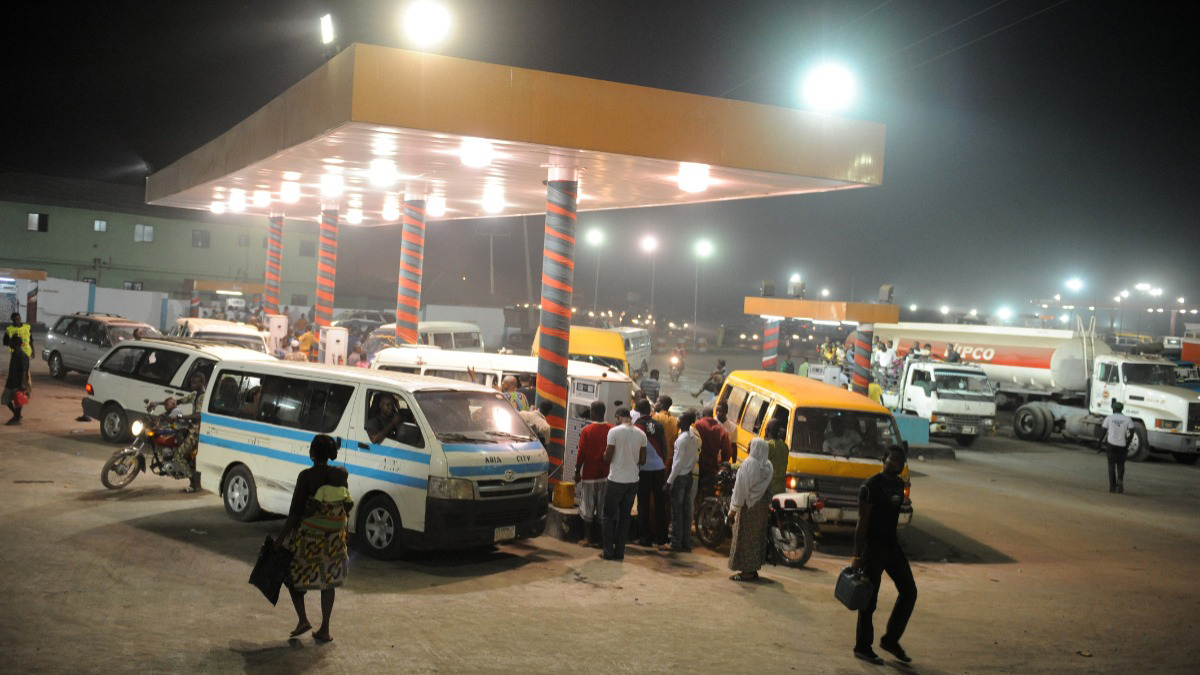
However, that stabilisation rests on assumptions that are now being challenged. Ghana imports a significant share of its fuel and many of its food products, meaning that any sharp rise in global oil prices — particularly Brent crude and refined petroleum products — quickly feeds into domestic transport and production costs, and ultimately onto market stalls across the country.
Research in Applied Econometrics and Agribusiness highlights a deeply troubling asymmetry in how fuel price changes affect Ghanaian food prices. When diesel prices rise by one Ghana cedi, food inflation jumps by as much as 1.67 percentage points within the same month — a rapid, aggressive pass-through. But when diesel prices fall by the same amount, food inflation drops by only about 0.46 percentage points. The pattern is similar for petrol: a one-cedi increase pushes food inflation up by 1.41 percentage points, yet a one-cedi drop barely moves prices downward at all. Market vendors, in other words, are quick to raise prices when costs go up but very slow — if they move at all — to bring them back down when conditions improve.
What this means for Ghanaians
For ordinary Ghanaians already stretched by the cost-of-living crisis of recent years, these findings carry stark implications. Food inflation in Ghana has averaged around 8.9% over the past three decades, with a baseline volatility of 4.9%. The country has lived through two major food price shocks in modern memory — a devastating 76.8% spike in 2001 and a 61% surge in 2023 — and the analysis suggests that price shocks, once they occur, do not fade quickly. Roughly 81.65% of one month's price volatility carries directly into the next, meaning bad months tend to produce more bad months.
Economists also point to a structural shift in Ghana's food markets that policymakers cannot afford to ignore. Since 1999, the country has moved through three distinct food inflation regimes — the most recent beginning in March 2022, triggered by external shocks including the Russia-Ukraine war and Ghana's own macroeconomic crisis. Any agricultural or pricing policy that relies on data or relationships from earlier periods risks being fundamentally ineffective in the current environment.
Seasonal patterns add another layer of complexity. Food prices tend to be highest in December, September, and February — months that coincide with festive periods and lean harvest seasons — and lowest in August and the mid-year months. December alone can push food inflation up by approximately 0.26 percentage points above the yearly average, while August tends to bring a modest relief of around 0.20 percentage points.
The bigger picture: imports, policy gaps and regional exposure
Ghana's vulnerability stems not only from fuel prices but from the broader structure of its import dependency. The country continues to spend heavily on importing food commodities and petroleum products that could, in principle, be sourced or produced locally. As long as that dependency persists, global shocks — whether from the Middle East, Eastern Europe, or elsewhere — will continue to find their way directly into the shopping baskets of Ghanaian families.
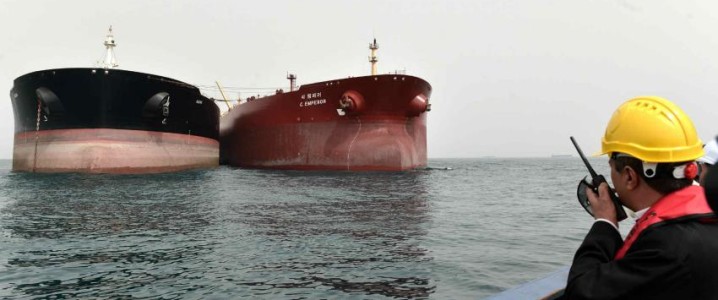
The comparison to the onset of the Russia-Ukraine war is instructive. That conflict triggered a sharp cedi depreciation and a surge in food prices that pushed millions of Ghanaians deeper into hardship. Analysts warn that a prolonged Middle East conflict, particularly one involving Iran and disrupting global oil supply routes, carries a similar risk profile.
- Policymakers are being urged to accelerate investments in domestic food production and reduce import dependency before the next external shock strikes.
- Price monitoring mechanisms and consumer protection policies need updating to account for the new food inflation regime that began in 2022.
- Agricultural interventions and subsidy programmes must be calibrated against current market conditions, not outdated economic relationships from previous decades.
With the December festive season approaching — historically one of the most inflationary periods for food prices — Ghanaians and their government may have very little time to act before the next wave of pressure arrives.
Source: The Ghana Report

Comments (0)
Be the first to comment.