
Mahama honours Atta Mills legacy 14 years on: 'A mentor, a friend, and a lesson for Ghana's politics'
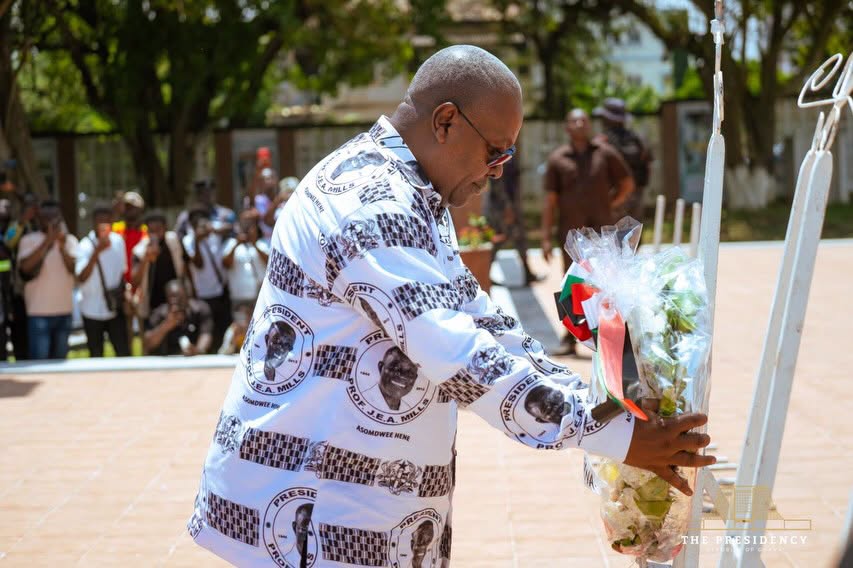

President John Mahama has paid tribute to the late President John Evans Atta Mills on the 14th anniversary of his death, describing the former leader not merely as a head of state but as a profound personal influence who shaped his approach to governance and public service.
In a reflective social media post marking the occasion on Friday, 24 July, Mahama visited Asomdwee Park, where Mills was laid to rest following his death in 2012 whilst serving as Ghana's third President under the Fourth Republic. The visit served as a moment for the incumbent president to reconnect with the memory of a leader whose principles continue to resonate in contemporary Ghanaian politics.
The values that endure
Mahama's tribute emphasised that Mills' lasting impact transcends the office he held. Standing at the late president's final resting place, Mahama reflected on Mills' defining characteristics: his humility, integrity and unwavering commitment to principle even amid political pressure. The President highlighted a central paradox of Mills' leadership—that gentleness and strong governance were not mutually exclusive.
"Gentle. Principled. Unshaken in his convictions, even when the noise around him grew loud," Mahama wrote, capturing what he views as Mills' most instructive legacy. This characterisation speaks to a particular style of leadership that prioritised steadfastness over reactive populism, a quality Mahama suggests remains relevant to Ghana's current political landscape.
The tribute also underscored a personal dimension often overlooked in formal political commemoration. For Mahama, Mills was not merely a predecessor but a mentor whose example informed his understanding of what public service demands. This relationship shaped Mahama's conviction that "kindness is not weakness, and that decency has no conflict with leadership."
Why it matters for Ghana
Mills' death in office remains a defining moment in Ghana's recent political history, and annual remembrances of his passing have become occasions for reflection on the character of the nation's leadership. At a time when political discourse can become heated and divisive, tributes to Mills often serve as reminders of an alternative model—one centred on consensus-building, restraint and respect for democratic institutions.
Mahama's emphasis on Mills' legacy arrives amid ongoing debates about governance standards and the tone of Ghanaian politics. By positioning Mills as an exemplar of principled leadership, the President signals his own commitment to similar ideals. This carries particular weight given Ghana's status as a democratic anchor in West Africa, where leadership style and institutional respect influence regional perceptions of democratic health.
The late president's approach to office—marked by respect for constitutional limits and a reluctance toward confrontational politics—has become a touchstone for evaluating contemporary leadership. Mills served as Attorney General and Vice President before his presidency, bringing legal expertise and institutional knowledge to the office. His relatively brief tenure as President (2009–2012) was marked by efforts to stabilise the economy and advance education initiatives, though his administration also faced significant challenges including rising debt and energy crises.
A personal commitment to principle
Mahama concluded his tribute with a personal pledge: to continue walking in Mills' footsteps by leading with integrity and treating public office as a sacred trust rather than a personal prize. This framing reflects a broader conversation within Ghanaian politics about the custodial nature of high office and the responsibility leaders bear not only to their parties but to the nation as a whole.
The anniversary visit underscores how figures like Mills continue to shape Ghanaian political culture even years after their passing, serving as standards against which contemporary leaders are measured.
Source: MyJoyOnline



Comments (0)
Be the first to comment.