Kudjoe Fianoo's bold call: Should Ghana turn to domestic players for Somalia World Cup qualifier?
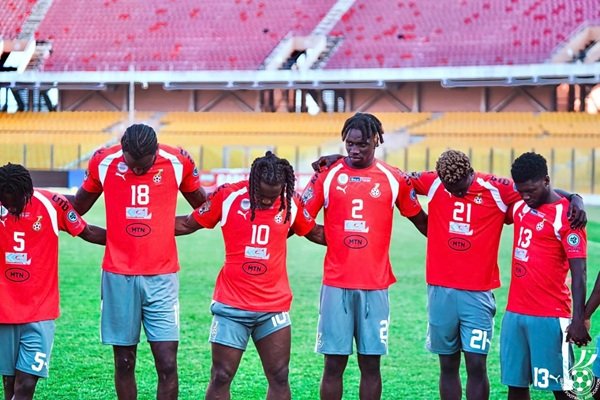
Ghana football is at a crossroads. After consecutive defeats against Côte d'Ivoire and The Gambia have left the Black Stars anchored to the bottom of Group C with zero points, veteran administrator Kudjoe Fianoo has ignited fresh debate by proposing a fundamental strategic shift: selecting home-based players for the crucial World Cup qualifier against Somalia in November.
The suggestion, controversial as it may sound in certain circles, challenges decades of established practice within the Ghana Football Association (GFA). Traditionally, the national team has relied heavily on Europe-based players, with significant resources devoted to their recruitment, travel and accommodation. Fianoo's intervention raises a pressing question: has this strategy served Ghana well, or has it become an expensive exercise in diminishing returns?
The current crisis in perspective
Ghana's predicament in World Cup qualifying is dire. Sitting bottom of their group with zero points after two matches represents a dramatic fall for a nation that reached the 2010 World Cup quarter-finals and has historically been one of Africa's strongest footballing powers. The recent coaching transition and mounting pressure on GFA leadership under Kurt Okraku have created an environment where unconventional ideas are gaining traction.
Somalia, historically weaker in international football, now appears to Ghana as a genuine threat rather than a formality. The psychological shift is telling: what should be a routine fixture has become a high-stakes encounter where failure would deepen the crisis considerably. In this context, Fianoo's proposal emerges not as mere fantasy but as a pragmatic response to institutional dysfunction.
Why it matters for Ghana
The debate touches on fundamental questions about Ghana football's future direction. Domestic leagues across Africa have long struggled with the exodus of their best talent abroad, yet this pattern has not strengthened national teams—it has often weakened them. Players recruited from lower European divisions frequently lack match sharpness and familiarity with the tactical demands of international football, whilst accumulating hefty travel and administrative costs.
Home-based players, by contrast, represent known quantities. They are actively competing at match fitness, understand local playing conditions, and carry genuine motivation—their professional survival depends on performance. The Ghana Premier League, despite infrastructure challenges, continues producing technically competent footballers. These players have nothing to lose against Somalia and everything to prove.
Financially, the proposal offers immediate relief to an overstretched GFA budget. Business class flights, international per-diems and accommodation in premium hotels represent substantial expenditure that has failed to translate into results. Reinvesting such resources into domestic league infrastructure could create a virtuous cycle: better-resourced local competition produces better national teams.
The path forward
Whether the GFA will embrace Fianoo's suggestion remains uncertain. Institutional inertia runs deep, and the allure of European-based players—rooted partly in prestige and partly in genuine player quality—will not disappear overnight. However, the Somalia qualifier presents an immediate opportunity for experimentation.
A pragmatic compromise might involve building a squad that strategically blends experienced diaspora talent with hungry domestic performers, rather than wholesale abandonment of either pool. The critical shift would involve selecting players based on current form and fitness rather than geographical location or league prestige.
For Ghana football to recover, the GFA must confront uncomfortable truths about its current approach. Kudjoe Fianoo's intervention, whatever its flaws, at least forces that conversation. With the Somalia match rapidly approaching, decisive action is required. Whether that action involves greater reliance on domestic players or broader systemic reform, the status quo has demonstrably failed.
Source: The Ghanaian Times




Comments (0)
Be the first to comment.