
Judicial Independence at Risk? People's Forum challenges Chief Justice over executive closeness
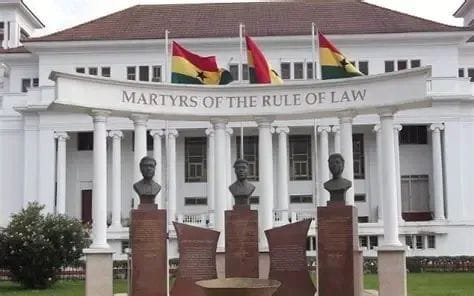

Ghana's judicial independence is under renewed scrutiny after the People's Forum challenged Chief Justice Paul Kwadwo Baffoe-Bonnie over his growing public proximity to the executive branch. In an open letter dated June 18, 2026, the advocacy group expressed concern that the Chief Justice's social engagements with government officials and members of the ruling National Democratic Congress could undermine public confidence in the Judiciary's neutrality and independence.
The People's Forum, led by Team Lead Dennis Miracles Aboagye, stressed that their concerns were not about the Chief Justice's personal integrity but rather about the perceptions created by his association with political leaders. They argued that as head of the Judiciary, Justice Baffoe-Bonnie must be held to a higher standard to protect the institution's credibility as the final refuge for justice-seeking citizens.
The Toronto Delegation and Judicial Optics
A central point of contention is the Chief Justice's reported attendance as part of Vice President Naana Jane Opoku-Agyemang's official delegation to Toronto, Canada, to support the Black Stars ahead of Ghana's 2026 FIFA World Cup qualifier against Panama. The People's Forum acknowledged the Chief Justice's right to support the national team but questioned the appropriateness of his participation as part of an executive government delegation rather than in an independent institutional capacity.
The group drew a distinction with former Chief Justice Kwesi Anin-Yeboah, who attended international football events in his capacity as a member of the FIFA Disciplinary Committee—an independent body, not a government delegation. This comparison underscores the forum's argument that Justice Baffoe-Bonnie's presence in Toronto could create the appearance of institutional alignment between the Judiciary and the executive.
Beyond the football delegation, the People's Forum cited other concerns, including the Chief Justice's reported attendance at private social functions, funerals and official gatherings involving NDC members. They argued that while such events may seem routine, they collectively create a pattern that threatens judicial perception.
Constitutional Safeguards and Democratic Concerns
The People's Forum grounded their argument in Article 127(1) of Ghana's 1992 Constitution, which guarantees judicial independence and stipulates that the Judiciary shall not be subject to control or direction of any person or authority. However, they emphasised that true judicial independence extends beyond freedom from direct interference; it also requires avoiding conduct that creates the appearance of dependence or bias.
The group warned that if citizens perceive the Chief Justice as having a close personal relationship with government members whose decisions may later be challenged in court, public confidence in the courts could erode. This erosion of trust, they argued, could weaken respect for the rule of law and encourage political actors to view the Judiciary as an institution to control rather than an independent arbiter.
The People's Forum also referenced the appointment of the Chief Justice's wife, Justice Patience Baffoe-Bonnie, as Director-General of the Ghana Prisons Service by the John Mahama administration, suggesting that this development, combined with the Chief Justice's public engagements, creates circumstances some citizens may find concerning. Additionally, the group raised broader concerns about the treatment of political opponents, critics, and journalists under the current administration, alleging that state institutions may be used to intimidate or silence dissenting voices.
Why It Matters for Ghana
This controversy arrives at a sensitive moment for Ghana's Judiciary. The circumstances surrounding the removal of former Chief Justice Gertrude Araba Esaaba Torkornoo had already raised questions about judicial independence and institutional stability. Public trust in Ghana's courts is foundational to democratic governance and the rule of law.
Justice Baffoe-Bonnie assumed office with the responsibility of restoring public confidence in the Judiciary following that turbulent transition. The People's Forum argues that his actions, whether intentional or not, could undermine that mission. If significant sections of the public come to view the Judiciary as aligned with the executive rather than independent from it, Ghana's democratic reputation could suffer. The group warned that allowing such perceptions to grow unchecked could set a dangerous precedent for future governments and further weaken institutional separation of powers—a cornerstone of democratic practice.
As Ghana navigates its political landscape, the tension between the Judiciary's need to function within society and its imperative to appear independent from political power remains a critical test of institutional health.
Source: The Ghanaian Times



Comments (0)
Be the first to comment.