
ISSER Warns: Ghana's 2027 Budget Will Be Judged by Delivery, Not Promises
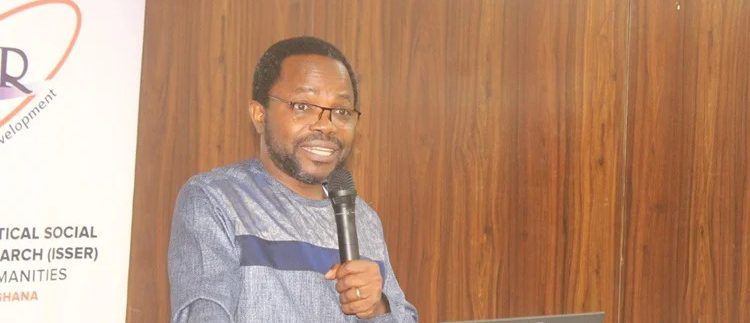

Ghana's leading economic research institution has issued a pointed warning to government: bold budget announcements mean little if projects remain unfinished or underfunded. The Institute of Statistical, Social and Economic Research (ISSER) says the true test of the 2027 Budget will be execution — not the figures presented on paper.
Delivery Over Declaration
Speaking at ISSER's budget review presentation in Accra, Professor Fred Dzanku, Head of the institute's Economics Division, urged Ghanaians and analysts to shift how they evaluate national budgets. Rather than applauding policy announcements at face value, he argued that scrutiny must be directed at whether proposed projects are actually completed and spending commitments honoured.
Prof. Dzanku welcomed the planned increase in capital expenditure for 2027, including the GH¢30 billion allocation under the government's New Economy programme. However, he was quick to temper enthusiasm with historical evidence. He noted that in 2025, only around 62 per cent of approved capital expenditure was actually utilised — a persistent problem that has undermined the impact of previous budgets. While implementation improved to approximately 91 per cent by October 2026, the ISSER economist stressed that consistent execution remains a challenge the government must urgently address.
He called on government to prioritise capital spending wisely, directing limited public resources toward projects with the greatest capacity to stimulate broad-based economic growth rather than spreading funds thinly across initiatives that deliver little measurable impact.
Why It Matters for Ghana
Ghana is at a critical juncture in its fiscal recovery. The country has been working to restore economic stability following a painful debt restructuring process, and international partners, including the International Monetary Fund, are closely watching the government's fiscal discipline. In this context, ISSER's concerns carry significant weight.
A budget that looks credible on paper but fails to deliver on the ground does real damage — not only to public trust, but to Ghana's standing with lenders and investors whose confidence underpins the country's access to affordable financing. For ordinary Ghanaians, poor capital expenditure execution translates directly into delayed roads, stalled schools, incomplete health facilities and sluggish job creation.
Prof. Dzanku also raised alarms about the structure of government revenue. With oil and mineral receipts accounting for roughly 63 per cent of projected revenues for 2027, Ghana's finances remain heavily exposed to swings in global commodity markets. A sharp drop in oil prices or reduced mineral output could blow a significant hole in the budget mid-year, forcing painful spending cuts or additional borrowing.
Plugging the Leaks and Borrowing Wisely
Beyond expenditure management, ISSER trained its attention on how Ghana raises and protects its revenues. Prof. Dzanku made a strong case for tackling financial leakages and illicit financial flows — money that exits the formal economy through corruption, transfer mispricing and other illicit channels. He argued that strengthening systems to plug these gaps could unlock substantial domestic resources, reducing dependence on external borrowing.
On the question of debt, the economist offered a measured perspective: borrowing is not inherently problematic, provided borrowed funds are deployed efficiently and generate genuine economic value. The concern, he implied, is borrowing to fund consumption or projects that yield poor returns — a pattern that has historically compounded Ghana's debt burden without delivering commensurate development gains.
- Capital credibility: ISSER urges focus on project execution, not just budget announcements.
- Revenue risk: Oil and minerals make up about 63% of 2027 projected revenues, raising vulnerability concerns.
- Spending gaps: Only 62% of 2025 capital expenditure was utilised, though the rate improved later in 2026.
As Ghana charts its path toward economic recovery, the message from ISSER is unambiguous: credibility is earned in construction sites, clinics and completed contracts — not in budget speeches.
Source: The Ghana Report



Comments (0)
Be the first to comment.