
Government pushes to slash Kaneshie–First Light Road works from one year to six months
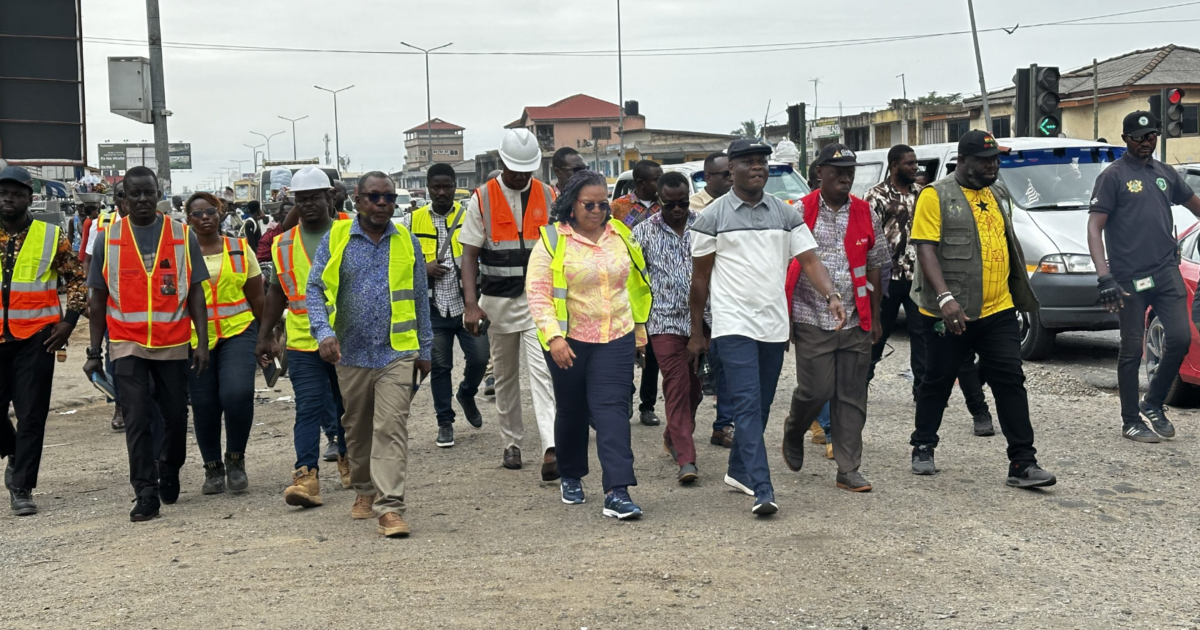

The Minister for Works, Housing and Water Resources, Ahmed Ibrahim, has intensified pressure on contractors to drastically reduce the construction timeline for critical repairs on the Kaneshie–Pamprom to First Light Road, one of Accra's most congested thoroughfares. During a recent site inspection under the GARID project, Mr Ibrahim signalled government's determination to complete the work in six to nine months rather than the originally proposed twelve-month period.
The urgency reflects deep concerns about the cascading traffic chaos and economic disruption that a year-long closure of the 1.5-kilometre stretch would inflict on motorists, businesses and residents across the capital. Accra's already congested road network cannot easily absorb the diversion of thousands of daily commuters onto alternative routes, a reality the Minister acknowledged requires careful planning before work begins.
Why this matters for Ghana
The Kaneshie–First Light corridor is a critical artery in Accra's transport system, linking major commercial and residential areas. Road closures here have immediate ripple effects across the city, affecting productivity, business operations and daily commutes for hundreds of thousands of people. The project itself—a comprehensive overhaul of drainage infrastructure and asphalt removal—addresses persistent flooding that has plagued the area, a problem familiar to Ghanaians in many urban centres where poor drainage compounds seasonal rains.
By pushing for acceleration, the government is attempting to balance two competing imperatives: the genuine need for infrastructure rehabilitation and the real cost to citizens of prolonged disruption. For Accra residents, this signals that authorities recognise their concerns about gridlock and are taking steps to minimise pain. However, rushing construction without proper planning could compromise quality or worker safety, a trade-off that remains unresolved.
Preparation and caution before work starts
Despite his impatience with the timeline, Mr Ibrahim has wisely insisted on thorough groundwork before full-scale construction commences. Key stakeholders—including the Ministers for Roads and Highways, Finance and National Security—must be fully briefed on impacts. A critical assessment will determine whether alternative routes can genuinely accommodate diverted traffic, and a test run of the road closure will simulate real-world conditions.
The Minister has also made clear that contractor readiness is non-negotiable. Companies must submit detailed work plans demonstrating their capacity to meet accelerated deadlines and identify any additional resources or support needed to stay on schedule. Mr Ibrahim personally staked his credibility on this, stating that if he is not satisfied with preparations, the project will not proceed.
Phased closure and public communication
To reduce disruption, the closure will be executed in phases rather than all at once, paired with extensive public education campaigns to guide motorists toward viable detours. This staged approach acknowledges that Accra's transport system lacks the redundancy to absorb sudden, total road closures without severe consequences.
- Construction timeline being reduced from one year to six to nine months
- Comprehensive drainage and asphalt replacement required beneath surface-level road repairs
- Test run planned to assess traffic diversion feasibility before full project launch
Source: MyJoyOnline


Comments (0)
Be the first to comment.