
Ghanaian-Founded Omenaa Foundation pledges €1m to UNESCO for African arts and education
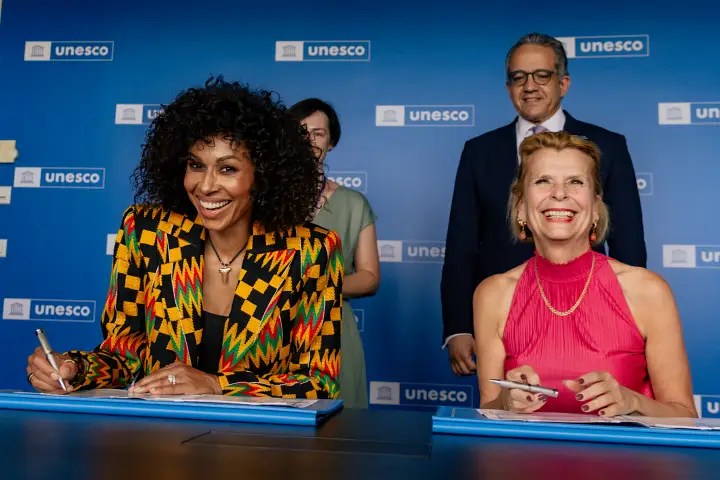

A significant partnership between UNESCO and the Omenaa Foundation has been sealed, with the foundation committing €1 million over three years to advance education, culture, heritage and the creative economy as tools for sustainable development. The agreement marks a milestone moment for cross-continental collaboration and represents the first time a Polish private foundation has partnered with UNESCO at this scale.
The framework agreement was formalised at UNESCO headquarters in Paris, with Deputy Director-General Åsa Regnér, UNESCO Director-General Khaled El-Enany, and Poland's Permanent Delegate to UNESCO in attendance. The partnership was facilitated by the Polish permanent delegation, underscoring the diplomatic importance of the arrangement.
Who is behind the Omenaa Foundation?
Founded in 2014 by Omenaa Mensah, a philanthropist of Ghanaian descent based in Poland, the Omenaa Foundation operates as a philanthropic network dedicated to using culture, art and education as instruments of social change. The foundation's work focuses on countering discrimination, advancing children's rights, and supporting vulnerable groups across Europe, Africa and beyond.
Mensah has established a distinctive model centred on building bridges between continents—particularly Europe and Africa. The foundation commissions contemporary artistic interventions at major heritage sites and runs scholarship programmes, artist residencies, mentorships and educational partnerships across Poland, Ghana and other nations. This transnational approach reflects Mensah's vision of creating relationships based on partnership and mutual respect rather than traditional charity models.
What the partnership will fund
Over the next three years, the UNESCO-Omenaa collaboration will concentrate on three key areas: strengthening culture and arts education for young people; supporting the revitalisation of heritage sites; and promoting contemporary African art and artists on the global stage.
The initiative aligns closely with UNESCO's stated Global Priorities on Africa and Gender Equality. By positioning culture and arts education as drivers of human rights advancement and discrimination-reduction, the partnership builds on frameworks adopted at UNESCO's 2024 World Conference on Culture and Arts Education.
Specific programme areas are expected to include educational initiatives in Ghana and Poland, mentorship opportunities for emerging artists, and cultural projects that amplify African voices within international heritage preservation efforts.
Why it matters for Ghana
This partnership carries particular significance for Ghanaians and African cultural advancement. With active programming planned for Ghana, the foundation's investment could support local artists, young creatives and cultural institutions seeking international exposure and resources. The emphasis on heritage site revitalisation may also benefit Ghana's cultural tourism sector and safeguard important historical sites.
More broadly, the model Mensah advocates—building Europe-Africa relations through culture, education and business partnerships rather than dependency-based charity—represents a shift in how diaspora philanthropists from African descent are structuring continental engagement. As migration and brain drain remain pressing issues for Ghana's development, examples of successful diaspora investment in home-continent priorities offer blueprints for others.
The three-year commitment also signals sustained, institutional-level attention to African creative economies at a time when youth unemployment and limited opportunities for creatives remain challenges across the region. By positioning arts and culture as economic drivers rather than peripheral cultural amenities, UNESCO and the Omenaa Foundation are potentially opening pathways for young Ghanaians to build viable careers in creative fields.
Source: Ameyaw Debrah


Comments (0)
Be the first to comment.