
Ghanaian climate advocate's home flooded while fighting for forests at international conference
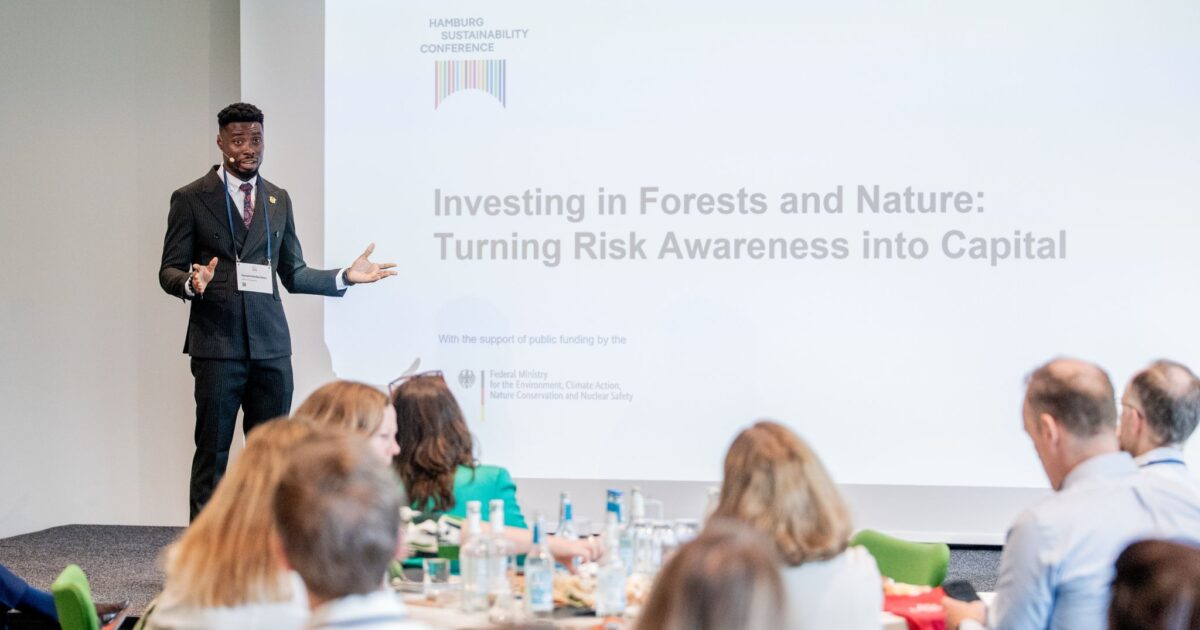

A Ghanaian climate advocate experienced the painful contradiction of global sustainability work firsthand when heavy rains flooded his Accra home whilst he was addressing international policymakers on forest finance at the Hamburg Sustainability Conference in Germany.
Kenneth Awotwe Darko, a multimedia journalist and fellow of the Africa Youth Negotiators Fellowship, was mid-presentation to investors and conservation leaders when he began receiving updates that parts of Accra had been submerged by flooding. His own residence was among those affected.
The incident underscored a fundamental truth that often gets lost in climate policy discussions: the human cost of environmental degradation extends far beyond statistical losses of forest cover or carbon measurements.
The lived reality behind climate statistics
Darko shared Ghana's environmental story not as abstract data points, but as a lived experience affecting real communities. He highlighted how those least responsible for environmental destruction often bear its heaviest consequences—families displaced, businesses disrupted, children unable to attend school, and households struggling to rebuild after natural disasters.
At a session hosted by the Federal Ministry of Environment, Darko emphasised that forest finance mechanisms must prioritise human protection alongside ecosystem preservation. The destruction of forests, whilst not the sole cause of flooding events, represents a significant contributing factor through loss of natural water absorption capacity and watershed degradation.
His intervention at the international conference came before a distinguished audience including Jochen Flasbarth, State Secretary at the German Federal Ministry for the Environment, Climate Action, Nature Conservation and Nuclear Safety, and Dr. Grethel Aguilar, IUCN Director General.
Why it matters for Ghana
Ghana faces increasing climate vulnerability, with urban centres like Accra experiencing more frequent flooding events linked to deforestation, poor drainage infrastructure and climate variability. The country's forest cover has declined significantly over decades due to illegal logging, agricultural expansion and inadequate enforcement of environmental regulations.
Darko's experience highlights the urgent need for Ghana to strengthen both forest conservation efforts and urban climate resilience measures. Investment in forest protection directly supports watershed health, which reduces flooding severity. Simultaneously, Ghana requires improved urban drainage systems and early warning mechanisms to protect residents in flood-prone areas.
The conversation about forest finance—how international funds can support developing nations' conservation efforts whilst protecting vulnerable populations—remains critical for Ghana's climate adaptation strategy. As a West African nation already grappling with desertification in the north and flooding in coastal and urban areas, strengthening forest ecosystems represents one of the most cost-effective adaptation investments available.
The broader sustainability conversation
Darko's point that sustainability is not merely a future discussion but an immediate reality for millions resonates powerfully across Ghana and the broader African continent. Climate impacts are not hypothetical scenarios; they are disrupting livelihoods, destroying property and straining government budgets today.
The experience also raises questions about the effectiveness of international climate conferences when representatives return home to face the very crises they are meant to address. It underscores the need for climate action to move beyond conference halls into tangible, locally-rooted solutions that protect both forests and the communities that depend on them.
Source: MyJoyOnline

Comments (0)
Be the first to comment.