
Ghana Water Limited admits it cannot guarantee round-the-clock supply to all Ghanaians

Ghana Water Limited (GWL) has made a candid admission that it is currently unable to deliver uninterrupted water supply to all Ghanaians, with officials citing infrastructure limitations and the geographical challenges posed by hilly and elevated communities as key factors behind the persistent water shortages many residents experience.
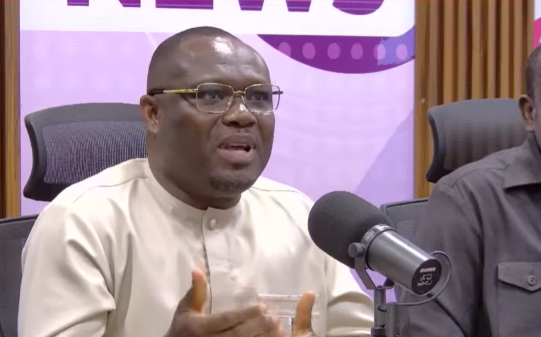
Speaking on an Accra-based radio station on Tuesday, Michael Tawiah Klutse, Chief Manager for Corporate Planning, Monitoring and Evaluation at GWL, was direct about the utility's constraints. "We don't have the capacity to serve every single person 24/7 at the moment. What we have is what we are managing for everybody to get something," he said.
Elevation and infrastructure gaps driving unequal access
One of the more technical points raised by Klutse is the role that terrain plays in water distribution — a factor that many ordinary consumers may not be aware of. Communities situated at higher elevations receive less water pressure through the existing pipe network, meaning residents there often go longer without supply compared to neighbours living in low-lying areas who benefit from natural gravitational flow.
According to Klutse, GWL must deploy additional infrastructure and pressure-boosting interventions to serve uphill communities, and the company currently does not have sufficient resources to roll these out uniformly across all affected areas. This explains why some neighbourhoods — even within the same district — can have vastly different experiences with water availability.
The admission shines a light on a long-standing and deeply unequal pattern of water access in Ghanaian cities and towns. Residents in densely populated hilltop communities in cities such as Accra, Kumasi and Takoradi have for years complained that they go days or even weeks without pipe-borne water, often resorting to buying from water tankers at significantly higher costs.
Why it matters for Ghana
Access to safe, reliable water is not merely a convenience — it is a public health necessity and a constitutional right. When pipe-borne water supply is inconsistent or entirely absent, households — particularly those with lower incomes — are forced into expensive and sometimes unsafe alternatives. The urban poor, who are least able to afford tanker water or bottled alternatives, bear the greatest burden.
Ghana has made considerable progress in expanding water infrastructure over the decades, yet the gap between supply and demand remains significant, particularly as urban populations continue to grow rapidly. The country's water treatment and distribution network has not expanded at the same pace as urbanisation, leaving GWL stretched across a system that was not designed for current population levels.
GWL's public acknowledgement of its limitations, while refreshingly honest, also raises important questions about investment priorities, government funding, and long-term planning for the sector. Civil society groups and consumer advocates have repeatedly called for increased budgetary allocations to water infrastructure, as well as stronger accountability mechanisms for the utility.
What needs to happen next
Experts in the water and sanitation sector have long argued that solving Ghana's water supply challenges requires a combination of approaches — expanding treatment capacity, rehabilitating ageing distribution pipes, and deploying targeted pressure-boosting technology in elevated communities. Public-private partnerships and international development financing have been suggested as potential avenues to bridge the funding gap.
For now, GWL says it is doing its best to ration available water equitably. However, with many Ghanaians still waiting days between supply, that assurance is likely to offer little comfort. The burden remains greatest on communities already disadvantaged by their geography — a problem that requires urgent and sustained government attention rather than managed expectations.
- GWL admits it cannot supply water on a 24-hour basis to all consumers nationwide.
- Higher-elevation communities face greater water shortages due to low pipe pressure in the network.
- Experts and consumers continue to call for increased investment in Ghana's water infrastructure.
Source: Today GH



Comments (0)
Be the first to comment.