
Ghana to Build Massive Thermal and Solar Plants in GH¢2 Billion Energy Push — Emergency Power to Be Phased Out by 2030
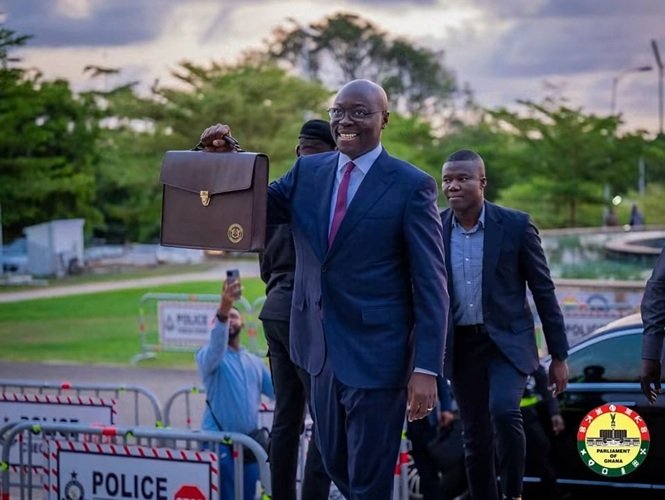

Ghana is set for one of its most ambitious energy overhauls in decades after Finance Minister Dr. Cassiel Ato Forson announced a US$2 billion investment in power infrastructure as part of the government's 2027 Budget. The package, anchored under Pillar Three of the New Economy Programme, targets chronic electricity shortages, ageing grid infrastructure, and Ghana's heavy reliance on costly emergency power plants — a burden that has weighed on households and businesses alike for years.
What is being built — and when
At the centre of the plan is a 1,450 megawatt (MW) thermal power plant to be constructed at Kafodzidzi-Abrobeano in the Central Region. The facility will be fully funded and owned by the state, with construction scheduled to begin in December 2026. The project will be delivered in two phases: the first 600 MW is expected to come online by December 2028, with the remaining 850 MW following by December 2030.
To fuel the plant, the government intends to draw approximately 150 million standard cubic feet of gas daily from Ghana's own Sankofa and Jubilee offshore fields — a move that keeps revenue within the country and reduces dependence on imported fuel sources.
Alongside the thermal plant, Dr. Forson announced a fully state-owned 600 MW solar power plant backed by 2,000 megawatt-hours (MWh) of battery storage. The combination of solar generation and large-scale battery storage reflects a growing global trend towards cleaner, more reliable energy supply — and signals that Ghana is not simply doubling down on fossil fuels but trying to diversify its energy mix simultaneously.
Together, both plants are designed to generate enough electricity to allow the government to phase out expensive emergency power plants entirely by 2030. Emergency power — often leased from independent providers at premium rates — has historically added significant costs to Ghana's power sector debt, which has contributed to tariff pressures on ordinary Ghanaians.
Grid modernisation and prepaid meters
Generating more power is only half the equation. Dr. Forson acknowledged that transmission and distribution inefficiencies remain a critical weak point, announcing a US$500 million investment between 2027 and 2030 to modernise the national transmission system. As part of that effort, two million prepaid meters will be deployed across the country to improve revenue collection — a persistent problem for the Electricity Company of Ghana and other distribution utilities.
Prepaid metering has previously been shown to reduce commercial losses and illegal connections, while also giving consumers more control over their electricity spending. Scaling this to two million additional meters would represent a substantial expansion of the system.
Why it matters for Ghana
Ghana's energy sector has long been a source of frustration. Episodes of load-shedding — locally known as dumsor — have disrupted businesses, damaged appliances, and hampered industrial productivity over successive decades. While the worst of those outages have eased in recent years, the underlying structural issues of generation capacity, transmission losses, and sector debt have never been fully resolved.
A fully state-owned generation model, as announced here, marks a notable policy direction — placing the government directly in the driver's seat rather than relying primarily on independent power producers. Whether that model delivers on time and on budget will be watched closely, given Ghana's historical challenges with large public infrastructure projects.
Perhaps most striking is the nuclear dimension. Dr. Forson confirmed a US$200 million investment in a 24-month nuclear readiness programme running from January 2027 to December 2028. More than 2,000 scientists and technical personnel are to be trained as part of an effort to build local expertise for safe and reliable nuclear power — laying the groundwork for what could eventually be Ghana's first nuclear power station, a project the country has been exploring for a number of years through the Nuclear Power Ghana initiative.
If realised as planned, this package could fundamentally reshape Ghana's energy landscape — reducing power costs, eliminating emergency generation, and positioning the country as a regional leader in both renewable and nuclear energy development.
Source: The Ghanaian Times


Comments (0)
Be the first to comment.