
Ghana's VP pushes African cities to forge stronger economic partnerships at international forum
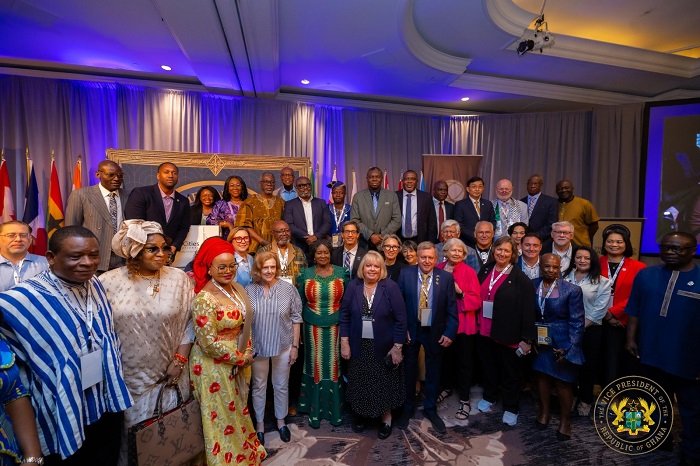

Ghana's Vice President Professor Naana Jane Opoku-Agyemang has made a compelling case for African cities to strengthen partnerships as a catalyst for economic growth and development. Speaking at the 70th anniversary celebration of Sister Cities International in Washington, DC, Prof. Opoku-Agyemang outlined how municipal-level cooperation could unlock opportunities for trade, innovation, and shared prosperity across the continent.
The Vice President framed city diplomacy as a practical tool for tackling common urban challenges whilst fostering institutional improvements and creating pathways for business expansion and youth employment. Her remarks emphasised that partnerships between municipalities go beyond ceremonial gestures; they represent a deliberate strategy for addressing pressing issues that transcend national borders.
Ghana's decentralisation agenda and African leadership
Prof. Opoku-Agyemang highlighted the Ghanaian government's commitment to decentralisation under President John Dramani Mahama's Reset Agenda. She noted that Metropolitan, Municipal and District Assemblies are receiving enhanced resources and responsibilities to strengthen key services including education, healthcare, and infrastructure development. This domestic focus on local governance strengthens Ghana's credibility when advocating for stronger inter-city collaboration across Africa.
The Vice President also underscored Ghana's unique position as host of the African Continental Free Trade Area (AfCFTA) Secretariat. She argued that Ghana is ideally positioned to facilitate and champion deeper collaboration among African municipalities, leveraging the AfCFTA framework to boost entrepreneurship, digital transformation, and cross-border investment flows.
Why it matters for Ghana and Africa
Africa's rapid urbanisation presents both opportunities and challenges. Cities across the continent face similar pressures: managing explosive population growth, mitigating climate change impacts, handling waste management, strengthening public health systems, and improving disaster preparedness. By fostering city-to-city partnerships, municipalities can pool resources and knowledge rather than tackling these issues in isolation.
For Ghana specifically, stronger African city networks align with the government's broader development strategy. As the AfCFTA Secretariat host, Ghana stands to benefit from positioning itself as a hub for municipal collaboration and innovation. Such partnerships can attract investment to Ghanaian cities, facilitate technology transfer, and create employment opportunities for young Ghanaians seeking to engage with regional markets.
Prof. Opoku-Agyemang also stressed the importance of cultural and educational exchanges in building trust between communities. She pointed to Ghana's engagement with the African diaspora as evidence of how people-to-people connections can evolve into sustainable development partnerships—a model applicable to city-level cooperation.
Building momentum for continental cooperation
The Vice President's address reflects a growing recognition that development challenges increasingly require sub-national and regional solutions. Climate adaptation, for instance, is often more effectively addressed through city networks that share local knowledge and contextual expertise rather than through top-down national policies alone.
By advocating for strengthened city partnerships, Prof. Opoku-Agyemang is positioning Ghana as a champion of practical, collaborative approaches to African development. Her message resonates with Sister Cities International's seven-decade mission to promote global friendship and institutional cooperation—values that align with Ghana's stated commitment to sustainable development and shared prosperity across the continent.
Source: The Ghanaian Times



Comments (0)
Be the first to comment.