Ghana's Small-Scale Fisheries Academy to reach 20 communities as sector leaders demand fisher-led solutions
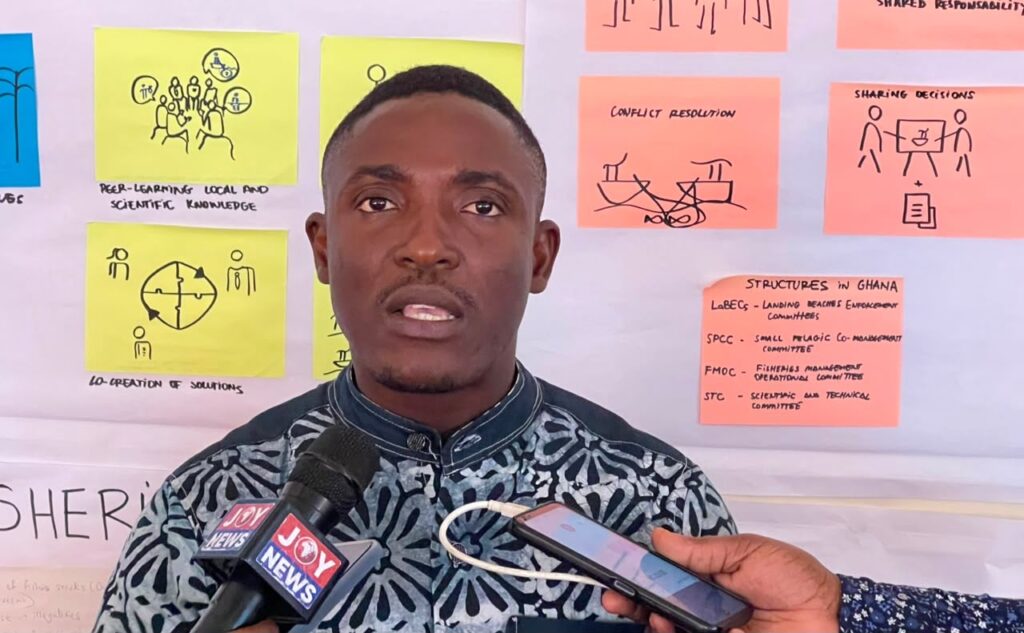
Ghana's fishing sector is shifting towards a community-centred approach to resource management as the Canoe and Fishing Gear Owners Association of Ghana (CAFGOAG) expands its Small-Scale Fisheries Academy from eight to 20 communities nationwide. The initiative represents a significant departure from top-down intervention models, placing artisanal fishers at the heart of decision-making on issues affecting their livelihoods and the sustainability of Ghana's marine resources.
The academy, developed in partnership with Mundus Maris, Blue Ventures, the Ministry of Fisheries and Aquaculture and the Fisheries Commission, operates as an inclusive dialogue platform where fishers identify sector challenges and develop practical, community-driven solutions. The second session, held in Elmina from late September to early October this year, brought together 35 participants from Ghana's four coastal regions—Western, Central, Greater Accra and Volta—to strengthen community leadership and facilitate fisheries co-management along the coast.
Placing fishers at the centre of decision-making
Kenneth Arthur, General Secretary of CAFGOAG, emphasised that fishers themselves hold the solutions to the industry's problems. "As fishers, we believe that the solution is with the fishers; hence there's a need to identify all the major stakeholders, all the major players, to come to a roundtable, dialogue and come out with solutions," he stated. This approach directly challenges decades of external intervention where non-governmental organisations and government bodies proposed fixes without adequate community input—often resulting in failed initiatives once implementers departed.
The academy's expansion strategy reflects growing recognition that sustainable fisheries management requires the active participation and ownership of coastal communities. Arthur outlined ambitions to eventually reach all landing beaches across Ghana, creating a unified network of community-led fisheries dialogue.
A key innovation of the academy is its communication methodology. Rather than relying on technical jargon that alienates many participants, facilitators use visual aids, drawings and practical demonstrations to convey complex fisheries management concepts. This approach ensures that canoe owners, fish processors, crew members and other industry players understand and can apply lessons within their own contexts.
Why it matters for Ghana
Ghana's artisanal fishing sector faces mounting pressure from overfishing, destructive practices and competition from industrial fleets. These challenges threaten both food security for millions of Ghanaians who depend on fish as a primary protein source and the livelihoods of thousands of coastal families. The expansion of the Small-Scale Fisheries Academy addresses these concerns by strengthening the capacity of fishing communities to manage their own resources sustainably.
Dr Cornelia Nauen, President of Mundus Maris, warned that stock depletion resulting from industrial fishing expansion and pressure to maximise short-term catches requires a fundamental shift away from extractive practices. Community-led management approaches, she argued, recognise the invaluable knowledge and experience of artisanal fishers—knowledge accumulated over generations—while building local leadership capacity to enforce sustainable practices from within communities rather than through external enforcement alone.
For Ghana's broader development agenda, the academy model offers a template for how sector-wide transformation can occur through empowerment rather than top-down regulation. As fishing communities gain skills in facilitation, dialogue and participatory planning, they become better equipped to negotiate their interests with government, private sector actors and international partners. This enhanced voice is particularly critical given the economic importance of fisheries to Ghana's economy and the disproportionate impact of resource depletion on vulnerable coastal populations.
Building sustainable fisheries from the ground up
The inaugural academy session in Winneba in June established the foundation for this community-centred approach. The Elmina session built on those gains by deepening participants' practical skills in convening diverse stakeholder groups—chief fishermen, canoe owners, women processors, traders and crew members—to collectively identify priorities and co-create solutions tailored to their specific contexts.
CAFGOAG's ambition to eventually encompass all Ghanaian landing beaches signals confidence that the model works and can be scaled. As the academy expands, its success will depend not only on continued support from development partners and government but also on genuine commitment from fisheries authorities to recognise community-developed solutions and incorporate them into official management frameworks. For Ghana's fishing communities, the expansion represents a rare opportunity to shape the future of their sector based on their own expertise and priorities.
Source: MyJoyOnline

Comments (0)
Be the first to comment.