Ghana's Tribunal Bills Aim to Speed Up Justice, Not Resurrect PNDC-Era System — Dafeamekpor
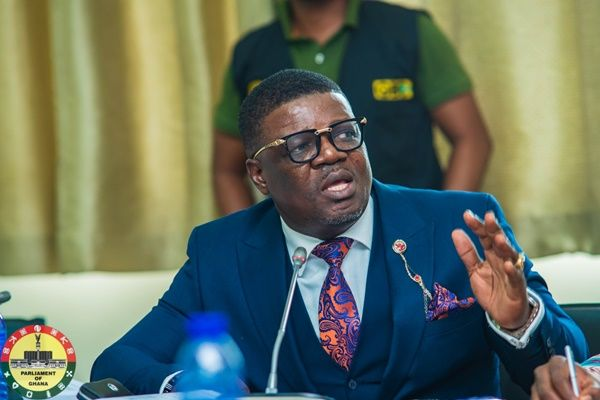
Ghana's Majority Chief Whip Rockson-Nelson Dafeamekpor has moved to reassure Ghanaians that the government's proposed tribunal bills are designed to strengthen and accelerate the country's justice system rather than resurrect the controversial tribunals of the Provisional National Defence Council era. Speaking on JoyNews's PM Express programme, Dafeamekpor acknowledged deep-rooted public apprehension about tribunal systems but argued that decades of legal reforms and constitutional safeguards have fundamentally transformed how tribunals would operate under any new framework.
Understanding the Distinction: Old Tribunals Versus Proposed Reform
At the heart of the debate is the significant difference between tribunal systems across different periods of Ghana's governance. The PNDC-era tribunals, established under PNDC Law 78 during military rule, operated under a fundamentally different legal and constitutional framework from those that existed during the Fourth Republic, which began in 1993. Dafeamekpor explained that the core innovation of tribunal systems has always been the inclusion of lay members—ordinary citizens without legal training—alongside a legally qualified chairperson to hear and decide cases. This philosophy, he argued, is rooted in Ghana's Constitution itself, which declares that justice emanates from the people.
The structural evolution of tribunals tells a story of progressive reform. After 1993, Parliament amended the Courts Act to expand the jurisdiction of community and circuit tribunals. A pivotal second reform occurred in 2002 when then Attorney-General Nana Akufo-Addo introduced amendments that abolished community and circuit tribunals as part of the lower court structure, replacing them with district courts, circuit courts, and family courts. Regional tribunals, however, remained constitutionally entrenched and could not be removed without a constitutional amendment. These continued operating until approximately 2010, when then Chief Justice Georgina Wood ceased empanelling them and promoted many chairpersons to the High Court bench.
The Public Participation Model: Drawing Parallels with Jury Systems
Dafeamekpor drew an important comparison to justify public participation in judicial proceedings. Ghana's High Courts already employ jury systems for serious criminal offences, where ordinary citizens selected from the public listen to evidence and assist the presiding judge in delivering justice. The tribunal model operates on similar principles: a lawyer-chairperson sits with two lay members to hear cases and render decisions, with appellants retaining full rights to challenge verdicts. This, he contended, is not a departure from established judicial practice but an extension of a principle already embedded in Ghana's legal system.
Why It Matters for Ghana: A Justice System Under Strain
The impetus for tribunal reform lies in a critical practical reality: Ghana's courts are severely overburdened. The Judiciary faces mounting caseloads year after year, necessitating repeated requests to Parliament for additional funding and new courts. Despite expansions over the past 16 years—including the creation of multiple High Court divisions, district courts across the country, and the modern Law Court Complex in Accra with specialised courts for financial, criminal, land, and matrimonial matters—the system remains inundated with work. This backlog affects both criminal and civil justice, delaying cases that harm vulnerable populations, businesses, and the rule of law itself.
The tribunal proposal represents an attempt to distribute caseload pressure by leveraging the constitutional framework that already permits tribunal systems. By reinstating or reforming tribunals with modern safeguards—constitutional rights, appellate review, trained leadership—the government seeks to increase access to justice and reduce delays. For ordinary Ghanaians waiting months or years for their cases to be heard, faster dispute resolution could be transformative, particularly in lower-tier civil and commercial disputes.
However, the government must navigate legitimate historical memory. The speed and finality of PNDC tribunals became synonymous with injustice during authoritarian rule. Rebuilding public confidence will require transparent communication about constitutional safeguards, appellate mechanisms, and the reasons tribunals remain a viable tool when properly reformed and supervised.
Source: MyJoyOnline


Comments (0)
Be the first to comment.