Ghana's Top Judge Backs Live Court Broadcasts to Rebuild Public Trust in Judiciary
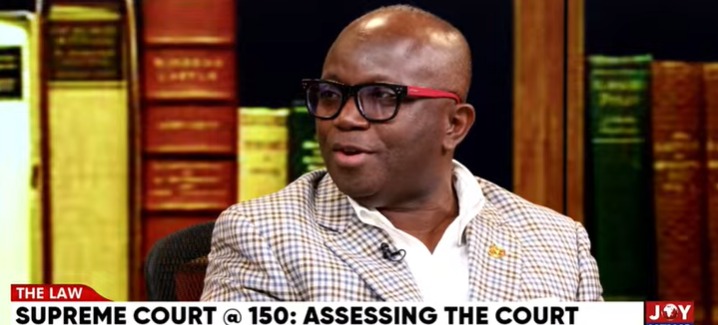
A senior Justice of Ghana's Supreme Court has thrown his weight behind plans to live-broadcast selected court proceedings, arguing that greater transparency through technology could strengthen public confidence in the judiciary at a critical moment for institutional trust.
Justice Kweku Tawiah Ackah-Boafo made the case during a discussion on The Law programme on JoyNews, held as part of commemorations marking the Supreme Court's 150th anniversary. He acknowledged that while Ghana's courts remain open to the public, technological access could widen engagement significantly and counter the perception that the judiciary operates behind closed doors.
Why It Matters for Ghana
The call for judicial transparency strikes at a fundamental challenge facing Ghana's courts: rebuilding public confidence after years of political tension and controversial rulings. Ghanaians still remember the 2012 presidential election petition broadcast as a watershed moment for open justice. That live coverage set a precedent for transparency that many citizens expected would become standard practice. Justice Ackah-Boafo's intervention suggests the judiciary recognises that selective use of broadcast technology could help reconnect with the public and demonstrate that the courts have nothing to hide.
This matters beyond institutional image-building. A judiciary that appears accessible and transparent is more likely to command respect for its judgements, particularly in contested political cases where public perception directly affects acceptance of court orders. For a nation where rule of law depends partly on voluntary compliance with court decisions, restoring judicial credibility through openness is a practical, not merely symbolic, concern.
Learning from International Models
Justice Ackah-Boafo outlined how different democracies have approached judicial broadcasting, suggesting Ghana should adopt a middle path rather than unrestricted live coverage. The United States Supreme Court, he noted, does not stream video proceedings but offers live audio and later publishes full transcripts—allowing access without turning trials into television spectacles. Canada and the United Kingdom stream proceedings through dedicated court websites rather than terrestrial television, preserving the formality of proceedings whilst extending reach.
South Africa's Constitutional Court, which broadcasts all proceedings live, was cited as a model. However, Justice Ackah-Boafo signalled caution about adopting that approach wholesale in Ghana, pointing to operational and cultural differences that could undermine the strategy.
The Practical Obstacles
The Justice was candid about obstacles. Ghana's Supreme Court faces severe resource constraints; establishing a functioning broadcast infrastructure would require significant investment in webcams, servers, and website maintenance. More subtly, Ghana's court system operates under time pressures unknown in many foreign jurisdictions. Whilst Canada's Supreme Court may hear three cases daily with lawyers allocated 45 minutes each for argument, Ghana's court processes up to 18 dockets per day, leaving minimal time for the contemplative work chambers require.
Justice Ackah-Boafo also flagged a distinctly Ghanaian concern: the risk that broadcast proceedings could encourage lawyers to perform for gallery rather than substance. He acknowledged instances where counsel have prioritised impressing clients over advancing legal arguments, suggesting that live cameras could amplify such behaviour and undermine the intellectual rigour of proceedings.
Despite these reservations, the Justice concluded that selective live-streaming of significant constitutional and appellate cases would be worthwhile if resources became available. His comments suggest the judiciary recognises both the necessity and the complexity of modernising access to courts—a recognition that may shape institutional policy as Ghana's legal system evolves.
Source: MyJoyOnline




Comments (0)
Be the first to comment.