VP Opoku-Agyemang pushes for sustained sanitation culture as Ghana marks nationwide clean-up day
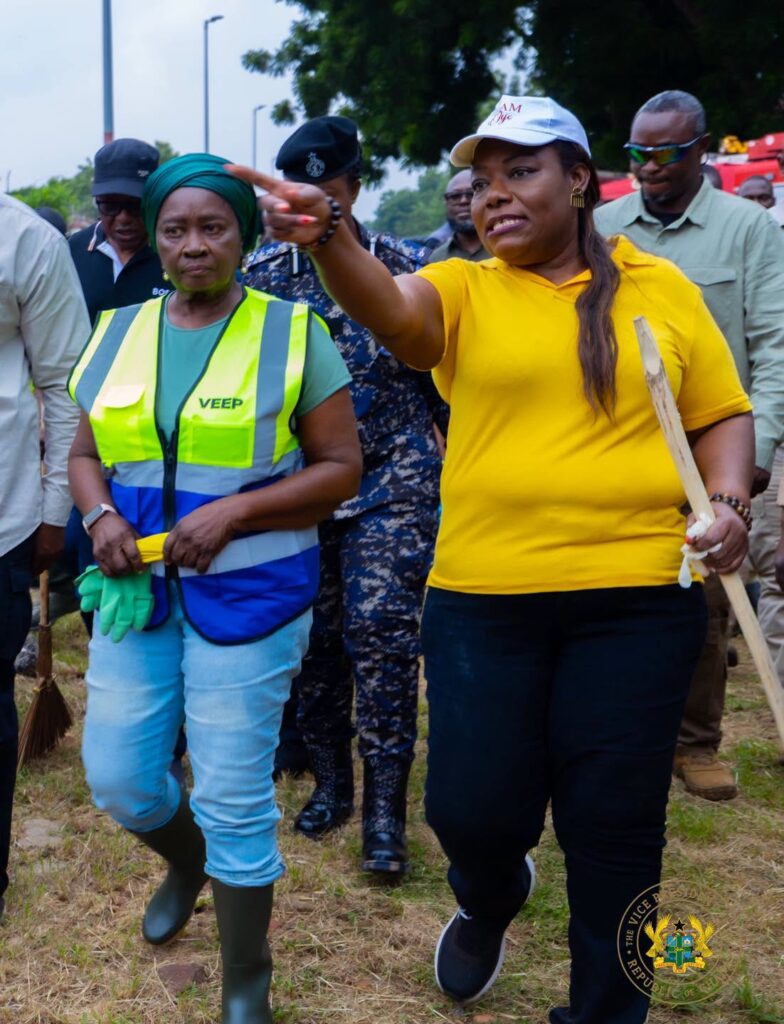
Vice President Professor Naana Jane Opoku-Agyemang has reinforced the importance of sanitation as a permanent cultural shift rather than a periodic exercise, as she joined staff and officials at Jubilee House for Friday's nationwide clean-up drive.
The call comes amid growing concerns about waste management and flooding in urban and rural areas across Ghana, challenges that require sustained action beyond annual or monthly clean-up campaigns.
Moving beyond one-day activities
Speaking during the exercise, the Vice President emphasised that environmental cleanliness must become embedded in Ghana's daily routines and values. She commended participants for their involvement but stressed that enthusiasm alone is insufficient without follow-through in the weeks and months ahead.
The VP urged all Ghanaians to maintain clean surroundings consistently, protect drainage infrastructure from blockages, and adopt responsible waste disposal practices. These actions, she noted, are critical in preventing the sanitation-related challenges that have plagued communities, particularly during rainy seasons when poor drainage leads to flooding and water-related health issues.
A collective national responsibility
Opoku-Agyemang underscored that building a cleaner Ghana requires a multi-stakeholder approach. Government institutions, private organisations, communities, and individual citizens all have roles to play in this transformation. Without genuine participation at every level, she suggested, piecemeal efforts will fail to produce lasting results.
The message reflects broader frustrations in Ghana about the gap between awareness campaigns and actual behavioural change. While clean-up exercises generate visibility and demonstrate commitment, they often do not translate into sustained improvements in public health and environmental conditions.
Why it matters for Ghana
Ghana faces persistent sanitation challenges that affect public health, urban planning, and quality of life. Poor waste management contributes to flooding during rainy seasons, particularly in cities like Accra and Kumasi, causing damage to property and disrupting livelihoods. Water-borne diseases linked to poor sanitation remain a public health concern, especially in densely populated areas.
The Vice President's emphasis on habit formation and collective responsibility reflects a recognition that legislative and policy interventions alone cannot solve these problems. Cultural attitudes towards waste disposal, communal responsibility, and environmental stewardship must shift if Ghana is to achieve sustainable improvements.
Previous governments and development organisations have launched similar campaigns with mixed success, suggesting that the challenge lies not in awareness but in implementation and sustained commitment. The VP's framing of sanitation as a national habit rather than an obligation signals an attempt to address this implementation gap by appealing to civic pride and collective identity.
Success will depend on whether this message resonates beyond government circles into households, schools, markets, and workplaces across the country.
Source: MyJoyOnline


Comments (0)
Be the first to comment.