
Ghana's rising school enrolment masks deeper quality crisis, MP warns
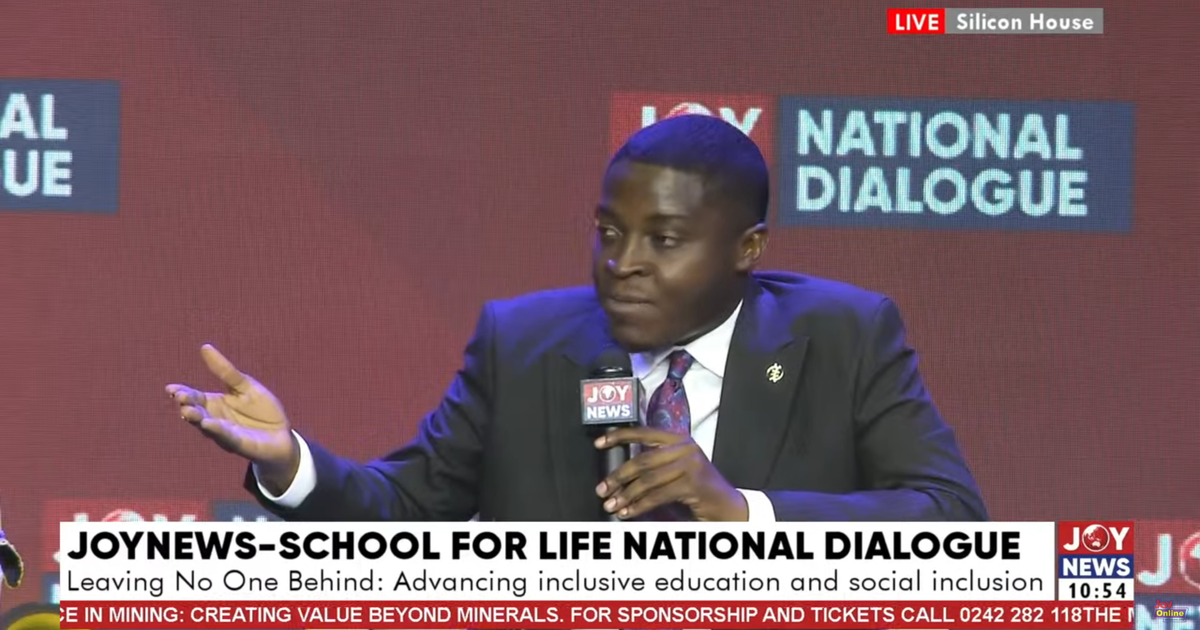

Ghana's school enrolment figures may be climbing, but that progress means little if children inside those classrooms are not genuinely learning — that is the stark warning delivered by Ketu North Member of Parliament Edem Agbana at a national education dialogue this week. The MP's remarks cut to the heart of a tension that has long shadowed Ghana's education sector: the gap between getting children through the school gate and ensuring they receive a meaningful education once inside.
What was said and where
Speaking at the JoyNews-School for Life National Dialogue on Wednesday, 18 November, Mr Agbana told participants that the country's focus on expanding enrolment must be matched with a serious reckoning with the quality of learning taking place in its schools. He stressed that access to education should not be defined solely by gender, ethnicity or cultural background, but must also account for the real opportunities available to children within the school environment itself.
"Every time in terms of enrolment, you may have increased enrolment, but there is a deeper issue. The enrolment is not necessarily reflected in the kind of opportunities children have in schools," the MP said. He added that encouraging statistics on the surface could obscure a troubling reality: "We have a lot of children in schools, yet the numbers may be increasing and giving you some good picture of the statistics. By the end of the day, quality education is not being accessed by these children."
Mr Agbana also shed light on Parliament's oversight role in holding education institutions to account. He explained that the Parliamentary Education Committee conducts annual performance audits, inviting agencies including the Ghana Education Service (GES) to brief members on their activities, identify gaps, and receive recommendations for improvement. "We invite the various agencies in education, including the GES, for what we call performance audit. They brief us on what they are doing, where we identify gaps, and we make recommendations that those gaps should be closed," he said.
Why it matters for Ghana
Ghana has invested considerably in widening access to basic and secondary education over the past two decades, with initiatives such as the Free Senior High School (Free SHS) policy significantly increasing enrolment numbers at the secondary level. While these gains are real and important, educators and analysts have consistently flagged that quantity does not equal quality. Concerns include overcrowded classrooms, teacher shortages in rural and deprived districts, inadequate learning materials, and persistently low scores in national and regional assessments.
Mr Agbana's warning resonates particularly in the context of Ghana's performance in regional learning assessments, where many pupils — despite completing primary school — struggle with basic literacy and numeracy. Organisations such as School for Life have long worked in northern Ghana to address foundational literacy gaps, underscoring that formal enrolment alone is insufficient.
The MP's call for a shift in how success is measured — from headcounts to actual learning outcomes — reflects a growing consensus among education stakeholders that Ghana must move beyond the enrolment milestone and begin holding itself accountable for what happens inside the classroom.
The road ahead
For policymakers, parents and education advocates, the message is clear: Ghana cannot afford to celebrate rising enrolment figures while ignoring whether those enrolled children are learning to read, write and think critically. The Parliamentary Education Committee's annual audit framework offers one accountability mechanism, but broader reforms — including investment in teacher training, infrastructure in underserved communities, and robust learning assessments — will be essential if the country is to close the gap between access and genuine educational opportunity.
- Schools must move beyond enrolment numbers to focus on learning outcomes.
- Parliament's Education Committee conducts yearly performance audits of the GES and other agencies.
- Ghana's Free SHS policy boosted enrolment but quality concerns remain unresolved.
Source: MyJoyOnline


Comments (0)
Be the first to comment.