Ghana's power crisis demands budget overhaul, says IMANI Africa VP
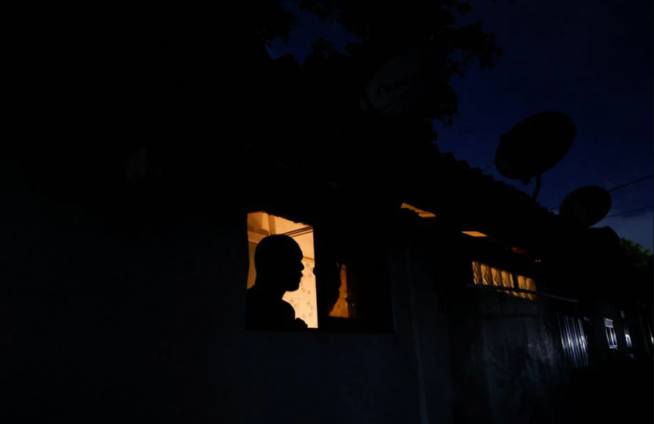
Lawyer and policy analyst Kofi Bentil has renewed calls for the Ghanaian government to fundamentally reorder its spending priorities, arguing that resources devoted to prestige projects should instead be channelled into fixing the country's deteriorating electricity infrastructure. Speaking on JoyNews' Newsfile programme, the Vice President of IMANI Africa highlighted the paradox of continued power outages whilst significant capital is allocated to market demolitions and reconstructions elsewhere in the economy.
Bentil's intervention underscores growing frustration among policy observers and ordinary Ghanaians over the persistence of load-shedding and blackouts despite the government's stated commitment to energy security. The recurring nature of these outages—which have plagued the nation intermittently in recent years—points to systemic rather than temporary failures, he suggested.
The technical case is straightforward
Bentil's core argument rests on a deceptively simple premise: Ghana possesses both the technical knowledge and financial capacity to resolve its power sector challenges, yet lacks the political will to prioritise the necessary interventions. He emphasised that the obstacles are well understood across government, industry and technical circles. "We know all the problems. We know what the solutions are. We know where to buy the equipment. We know how much they cost," he stated, implying that budget constraints are not the fundamental barrier.
Instead, Bentil identified misaligned expenditure priorities as the real culprit. His specific criticism of large-scale market infrastructure projects whilst critical utilities deteriorate reflects a broader concern about how public resources are allocated between visible, ceremonial investments and essential but less glamorous maintenance and system upgrades.
Life-or-death stakes at critical facilities
The IMANI Africa leader drew particular attention to the dangers posed by power disruptions at healthcare institutions. He cited recent blackouts affecting Korle Bu Teaching Hospital—Ghana's leading tertiary referral centre—as a stark example of how load-shedding can directly threaten lives. Blackouts at operating theatres, intensive care units and neonatal wards create immediate jeopardy for vulnerable patients.
Beyond hospitals, unreliable electricity damages Ghana's broader economic prospects. Businesses struggle to maintain operations under intermittent power supply, manufacturing competitiveness deteriorates, and investor confidence erodes. For a nation with stated ambitions to industrialise and create jobs, electricity reliability is foundational rather than peripheral.
Why it matters for Ghana
Ghana's electricity crisis sits at the intersection of governance, public health and economic development. The nation's capacity to meet regional and global competitive standards depends fundamentally on energy security. When Ghanaian firms cannot guarantee continuous power to clients, when hospitals cannot assure uninterrupted lighting during surgery, and when households endure extended darkness, the costs ripple across society.
Bentil's intervention is particularly significant because it challenges not resource scarcity but political choice. His assertion that Ghanaian engineers possess the capacity to fix these problems—if given adequate resources and leadership support—places responsibility squarely on decision-makers rather than on technical impossibility. The argument carries weight partly because IMANI Africa, though sometimes critical of government, is regarded as analytically serious rather than reflexively oppositional.
The recurring nature of blackouts suggests that even when short-term fixes are implemented, preventive maintenance and systemic strengthening are neglected. This pattern drains resources through emergency repairs whilst leaving underlying vulnerabilities unaddressed. A sustained, properly resourced approach to power system rehabilitation would likely prove more cost-effective long-term than the current cycle of crisis response.
For ordinary Ghanaians, Bentil's message offers both clarity and frustration: the solutions exist, the money is available, but the priorities remain misaligned. Whether policymakers heed such warnings remains to be seen, but the stakes—measured in hospital mortality, business failures and lost opportunities—are undeniably high.
Source: MyJoyOnline

Comments (0)
Be the first to comment.