
Ghana's poultry sector plagued by policy-practice gap, warns industry chief
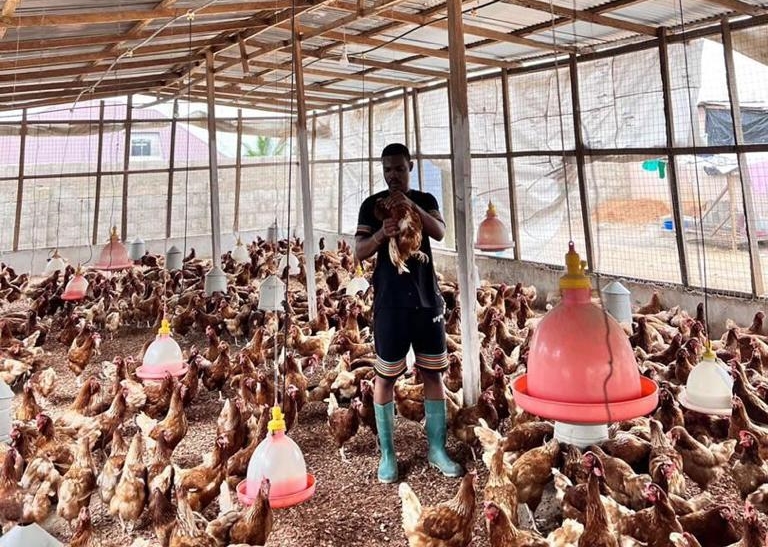
Ghana's poultry industry is being undermined by a significant disconnect between government policy decisions made at the national level and the practical challenges faced by farmers operating across the country, according to the Chief Executive Officer of the Greater Accra Poultry Farmers Association, Ali Muhammed.
Speaking during Joy Business's special discussion on Ghana's food self-sufficiency ambitions, Muhammed called for immediate intervention to bridge this gap, arguing that policy makers must move beyond boardroom deliberations and engage directly with poultry stakeholders to understand real-world challenges.
"The policy makers need to come down because there is a disjoint from the local level to the national level," Muhammed stated, emphasising that this disconnect is preventing the sector from reaching its potential and delivering meaningful solutions to farmers' problems.
Why it matters for Ghana
Ghana's poultry sector represents a critical pillar of national food security and economic development. The industry has considerable capacity to reduce Ghana's heavy reliance on imported poultry products—a significant drain on foreign exchange reserves—whilst simultaneously creating employment across rural and urban communities. However, this potential remains largely untapped due to structural governance failures.
If the sector were operating at full capacity, it could contribute substantially to the government's broader goal of achieving food self-sufficiency, a priority that has gained renewed urgency given global supply chain volatility and rising food import costs. The current policy-implementation gap means that resources allocated to agricultural development are not translating into tangible support for farmers.
Bridging the divide through stakeholder engagement
Muhammed's core argument centres on the necessity for government officials to move beyond theoretical policy design and engage in meaningful dialogue with farmers, traders, input suppliers, and other industry participants. This engagement would enable policy makers to understand the specific constraints limiting production—such as access to affordable feed, disease management, credit facilities, and marketing infrastructure—that are rarely captured in government reports or economic projections.
The Greater Accra Poultry Farmers Association CEO stressed that incorporating stakeholder experiences and ground-level insights into decision-making processes would lead to more practical, effective policy interventions that actually address the challenges farmers face daily.
Building resilience and competitiveness
The discussion, organised by Joy Business in partnership with the Super Morning Show, brought together leading experts and industry stakeholders to examine pathways toward a more resilient and competitive poultry sector. The consensus emerging from such forums is that Ghana possesses the agricultural foundation, human capital, and market demand necessary to become a net exporter of poultry products rather than a net importer.
Realising this vision, however, requires systemic alignment between policy aspirations and implementation realities. Government agencies, the private sector, farmer organisations, and research institutions must work in concert, with policy frameworks designed collaboratively rather than imposed from above. Until this structural realignment occurs, Ghana's poultry industry will continue operating below capacity, limiting its contribution to national food security and economic resilience.
Source: MyJoyOnline



Comments (0)
Be the first to comment.