Ghana's New Economy: Import-Substitution Strategy to Drive Local Production and Jobs
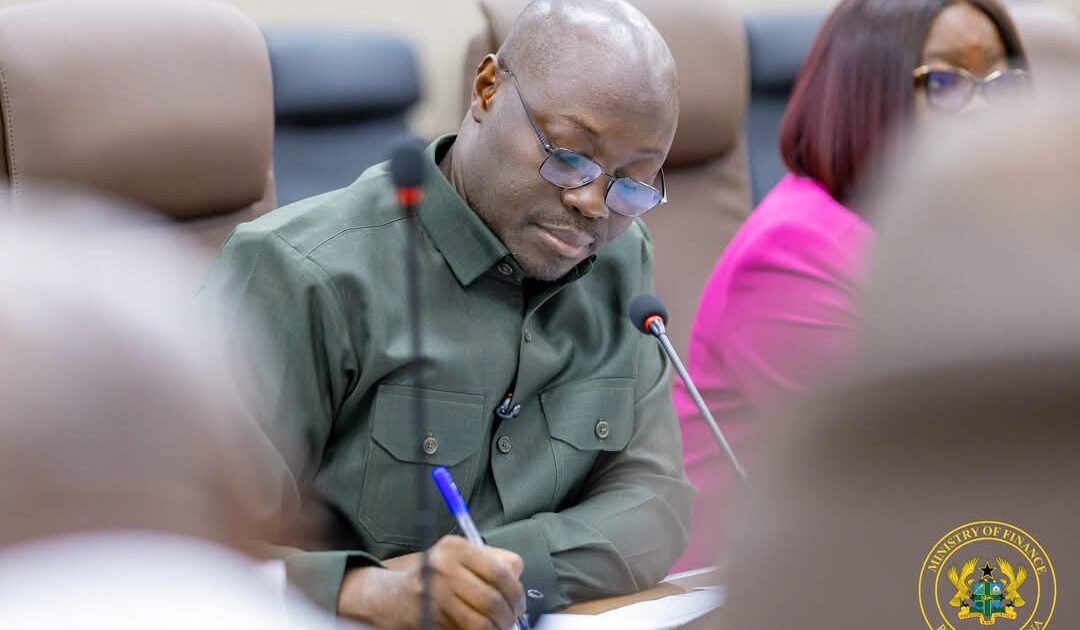
Ghana's government is preparing a major economic pivot aimed at transforming the country's consumption patterns into opportunities for local manufacturing and employment. Finance Minister Dr Cassiel Ato Forson has outlined the New Economy programme—set to be detailed in the 2027 Budget—which will channel approximately US$1.6 billion (roughly one per cent of GDP) into strategic domestic production sectors.
The core philosophy behind the initiative is straightforward: rather than accepting imports as inevitable costs, Ghana should systematically examine which imported goods could be produced domestically and build competitive industries around them. Dr Forson articulated this shift in mindset during a meeting with Ghana's industrial leadership, declaring that "every import is an opportunity to ask: why can't we make it in Ghana?"
Focus Areas and Investment Priorities
The New Economy framework identifies four primary sectors for strategic investment. Commercial agriculture remains central to Ghana's economic development, while mining value addition aims to capture greater returns from the country's mineral resources rather than exporting raw materials. Energy and transport infrastructure round out the priorities, with specific emphasis on gas-to-power and gas-to-fertiliser projects designed to strengthen both energy security and industrial capacity. The proposed Western Railway Line also features as a potential infrastructure investment.
These investments reflect a deliberate transition away from simple macroeconomic stabilisation towards what government describes as the next phase: genuine production, employment generation, and wealth creation. The strategy acknowledges that Ghana's current economic model relies heavily on imported finished goods, with limited value-adding activity domestically.
Why It Matters for Ghana
Import-substitution strategies have been central to economic development in successful emerging markets, and Ghana's formal embrace of this approach signals a recognition that stabilising the macroeconomy alone is insufficient for sustainable prosperity. The programme directly addresses unemployment—a persistent challenge for Ghanaians, particularly young people—by explicitly targeting job creation through expanded domestic production.
The initiative also has implications for Ghana's balance of payments and foreign exchange pressures. Reducing import dependency would ease pressure on the cedi and reduce capital flight. For private businesses, the strategy creates clearer policy signals that government will actively support industrial development in these sectors, potentially attracting both local and foreign investment.
The $1.6 billion commitment, while substantial, underscores that government views this as a foundational investment rather than a comprehensive overhaul. Private sector participation remains essential, and Dr Forson's engagement with the Association of Ghana Industries suggests the government is seeking buy-in from manufacturing and industrial captains who will ultimately drive expansion and exports.
Next Steps and Expectations
The full programme will be unveiled through the 2027 Budget presentation, where more detailed allocation breakdowns and implementation timelines should emerge. Government messaging emphasises that businesses will be encouraged to expand production capacity, increase exports, and hire more workers as the economic programme takes shape.
The slogan—"Ghana producing. Ghanaians working. Prosperity growing"—encapsulates the aspirational vision, though success will depend on execution, private sector response, and whether the investments genuinely translate into competitive, export-capable industries rather than import-dependent ventures reliant on protection.
Source: MyJoyOnline

Comments (0)
Be the first to comment.