Ghana's Legal Boom: Are We Training Lawyers Faster Than Courts Can Hire Judges?
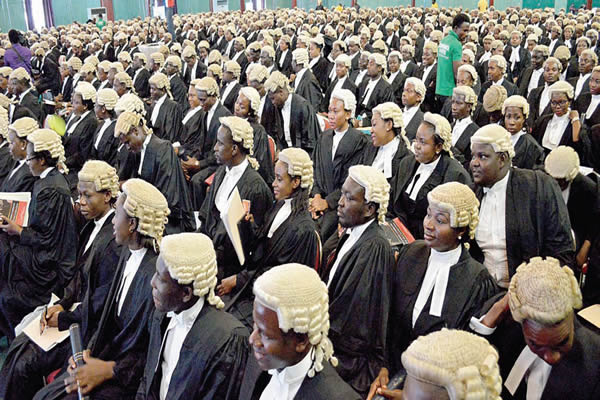
Ghana reached a historic milestone in October 2024 when the General Legal Council enrolled 1,568 new lawyers onto the roll—the largest single cohort since the country began training its own legal professionals. Yet this achievement has sparked urgent questions about whether Ghana's booming legal profession can find meaningful employment in a justice system that itself is struggling with fundamental resource gaps.
The debate is not academic. With nearly 10,000 lawyers now serving a population of 35 million—a ratio of 1 lawyer per 4,000 citizens—Ghana is approaching lawyer density levels comparable to developed economies like the United Kingdom (1:440) and far exceeding many West African neighbours. Nigeria, despite its size, maintains a ratio of 1:2,000, while Ivory Coast operates at 1:40,000 to 1:50,000. The question facing policymakers, law schools, and the Bar Association is blunt: are we producing lawyers we cannot employ?
The Judge Shortage Paradox
The irony is stark. While law schools churn out 1,500 new lawyers annually, Ghana's judicial system faces a crippling shortage of judges. Approximately 130 of the nation's 500 courts currently operate without judges—a bottleneck that has created a cascading crisis of delayed cases, endless adjournments, and eroded public confidence in the justice system.
The constraint is not a lack of qualified candidates. Lawyers are available and willing to serve on the bench. Instead, the Ministry of Finance has not approved funding to pay these additional judges. This disconnect reveals a deeper structural problem: Ghana is investing heavily in legal education whilst underfunding the infrastructure—courtrooms, judges, support staff—required to deploy those lawyers meaningfully.
The human cost is substantial. Litigants, both individual and corporate, face years-long case backlogs. Criminal defendants languish in pre-trial detention. The justice system's inability to function efficiently undermines the rule of law and Ghana's business environment, yet the response has been to continue expanding the lawyer supply rather than addressing the bottleneck.
Where Are All the Lawyers Going?
Not all lawyers practice in courts. The profession has diversified significantly. Beyond litigation, modern legal practice encompasses corporate and commercial law, where lawyers advise businesses on mergers, acquisitions, and regulatory compliance; intellectual property practice focused on trademarks and patents; and increasingly, roles in government agencies, NGOs, international organisations, and in-house corporate positions.
However, economic geography matters. The vast majority of Ghana's lawyers cluster in Accra, Kumasi, and Takoradi, where commercial activity and paying clients concentrate. Rural areas and secondary cities remain chronically underserved, meaning millions of ordinary Ghanaians lack practical access to legal services despite the nominal abundance of lawyers in the system.
Salary data also raises concerns. Whilst lawyers in developed economies earn upwards of $80,000 to $170,000 annually, Ghanaian lawyers average approximately GHS 180,000 (around $15,000 USD) per year. This mirrors the plight of peers across West Africa, where limited economic activity constrains legal markets and salaries.
Why It Matters for Ghana
The oversupply of lawyers reflects a broader development challenge: Ghana's legal education system is not calibrated to the economy's actual labour demand. Universities continue expanding law programmes because they are affordable to operate—lecture-based, low overhead compared to engineering or medical training—and attract students seeking professional status. But this supply-side expansion bears little relationship to genuine economic need.
The consequences extend beyond individual lawyer earnings. A glutted profession diverts talent from other critical sectors. Whilst Ghana struggles with engineer and skilled technician shortages, law schools remain oversubscribed. Worse, unemployment or underemployment amongst lawyers can fuel the troubling perception that legal training emphasises rhetoric over substance—a stereotype that damages public respect for both the profession and the judiciary.
The solution requires coordination between law schools, the Bar Association, and government. Policy options include: limiting law school admissions to align with realistic labour market absorption; fast-tracking funding approvals for judicial appointments to utilise available lawyers; incentivising lawyers to practice in underserved regions; and promoting non-traditional legal careers in corporate compliance, alternative dispute resolution, and legal technology. Ghana's legal boom can be a national asset, but only if deliberately channelled toward genuine development needs rather than left to market forces that currently generate unemployment and regional inequality.
Source: MyJoyOnline




Comments (0)
Be the first to comment.